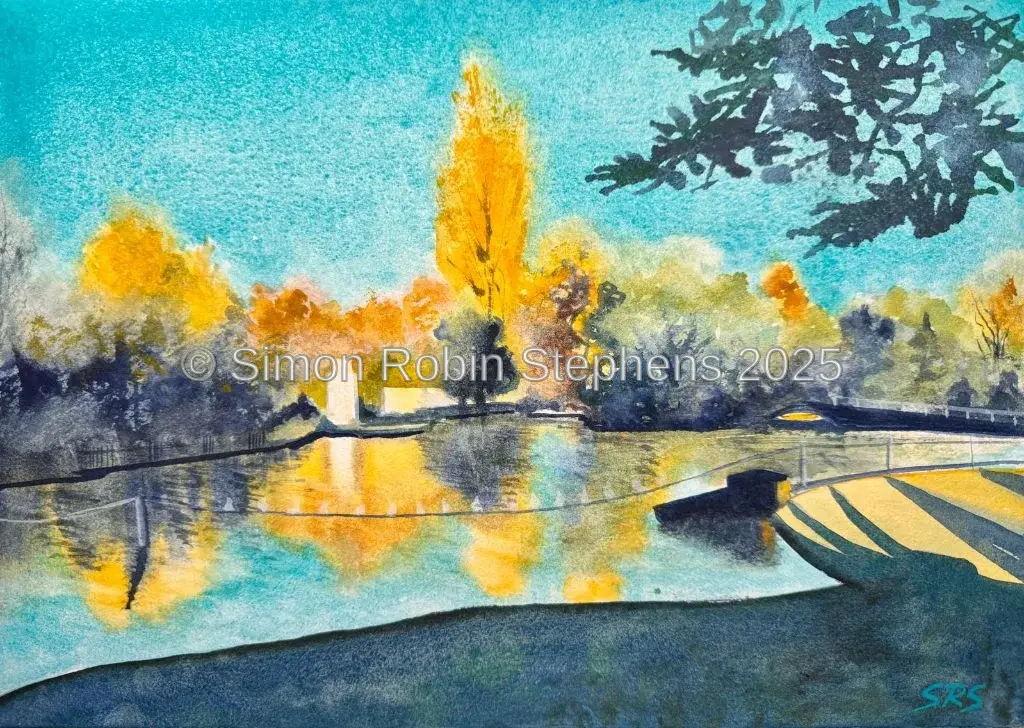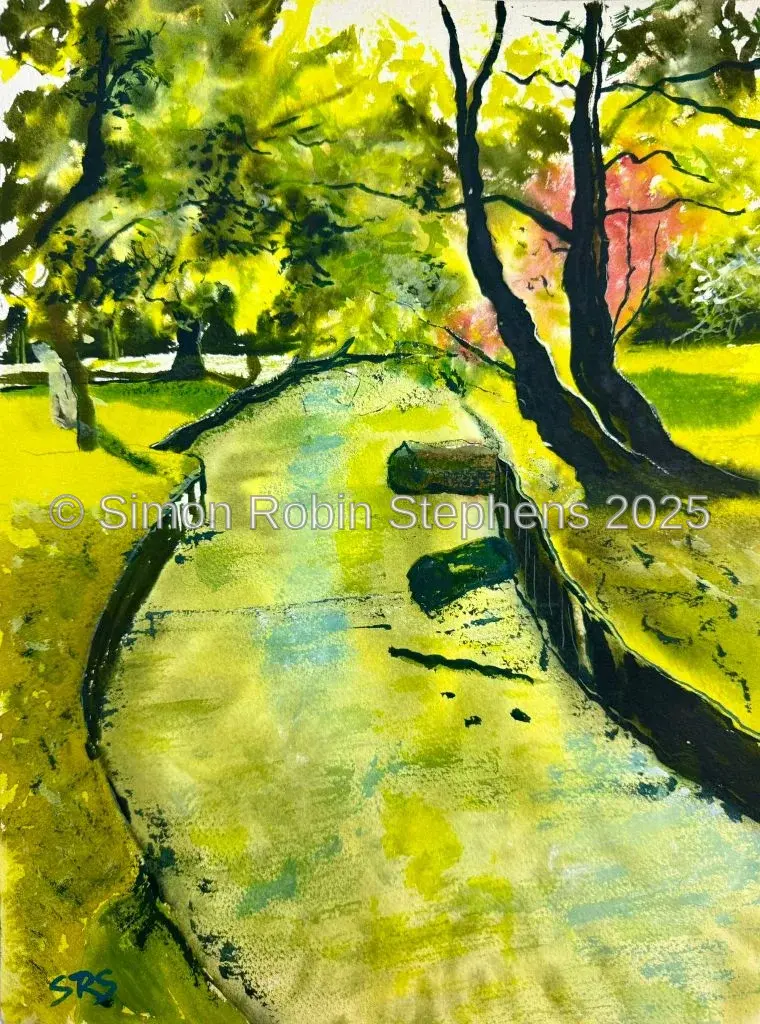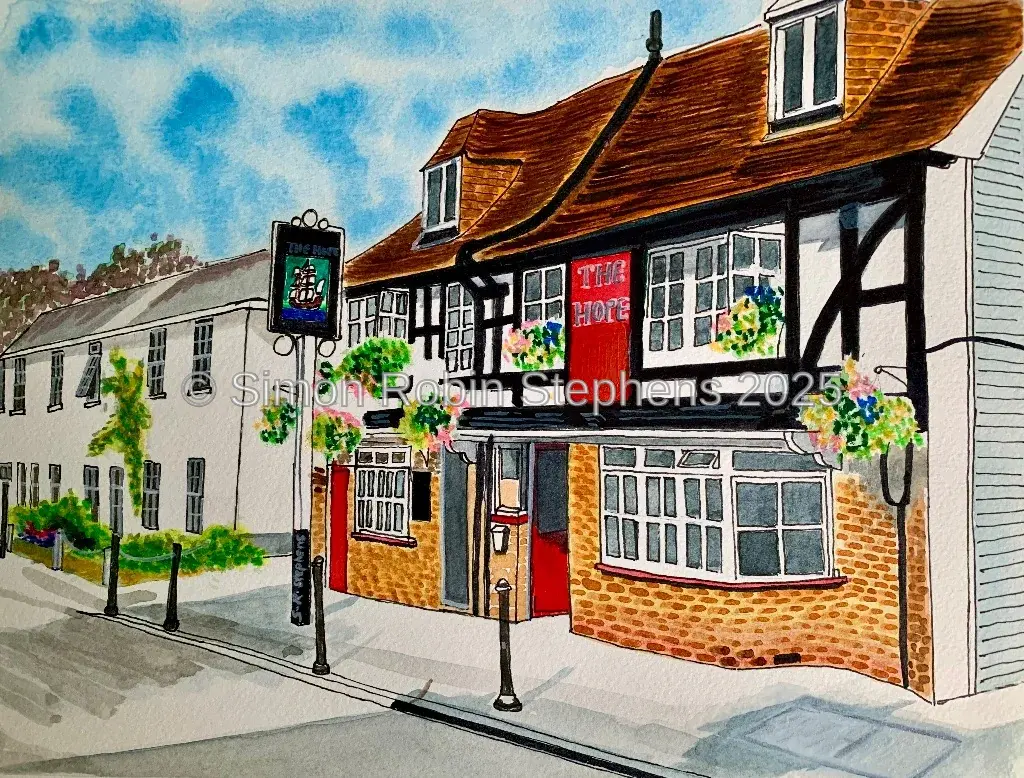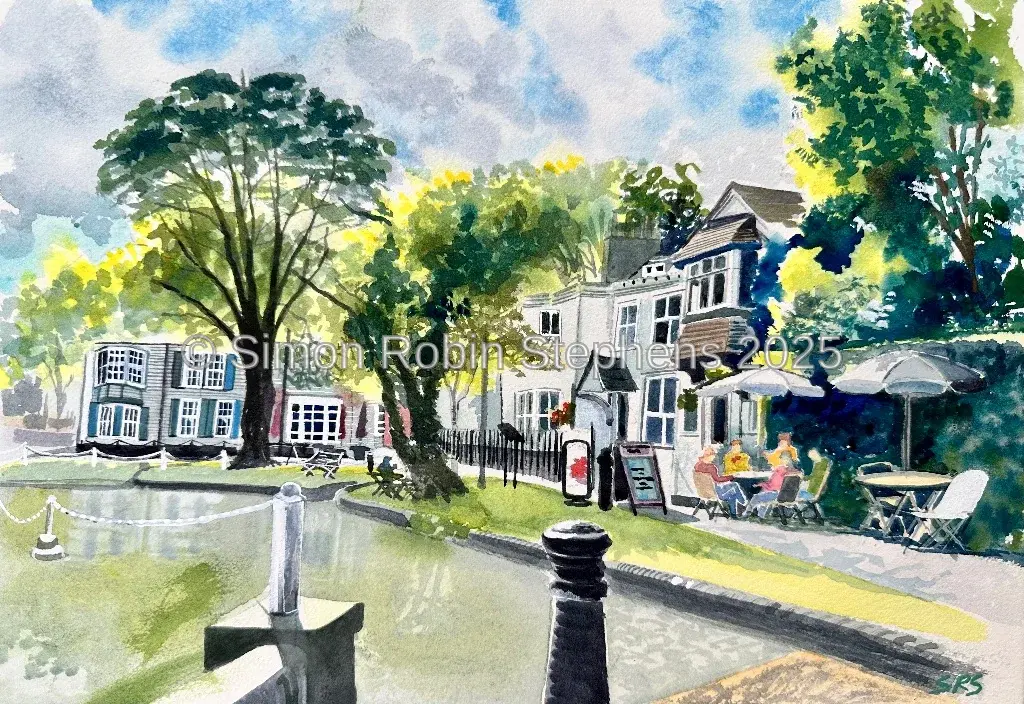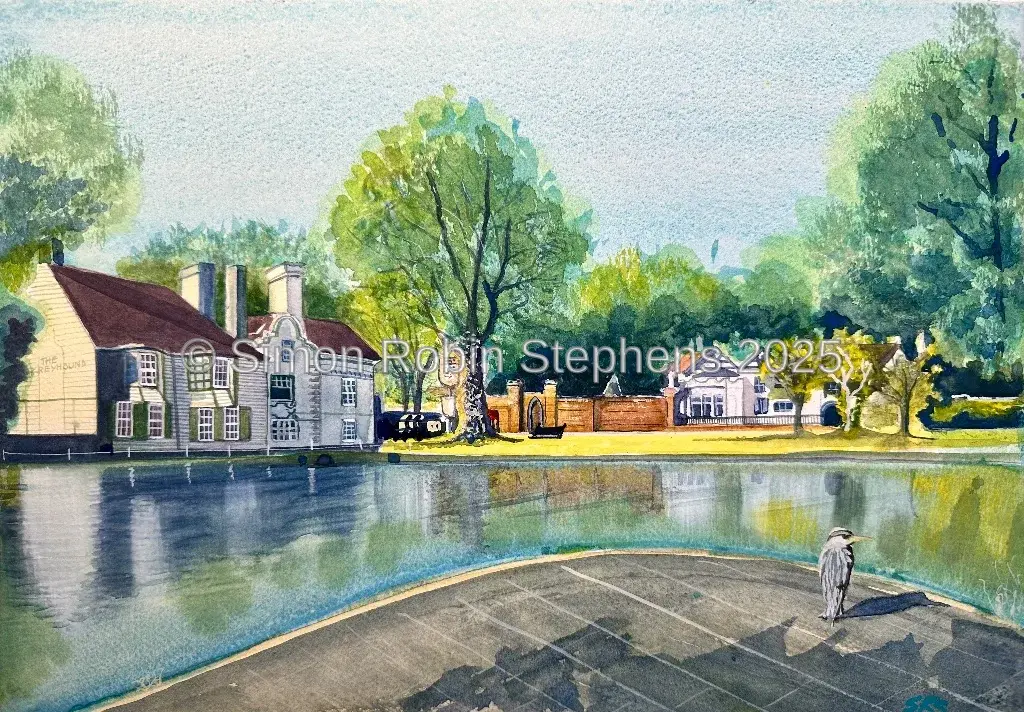
<h2>Why Carshalton Ponds is Perfect for Plein Air Painting</h2>
<p><strong>Carshalton Ponds</strong> is one of South London's hidden treasures—and one of the best locations for <strong>plein air watercolour painting</strong> in Surrey. Located in the heart of historic Carshalton village, the ponds offer:</p>
<ul> <li><strong>Reflective water surfaces</strong> — perfect for practicing watercolour reflections</li> <li><strong>Historic architecture</strong> — All Saints Church spire provides a striking focal point</li> <li><strong>Varied lighting</strong> — dappled shade from mature trees, golden hour opportunities</li> <li><strong>Peaceful atmosphere</strong> — usually quiet early morning or weekday afternoons</li> <li><strong>Accessible location</strong> — benches, flat surfaces, nearby facilities</li> </ul>
<p>As a <strong>Carshalton-based artist</strong> who has painted these ponds dozens of times, I've learned what works and what doesn't. This guide shares those lessons.</p>
<h2>Best Times to Paint Carshalton Ponds</h2>
<h3>Early Morning (7-9 AM)</h3>
<p><strong>Best for: Reflections, calm water, soft light</strong></p>
<p>This is my favourite time. The ponds are still, the light is gentle, and you'll have the place mostly to yourself. Morning mist sometimes lingers—magical for atmospheric paintings.</p>
<p><em>What to capture:</em> Perfect mirror-like reflections of All Saints Church, golden sunrise light warming the water, morning stillness.</p>
<h3>Late Afternoon (4-6 PM)</h3>
<p><strong>Best for: Golden light, long shadows, warm tones</strong></p>
<p>The setting sun creates beautiful warm light on the church spire and casts long shadows across the water. More people around, but also more life and movement to capture.</p>
<p><em>What to capture:</em> Golden hour glow on historic buildings, silhouettes, dramatic sky reflections.</p>
<h3>Overcast Days</h3>
<p><strong>Best for: Learning, subtle tones, no harsh shadows</strong></p>
<p>Don't dismiss grey days! Overcast light is actually easier for beginners—no harsh shadows or squinting into bright reflections. Colours appear more saturated.</p>
<p><em>What to capture:</em> Moody atmosphere, rich greens, architectural details without harsh contrast.</p>
<h2>Best Viewpoints Around the Ponds</h2>
<h3>1. Bridge View Looking North</h3>
<p><strong>What you see:</strong> All Saints Church spire framing through trees, full pond reflection</p>
<p><strong>Good for:</strong> Classic Carshalton view, balanced composition, iconic shot</p>
<p><strong>Challenges:</strong> Can be backlit in afternoon, trees may obscure church</p>
<h3>2. South Bank Near Ecology Centre</h3>
<p><strong>What you see:</strong> Across water to historic buildings, good tree canopy</p>
<p><strong>Good for:</strong> Dappled light effects, foreground interest, sheltered spot</p>
<p><strong>Challenges:</strong> Less clear view of church spire</p>
<h3>3. Anne Boleyn Well End</h3>
<p><strong>What you see:</strong> Looking through foliage toward St Mary Church tower</p>
<p><strong>Good for:</strong> Intimate, enclosed feeling, heritage connection</p>
<p><strong>Challenges:</strong> More foliage to navigate, narrower view</p>
<h2>Essential Supplies for Plein Air Painting</h2>
<h3>My Minimal Kit</h3>
<ul> <li><strong>Portable watercolour palette</strong> — I use 6-8 colours maximum</li> <li><strong>Water-soluble sketchbook</strong> — 140lb/300gsm paper, A5 or A4 size</li> <li><strong>Two water containers</strong> — one for rinsing, one for clean mixing</li> <li><strong>3-4 brushes</strong> — round sizes 4, 8, 12, plus one flat for washes</li> <li><strong>Folding stool or cushion</strong> — benches are available but not always ideal angles</li> <li><strong>Paper towel or rag</strong> — for lifting, cleaning, drying brushes</li> <li><strong>Viewfinder</strong> — cardboard frame helps compose scenes</li> <li><strong>Sunscreen and hat</strong> — especially for afternoon sessions</li> </ul>
<h3>What I Don't Bring</h3>
<ul> <li>Heavy easel (benches work fine, or painting on lap)</li> <li>More than 8 colours (simplicity = better paintings)</li> <li>Expensive materials (accidents happen outdoors)</li> </ul>
<h2>Painting Technique: Capturing Carshalton Ponds</h2>
<h3>Step 1: Quick Compositional Sketch (5 minutes)</h3>
<p>Before touching watercolour, do a <strong>pencil thumbnail sketch</strong>. This helps you:</p>
<ul> <li>Simplify the scene (don't paint every leaf!)</li> <li>Establish focal point (usually church spire or tree reflection)</li> <li>Plan value contrasts (darks vs lights)</li> <li>Identify what to leave out (less is more)</li> </ul>
<h3>Step 2: Block in Sky and Water (10 minutes)</h3>
<p><strong>Work wet-on-wet for soft transitions</strong></p>
<p>Wet the entire sky and water areas with clean water, then drop in colours while still wet. This creates those beautiful soft transitions watercolour is famous for.</p>
<p><em>Pro tip:</em> Paint sky and its reflection in one go—mirror the colours and values.</p>
<h3>Step 3: Mid-ground Buildings and Trees (15 minutes)</h3>
<p><strong>Work from light to dark, background to foreground</strong></p>
<p>All Saints Church spire is your focal point. Keep it relatively crisp compared to surrounding foliage. Use lost edges where trees meet sky—don't outline everything.</p>
<p><em>Pro tip:</em> Let some background wash show through foliage—don't make trees solid blocks of green.</p>
<h3>Step 4: Reflections (10 minutes)</h3>
<p><strong>Reflections are darker and less detailed than the objects they reflect</strong></p>
<p>Paint reflections using <strong>vertical brushstrokes</strong> to suggest water surface. Leave some white paper gaps to show movement and light on water.</p>
<p><em>Pro tip:</em> Reflections aren't perfect mirrors—they're simplified, darker versions.</p>
<h3>Step 5: Foreground Details (10 minutes)</h3>
<p>Add darkest darks, sharpest details, and final accents in the foreground. This is where you can be most specific.</p>
<p><em>Pro tip:</em> Don't overwork it. Know when to stop.</p>
<h2>Common Challenges and Solutions</h2>
<h3>Challenge: Too Much Green</h3>
<p><strong>Solution:</strong> Vary your greens! Mix yellows, blues, and browns to create different green tones. Add purples and reds to shadows within foliage.</p>
<h3>Challenge: Harsh Midday Light</h3>
<p><strong>Solution:</strong> Paint under trees for shade, or choose a cloudy day. Alternatively, focus on shadowed areas and let bright areas stay white paper.</p>
<h3>Challenge: Changing Light</h3>
<p><strong>Solution:</strong> Work fast, or take photos for reference. Commit to painting the light <em>as it was when you started</em>, not chase it across the scene.</p>
<h3>Challenge: People Walking Past</h3>
<p><strong>Solution:</strong> Embrace it! Quick silhouettes add life. Or paint early morning when it's quieter.</p>
<h3>Challenge: Wind Blowing Pages</h3>
<p><strong>Solution:</strong> Use clips or elastic bands to hold pages down. Work in sheltered spots when windy.</p>
<h2>Colour Palette for Carshalton Ponds</h2>
<p>Here's my go-to palette for this location:</p>
<ul> <li><strong>Ultramarine Blue</strong> — sky and water base</li> <li><strong>Cerulean Blue</strong> — bright sky highlights</li> <li><strong>Yellow Ochre</strong> — church stone, autumn leaves, warm light</li> <li><strong>Burnt Sienna</strong> — tree trunks, warm shadows, reflections</li> <li><strong>Sap Green</strong> — foliage base</li> <li><strong>Permanent Rose or Quinacridone Magenta</strong> — shadows, atmospheric effects</li> </ul>
<p>That's 6 colours. Everything else is mixed from these.</p>
<h2>Learning from Mistakes</h2>
<h3>My Early Carshalton Pond Disasters:</h3>
<ul> <li><strong>Overworked reflections</strong> — made them too detailed, looked stiff</li> <li><strong>Painted every leaf</strong> — resulted in busy, unfocused paintings</li> <li><strong>Used too dark greens</strong> — shadows went muddy and dead</li> <li><strong>Centred church spire</strong> — static composition, boring</li> <li><strong>Forgot to leave whites</strong> — paintings felt heavy and flat</li> </ul>
<p>I learned more from these "failures" than from successful paintings. Don't be precious—experiment!</p>
<h2>Beyond Technical: Capturing Feeling</h2>
<p>Technique matters, but <strong>feeling matters more</strong>. What draws me back to Carshalton Ponds isn't just the architecture and reflections—it's the atmosphere.</p>
<p>When you paint here, you're not just recording shapes and colours. You're capturing:</p>
<ul> <li>The particular quality of light through oak leaves</li> <li>The stillness of early morning before the village wakes</li> <li>The sense of history held in old stones and quiet water</li> <li>The feeling of being present in a place that's seen centuries pass</li> </ul>
<p>Let your painting be loose enough to hold these intangibles.</p>
<h2>Practical Tips for Your First Session</h2>
<ol> <li><strong>Go on a weekday morning</strong> if possible — quieter, better light</li> <li><strong>Start with a small painting</strong> — postcard size, 30-minute session</li> <li><strong>Focus on one element</strong> — just the church spire, just the reflections</li> <li><strong>Take a photo</strong> before you start (for reference if light changes)</li> <li><strong>Bring a friend</strong> — plein air painting is more fun (and less self-conscious) with company</li> <li><strong>Accept imperfection</strong> — outdoor painting is about experience, not perfect results</li> </ol>
<h2>Finding Your Own View</h2>
<p>This guide gives you starting points, but the best Carshalton Ponds painting will be <em>your</em> interpretation. Walk around. Notice what catches your eye. Trust your instincts.</p>
<p>Maybe you're drawn to:</p>
<ul> <li>The play of light through trees more than the architecture</li> <li>The abstract patterns in rippling water</li> <li>A small detail—a swan, a lamppost, a single reflected window</li> </ul>
<p>Your unique perspective is what will make your painting interesting.</p>
<h2>Join the Carshalton Painting Community</h2>
<p>I'm <strong>Vice Chairman of Carshalton Artists</strong>, and we regularly paint at local sites including the ponds. If you'd like to paint with others or see more examples of Carshalton artwork, visit:</p>
<ul> <li><a href="https://www.carshaltonartists.com" target="_blank" rel="noopener">Carshalton Artists</a></li> <li><a href="/gallery/collections/south-london/" title="South London Collection">My South London Collection</a> (includes many Carshalton paintings)</li> </ul>
<h2>Final Thoughts: Paint What You Love</h2>
<p>I keep returning to Carshalton Ponds not because I've perfected painting it (I haven't), but because <strong>I love being there</strong>. The paintings are a record of that love—of time spent in a place that matters to me.</p>
<p>Choose locations that move you. Technical skill develops with practice, but genuine connection with a place—that's what makes paintings resonate.</p>
<p>Pack your paints, head to the ponds, and see what happens. The first painting might be rough. The tenth might surprise you. By the twentieth, you'll understand this place in ways only painting can teach.</p>
<section class="faq mt-12 mb-8" itemscope itemtype="https://schema.org/FAQPage"> <h2 class="text-2xl font-heading text-gray-800 mb-6">Frequently Asked Questions</h2>
<div class="mb-6" itemscope itemprop="mainEntity" itemtype="https://schema.org/Question"> <h3 class="text-lg font-semibold text-gray-800 mb-2" itemprop="name">What's the best time of day to paint Carshalton Ponds?</h3> <div itemscope itemprop="acceptedAnswer" itemtype="https://schema.org/Answer"> <p itemprop="text" class="text-gray-700">Early morning (7-9am) offers soft light, fewer people, and calm water perfect for reflections. Late afternoon (4-6pm) provides golden hour warmth and interesting shadows. Avoid midday when harsh overhead light flattens the scene. Overcast days work beautifully for watercolour—no harsh shadows, even lighting, and rich colours.</p> </div> </div>
<div class="mb-6" itemscope itemprop="mainEntity" itemtype="https://schema.org/Question"> <h3 class="text-lg font-semibold text-gray-800 mb-2" itemprop="name">What watercolour supplies do I need for plein air painting?</h3> <div itemscope itemprop="acceptedAnswer" itemtype="https://schema.org/Answer"> <p itemprop="text" class="text-gray-700">Essential plein air kit: small watercolour sketchbook (A5 or A4), portable paint set (12-24 colors), two water-soluble pencils, three brushes (small detail, medium round, large wash), collapsible water container, paper towels, and lightweight folding stool. Keep it minimal—you'll be carrying everything.</p> </div> </div>
<div class="mb-6" itemscope itemprop="mainEntity" itemtype="https://schema.org/Question"> <h3 class="text-lg font-semibold text-gray-800 mb-2" itemprop="name">Do I need permission to paint at Carshalton Ponds?</h3> <div itemscope itemprop="acceptedAnswer" itemtype="https://schema.org/Answer"> <p itemprop="text" class="text-gray-700">No permission needed for personal sketching and painting at Carshalton Ponds—it's a public park. Be respectful of other visitors, don't block pathways, and pack out all materials. If painting for commercial purposes (organized workshops, photo shoots), contact Sutton Council for guidance.</p> </div> </div>
<div class="mb-6" itemscope itemprop="mainEntity" itemtype="https://schema.org/Question"> <h3 class="text-lg font-semibold text-gray-800 mb-2" itemprop="name">How long does it take to paint a plein air watercolour?</h3> <div itemscope itemprop="acceptedAnswer" itemtype="https://schema.org/Answer"> <p itemprop="text" class="text-gray-700">Quick sketches take 30-45 minutes. Detailed paintings require 1.5-3 hours. Light changes fast outdoors, so work quickly or focus on capturing one specific light moment. Many artists sketch on-site then finish studio work from photos and notes—this is completely legitimate plein air practice.</p> </div> </div>
<div class="mb-6" itemscope itemprop="mainEntity" itemtype="https://schema.org/Question"> <h3 class="text-lg font-semibold text-gray-800 mb-2" itemprop="name">What if my watercolour painting doesn't look like the scene?</h3> <div itemscope itemprop="acceptedAnswer" itemtype="https://schema.org/Answer"> <p itemprop="text" class="text-gray-700">That's normal and perfectly fine! Plein air painting is about capturing feeling and atmosphere, not photographic accuracy. Your painting will reflect your unique perception. With practice, technical accuracy improves, but emotional honesty matters more than perfect representation. Every painter sees differently.</p> </div> </div>
<div class="mb-6" itemscope itemprop="mainEntity" itemtype="https://schema.org/Question"> <h3 class="text-lg font-semibold text-gray-800 mb-2" itemprop="name">Do you offer plein air watercolour workshops at Carshalton Ponds?</h3> <div itemscope itemprop="acceptedAnswer" itemtype="https://schema.org/Answer"> <p itemprop="text" class="text-gray-700">I occasionally run small plein air sessions for beginners and intermediate painters. These hands-on workshops cover setup, composition, working with changing light, and managing outdoor challenges. Sign up for my newsletter or follow Instagram for workshop announcements. Private plein air coaching also available.</p> </div> </div> </section>
<script type="application/ld+json"> { "@context": "https://schema.org", "@type": "FAQPage", "mainEntity": [ {"@type": "Question", "name": "What's the best time of day to paint Carshalton Ponds?", "acceptedAnswer": {"@type": "Answer", "text": "Early morning (7-9am) offers soft light, fewer people, and calm water perfect for reflections. Late afternoon (4-6pm) provides golden hour warmth and interesting shadows. Avoid midday when harsh overhead light flattens the scene. Overcast days work beautifully for watercolour—no harsh shadows, even lighting, and rich colours."}}, {"@type": "Question", "name": "What watercolour supplies do I need for plein air painting?", "acceptedAnswer": {"@type": "Answer", "text": "Essential plein air kit: small watercolour sketchbook (A5 or A4), portable paint set (12-24 colors), two water-soluble pencils, three brushes (small detail, medium round, large wash), collapsible water container, paper towels, and lightweight folding stool. Keep it minimal—you'll be carrying everything."}}, {"@type": "Question", "name": "Do I need permission to paint at Carshalton Ponds?", "acceptedAnswer": {"@type": "Answer", "text": "No permission needed for personal sketching and painting at Carshalton Ponds—it's a public park. Be respectful of other visitors, don't block pathways, and pack out all materials. If painting for commercial purposes (organized workshops, photo shoots), contact Sutton Council for guidance."}}, {"@type": "Question", "name": "How long does it take to paint a plein air watercolour?", "acceptedAnswer": {"@type": "Answer", "text": "Quick sketches take 30-45 minutes. Detailed paintings require 1.5-3 hours. Light changes fast outdoors, so work quickly or focus on capturing one specific light moment. Many artists sketch on-site then finish studio work from photos and notes—this is completely legitimate plein air practice."}}, {"@type": "Question", "name": "What if my watercolour painting doesn't look like the scene?", "acceptedAnswer": {"@type": "Answer", "text": "That's normal and perfectly fine! Plein air painting is about capturing feeling and atmosphere, not photographic accuracy. Your painting will reflect your unique perception. With practice, technical accuracy improves, but emotional honesty matters more than perfect representation. Every painter sees differently."}}, {"@type": "Question", "name": "Do you offer plein air watercolour workshops at Carshalton Ponds?", "acceptedAnswer": {"@type": "Answer", "text": "I occasionally run small plein air sessions for beginners and intermediate painters. These hands-on workshops cover setup, composition, working with changing light, and managing outdoor challenges. Sign up for my newsletter or follow Instagram for workshop announcements. Private plein air coaching also available."}} ] } </script>
<p class="text-sm text-gray-600 mt-8"><em>— Simon Robin Stephens, plein air watercolour artist painting Carshalton & South London since 2015</em></p>