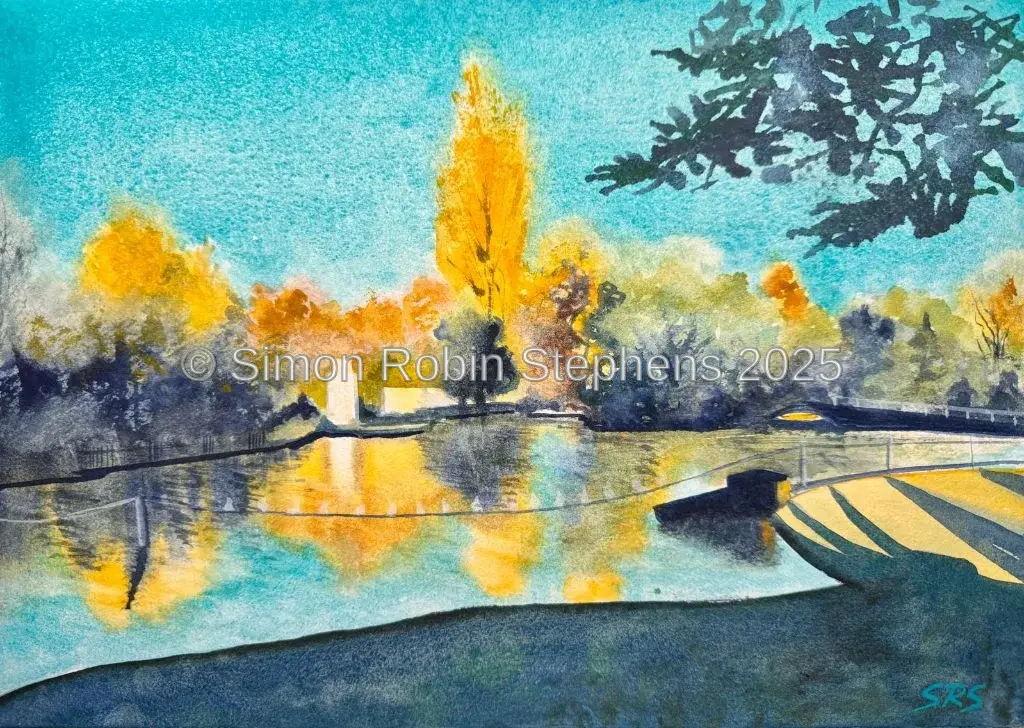
Living with ADHD means living with a brain that moves too fast, jumps between thoughts, and rarely sits still. For years, I tried traditional meditation. Mindfulness apps. Breathing exercises. They all asked me to quiet my mind—something my neurodivergent brain simply cannot do.
Then I discovered watercolour painting. And accidentally found a form of meditation that actually works for me.
## Why Traditional Meditation Doesn't Work for ADHD
Most meditation practices ask you to
- Clear your mind of thoughts
- Focus on your breath and nothing else
- Sit perfectly still for extended periods
- Notice thoughts and let them pass without engaging
For a neurotypical brain, this might be challenging but achievable. For an ADHD brain, it's like asking water not to be wet.
My thoughts don't pass quietly by like clouds. They multiply, overlap, cascade into each other. Sitting still amplifies the restlessness rather than calming it. And "clearing my mind" feels about as possible as stopping my heart from beating.
I spent years thinking I was bad at mindfulness. That my brain was too broken for contemplative practices. That meditation simply wasn't for people like me.
## The Accidental Discovery
I started painting watercolours not for therapy, but because I liked how the medium looked. Transparent, luminous, unpredictable. I had no idea it would become my most effective ADHD management tool.
Here's what happened
When I paint, my brain finally has something specific to focus on—but that "something" has just enough variables to keep my ADHD mind engaged without overwhelming it. I'm tracking:
- How wet the paper is
- How much water is in my brush
- Which colors to mix next
- Where light and shadow should go
- How fast the wash is drying
It's not "clearing my mind." It's giving my restless brain a complex but manageable task that requires complete presence.
And presence—being fully absorbed in what's happening right now—is exactly what meditation is supposed to cultivate.
## Active Meditation vs. Stillness Meditation
What I've learned is that ADHD brains often need **active meditation** rather than **stillness meditation**:
**Stillness Meditation (Hard for ADHD):**
- Sitting motionless
- Watching thoughts without engaging
- Returning focus to breath repeatedly
- Accepting boredom and restlessness
**Active Meditation (Works for ADHD):**
- Painting, drawing, making
- Washing dishes with full attention
- Walking with intentional observation
- Any absorbing task requiring presence
Watercolour painting accidentally became my active meditation practice. I didn't plan it. My brain just finally exhaled.
## The Science Behind Why It Works
Research on ADHD and creative practices shows why this makes sense
**Flow States:** ADHD brains can achieve hyperfocus on tasks that provide
- Immediate feedback (watercolour shows results instantly)
- Variable rewards (every painting offers surprises)
- Clear but flexible structure (techniques exist, but outcomes vary)
- Novel challenges (each painting is different)
Watercolour offers all of these. It's engaging enough to hook my ADHD brain, but forgiving enough not to trigger perfectionism paralysis.
**Sensory Engagement:** ADHD often comes with sensory seeking behavior. Watercolour provides:
- Visual stimulation (watching color bloom and blend)
- Tactile feedback (feeling brush on paper, water flowing)
- Proprioceptive input (hand movements, posture shifts)
- Even auditory input (brush swishing, water dripping)
This multi-sensory experience satisfies my brain's need for stimulation while channeling it into focused creation.
## What Painting Taught Me About Calm
I used to think "calm" meant an empty mind. No thoughts, no restlessness, just peaceful silence.
Watercolour taught me that calm can also mean
- **Focused attention** rather than scattered overwhelm
- **Present engagement** rather than anxious future planning
- **Productive restlessness** channeled into creative making
- **Acceptance of uncertainty** because watercolour demands it
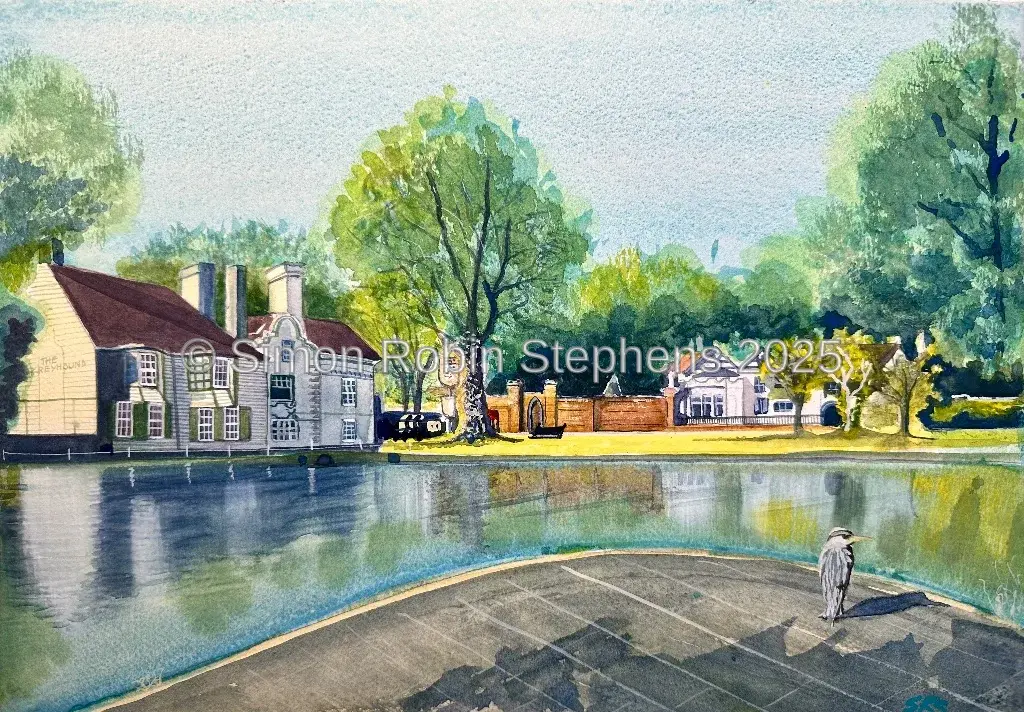
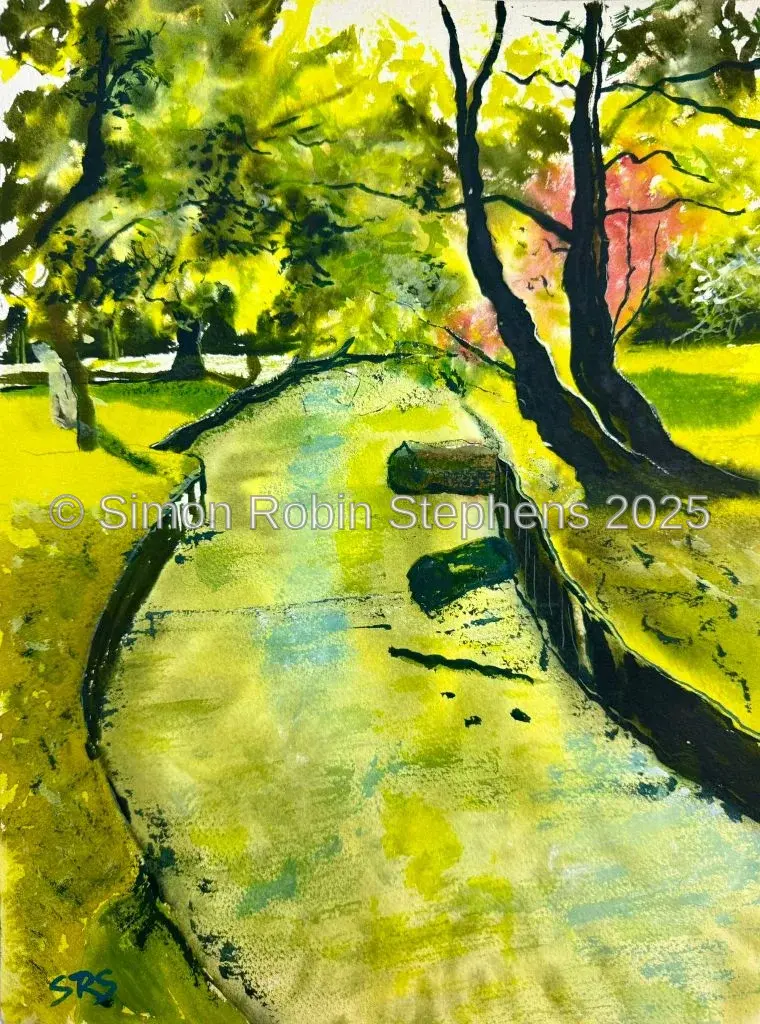
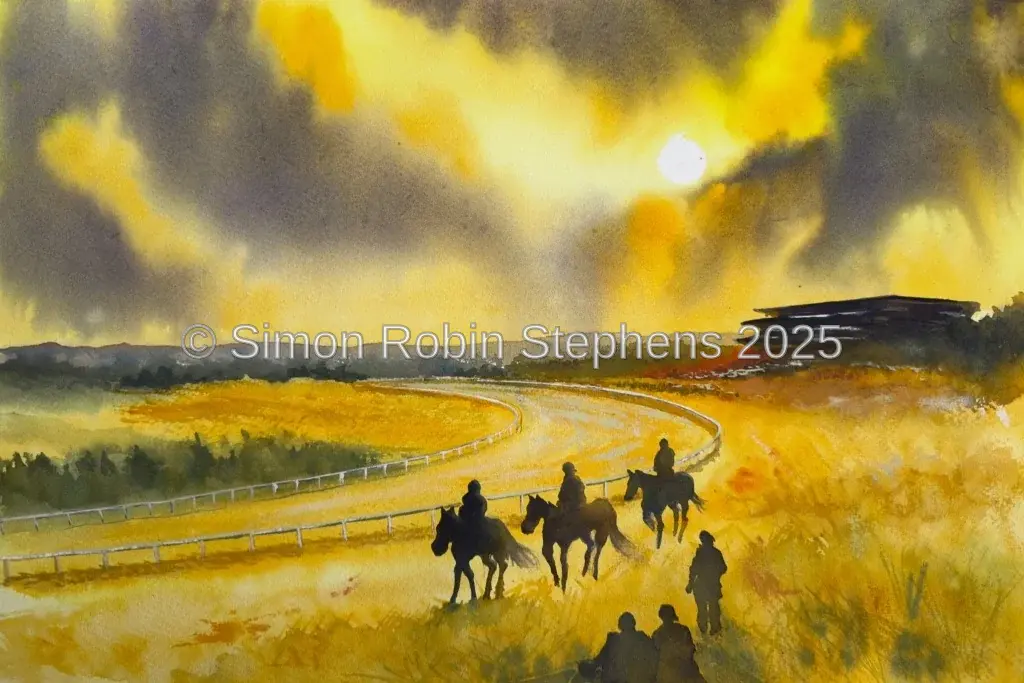
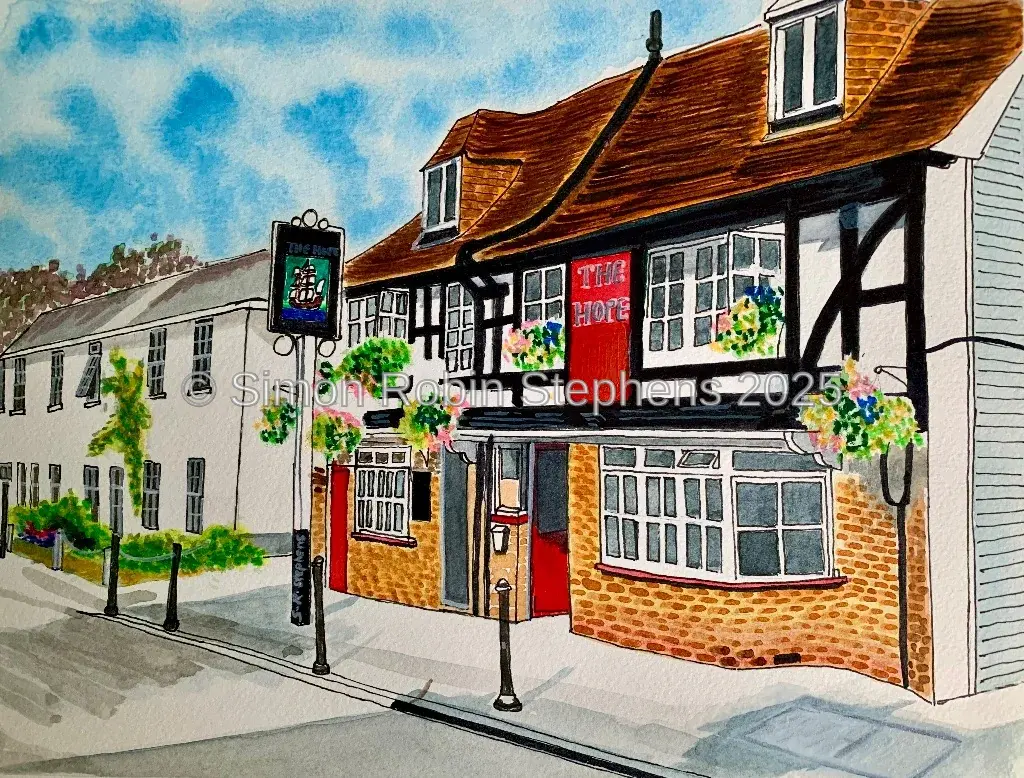
My [Sanctuaries of the Mind collection](/collections/sanctuaries-of-the-mind) emerged from this realization. These paintings aren't places of perfect silence—they're spaces where my ADHD brain finally finds its own version of peace.
['Golden Hush'](/artwork/golden-hush), for example, captures the feeling of late afternoon light when my racing thoughts finally slow. Not stop—just slow enough to breathe.
['Home Imagined'](/artwork/home-imagined) represents the internal landscape my mind creates when painting allows me to escape overwhelm for a few hours.
These aren't literal places. They're emotional states translated into watercolour.
## Practical Tips: Watercolour for ADHD Brains
If you're neurodivergent and curious about painting as meditation, here's what I've learned:
**Start Small:** Don't attempt masterpieces. Paint postcard-sized studies. Low stakes reduce performance anxiety that can paralyze ADHD brains.
**Embrace Imperfection:** Watercolour will do unexpected things. Your ADHD brain will make impulsive choices. Both are features, not bugs.
**Time-Box Sessions:** I paint for 30-90 minutes. Short enough to maintain focus, long enough to achieve flow state.
**Have Multiple Paintings Going:** ADHD brains love novelty. Switching between 2-3 paintings prevents boredom without feeling scattered.
**Accept Bad Days:** Some days, executive function fails. Motivation disappears. The painting looks terrible. That's okay—it's part of having ADHD.
**Focus on Process, Not Product:** The meditation happens while painting, not when admiring the finished piece.
## When Painting Doesn't Help
I won't pretend watercolour is a miracle cure. Some days it helps immensely. Some days it doesn't work at all.
When ADHD is severe—when executive dysfunction is strong, when emotional dysregulation is overwhelming, when burnout has hit—painting can feel like one more task I 'should' do but can't.
On those days, I give myself permission to not paint. To not create. To just exist in whatever way my brain allows.
The goal isn't to paint every day. It's to have painting available when my brain needs it.
## Beyond Watercolour: Finding Your Active Meditation
Watercolour works for me because it matches my nervous system. Yours might be different.
Other neurodivergent artists I know find their active meditation in
- **Digital art** (fast iterations, easy corrections)
- **Pottery** (tactile, physical, immediate feedback)
- **Collage** (quick, visually stimulating, low-pressure)
- **Photography** (requires observation, encourages walks)
- **Nature journaling** (combines drawing, writing, and outdoor time)
The medium matters less than finding a creative practice that
- Holds your attention without forcing silence
- Provides enough structure to ground you
- Allows enough flexibility to stay engaging
- Feels like meditation by accident, not effort
## The Gift of Distraction
Here's the paradox: my ADHD brain, which makes stillness meditation impossible, is exactly what makes me a better painter.
I notice details others miss. I make unexpected color choices that somehow work. I embrace mistakes because my brain is already ten steps ahead, excited about the next attempt rather than fixated on the current failure.
ADHD isn't a flaw to overcome in my art practice—it's an asset to work with.
My painting ['They Were There All Along'](/artwork/they-were-there-all-along) represents this: the moments of beauty and clarity that were always present but only visible once my restless brain found its medium.
## For Therapists and Caregivers
If you're supporting someone with ADHD, consider this: not everyone will respond to traditional mindfulness. And that's okay.
Active meditation practices—painting, making, moving—can offer the same benefits of presence and calm without requiring the neurodivergent brain to do something it fundamentally cannot.
The goal isn't to fix ADHD. It's to find practices that work with it.
## What Calm Really Means
I'll never have a perfectly quiet mind. My thoughts will always move too fast, jump too often, overlap too much.
But watercolour gave me something better than silence: engaged presence. The kind of calm that comes from being so absorbed in what you're doing that the racing thoughts finally have somewhere specific to go.
That's not curing ADHD. That's learning to paint with it.
If you'd like to see more paintings born from this practice, explore my [Sanctuaries of the Mind collection](/collections/sanctuaries-of-the-mind)—every piece represents a moment when my ADHD brain found its own version of meditation through transparent watercolour.
**Resources for neurodivergent artists:** → [Sanctuaries of the Mind](/collections/sanctuaries-of-the-mind) – Therapeutic watercolour landscapes → [About Simon's ADHD Journey](/about) – Full neurodiversity story → [All Gallery Artworks](/gallery) – Original paintings and prints → [ADHD and the Art of Slow](/blog/adhd-art-of-slow) – Why watercolour won't be rushed