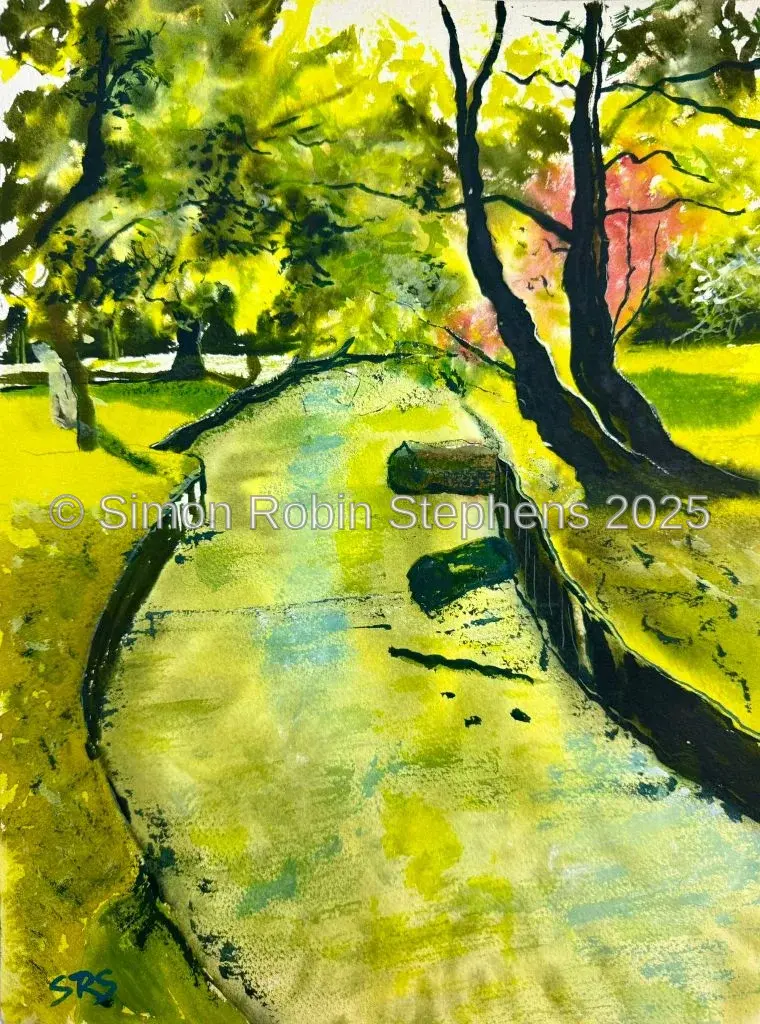
<h2>Why Art Matters in Therapy Spaces</h2>
<p>As a <strong>watercolour artist</strong> whose paintings often find homes in <strong>therapy rooms</strong>, counselling offices, and wellness centres, I've come to understand that the art on your walls isn't just decoration—it's part of the therapeutic environment.</p>
<p>The right artwork can:</p>
<ul> <li><strong>Reduce client anxiety</strong> while waiting or during difficult moments</li> <li><strong>Create psychological safety</strong> through non-threatening imagery</li> <li><strong>Provide grounding focal points</strong> for emotional regulation techniques</li> <li><strong>Communicate your values</strong> and approach to clients</li> <li><strong>Support mindfulness practices</strong> through contemplative imagery</li> </ul>
<p>This guide draws from conversations with therapists, my own experience as a <strong>neurodivergent artist</strong> navigating mental health, and years of creating <strong>calming watercolour paintings</strong> for therapeutic spaces.</p>
<h2>What Makes Art "Therapeutic"?</h2>
<h3>1. Non-Threatening Subject Matter</h3>
<p><strong>Choose imagery that doesn't demand emotional engagement</strong></p>
<p>Therapy already asks clients to engage deeply with difficult emotions. The artwork shouldn't add to that burden. Avoid:</p>
<ul> <li>Human figures (can feel like being watched or judged)</li> <li>Direct eye contact or faces</li> <li>Aggressive or disturbing imagery</li> <li>Complex narratives requiring interpretation</li> <li>Religious or culturally specific symbols (unless appropriate to your practice)</li> </ul>
<p><strong>Better choices:</strong></p>
<ul> <li>Landscapes and nature scenes</li> <li>Water (inherently calming)</li> <li>Soft abstract patterns</li> <li>Gentle architectural scenes</li> <li>Seasonal imagery (familiar, grounding)</li> </ul>
<h3>2. Calming Colour Palettes</h3>
<p><strong>Colour psychology matters in therapeutic spaces</strong></p>
<p>Certain colours naturally promote calm and safety:</p>
<ul> <li><strong>Blues and greens</strong> — reduce heart rate, promote calm</li> <li><strong>Soft earth tones</strong> — grounding, stable, warm</li> <li><strong>Muted purples</strong> — contemplative without being sad</li> <li><strong>Gentle greys and neutrals</strong> — non-intrusive, professional</li> </ul>
<p><strong>Use sparingly or avoid:</strong></p>
<ul> <li><strong>Intense reds</strong> — can increase anxiety and heart rate</li> <li><strong>Bright neon colours</strong> — overstimulating</li> <li><strong>Very dark or heavy blacks</strong> — can feel oppressive</li> <li><strong>High contrast</strong> — jarring, demanding attention</li> </ul>
<p><em>Exception:</em> Small accents of warm colours (soft yellows, gentle oranges) can add hope and warmth without being overwhelming.</p>
<h3>3. Soft Visual Texture</h3>
<p><strong>Watercolour's natural gentleness makes it ideal for therapy spaces</strong></p>
<p>The medium itself communicates softness through:</p>
<ul> <li>Flowing, organic edges (not harsh or rigid)</li> <li>Translucent layers (light, not heavy)</li> <li>Visible water blooms and natural textures</li> <li>Gentle transitions between colours</li> </ul>
<p>This visual softness subconsciously signals safety—nothing harsh, nothing jarring.</p>
<h3>4. Breathing Room</h3>
<p><strong>Choose paintings with visual space—not too busy</strong></p>
<p>Clients in therapy often feel mentally crowded. Art that's too busy or detailed adds to that feeling. Look for:</p>
<ul> <li>Simple compositions with clear focal points</li> <li>Generous use of negative space</li> <li>Uncluttered backgrounds</li> <li>Soft, unfocused areas that don't demand constant attention</li> </ul>
<h2>Specific Recommendations by Therapy Type</h2>
<h3>Anxiety & Trauma Therapy</h3>
<p><strong>Priority: Safety, calm, predictability</strong></p>
<p><strong>Best choices:</strong></p>
<ul> <li>Gentle water scenes (ponds, calm seas)</li> <li>Horizons (provide sense of open space, escape)</li> <li>Soft, muted colours</li> <li>No sudden visual surprises or sharp contrasts</li> </ul>
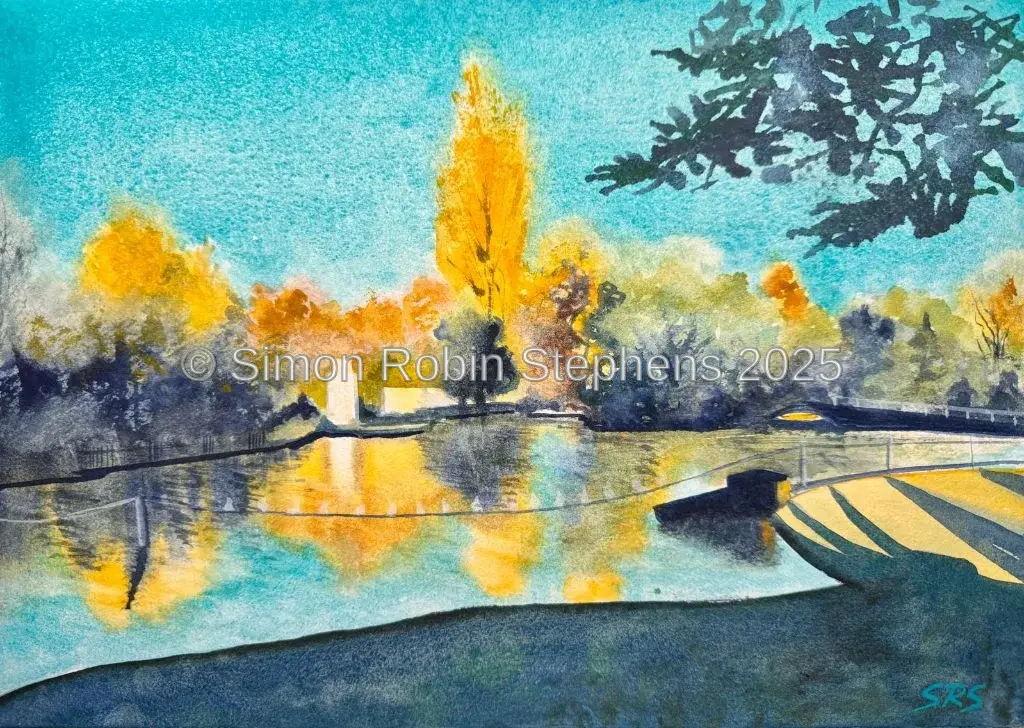
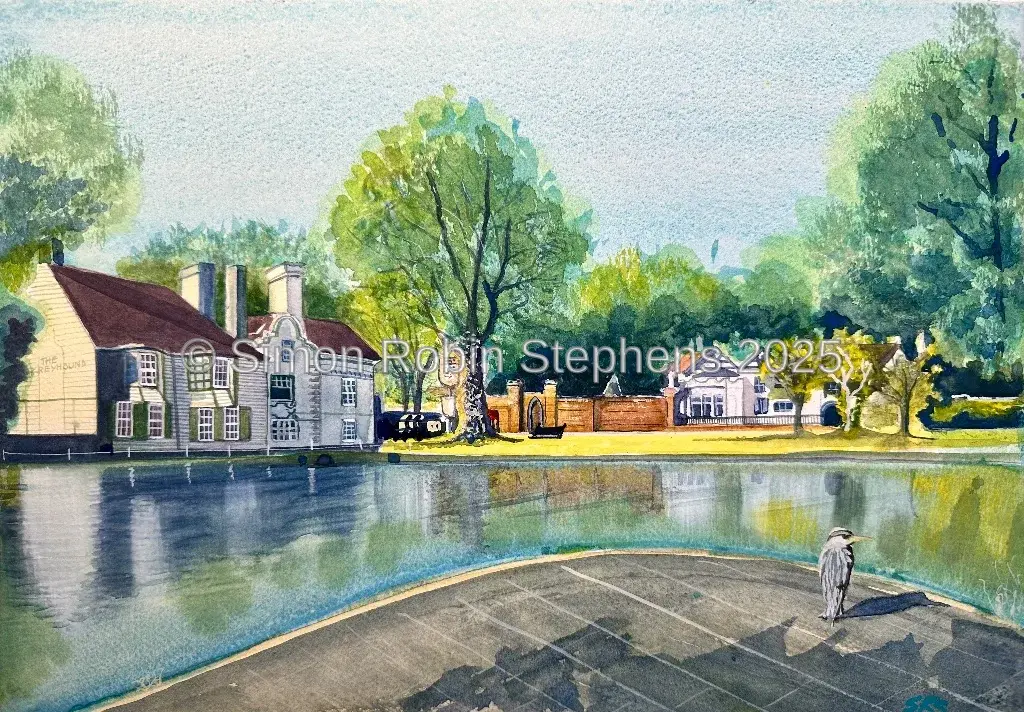
<p><strong>Example subjects:</strong> <em>Carshalton Ponds at dawn, quiet coastal scenes, misty morning landscapes</em></p>
<h3>Depression & Mood Disorders</h3>
<p><strong>Priority: Hope, light, gentle warmth</strong></p>
<p><strong>Best choices:</strong></p>
<ul> <li>Paintings with subtle warm tones</li> <li>Sunrise/sunset light (symbolizes change)</li> <li>Spring or early summer imagery</li> <li>Enough colour to feel alive, not too muted</li> </ul>
<p><strong>Example subjects:</strong> <em>Golden hour scenes, cherry blossoms, gentle autumn light</em></p>
<h3>ADHD & Neurodivergent Clients</h3>
<p><strong>Priority: Grounding without overstimulation</strong></p>
<p><strong>Best choices:</strong></p>
<ul> <li>Clear, uncluttered compositions</li> <li>Enough visual interest without chaos</li> <li>Nature scenes (inherently grounding)</li> <li>Avoid overly busy patterns or competing focal points</li> </ul>
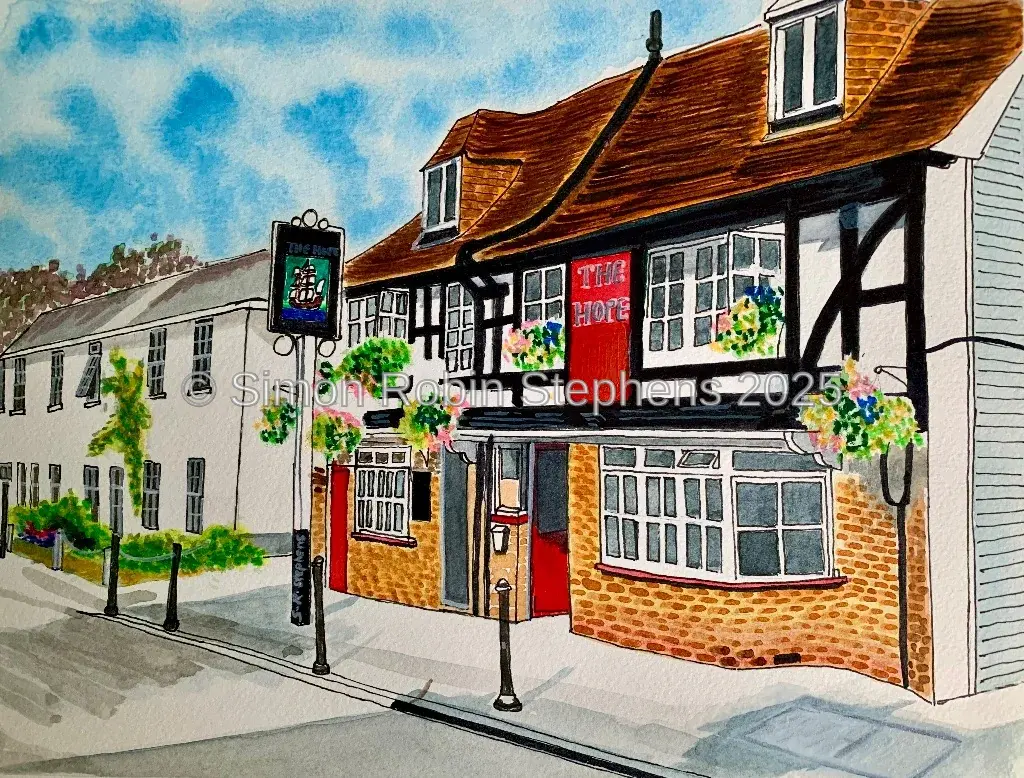
<p><strong>Example subjects:</strong> <em>Single trees, simple architectural scenes, quiet park views</em></p>
<p><em>Personal note:</em> As someone with ADHD, I find that watercolour paintings work better than photographs in therapy rooms—the soft edges don't demand the same hyperfocus.</p>
<h3>Mindfulness-Based Therapy</h3>
<p><strong>Priority: Contemplative, present-moment focus</strong></p>
<p><strong>Best choices:</strong></p>
<ul> <li>Abstract or semi-abstract works</li> <li>Water, reflections, light effects</li> <li>Seasonal change (impermanence, acceptance)</li> <li>Gentle movement suggested (leaves, ripples)</li> </ul>
<p><strong>Example subjects:</strong> <em>Water reflections, dappled light through trees, atmospheric landscapes</em></p>
<h2>Practical Considerations</h2>
<h3>Size and Placement</h3>
<p><strong>Where your eye naturally goes matters</strong></p>
<ul> <li><strong>Behind therapist:</strong> Smaller pieces (12"x16" or less) — shouldn't distract from therapy work</li> <li><strong>Opposite client seating:</strong> Medium pieces (16"x20" to 20"x24") — available as grounding focal point when needed</li> <li><strong>Waiting area:</strong> Larger pieces acceptable (up to 24"x36") — more time for contemplation</li> <li><strong>Multiple small pieces:</strong> Can feel busy — use sparingly, ensure visual cohesion</li> </ul>
<h3>Framing</h3>
<p><strong>Simple, neutral frames work best</strong></p>
<ul> <li>White, natural wood, or simple black frames</li> <li>Mats create breathing room (especially important in smaller rooms)</li> <li>Avoid ornate or distracting frames</li> <li>Consider non-reflective glass (reduces glare, less distracting)</li> </ul>
<h3>Professional Appearance</h3>
<p><strong>Quality matters for your practice's image</strong></p>
<ul> <li>Original artworks or high-quality giclee prints</li> <li>Professional mounting and framing</li> <li>Cohesive colour palette across multiple pieces</li> <li>Avoid commercial posters or mass-market prints</li> </ul>
<p>Your space communicates your values. Quality art suggests you value quality care.</p>
<h2>What Therapists Tell Me</h2>
<p>Over the years, therapists who've chosen my work have shared these insights:</p>
<h3>"Clients often mention the artwork"</h3>
<p>Particularly anxious clients will comment on paintings as a way to ground themselves or transition into session. The art becomes a safe conversation starter.</p>
<h3>"It helps with emotional regulation"</h3>
<p>Some therapists explicitly use artwork as <strong>grounding tools</strong>—asking clients to focus on the painting, describe what they see, or notice how looking at it affects their breathing.</p>
<h3>"It reinforces our therapeutic approach"</h3>
<p>Nature-based imagery supports eco-therapy approaches. Mindful, present-moment scenes reinforce mindfulness-based practices. The right art becomes part of the treatment philosophy.</p>
<h3>"It reduces cancellations"</h3>
<p>One therapist told me that creating a more welcoming, less clinical space (including thoughtful artwork) seemed to reduce client anxiety about appointments and lower cancellation rates.</p>
<h2>Questions to Ask Before Choosing Art</h2>
<ol> <li><strong>Who will be looking at this artwork?</strong> (Age ranges, presenting issues, sensitivities)</li> <li><strong>How does it make me feel?</strong> (If it stresses you, it'll likely stress clients)</li> <li><strong>Does it match my therapeutic approach?</strong> (Art should support, not contradict, your work)</li> <li><strong>Is it restful to look at?</strong> (Can you imagine looking at this during a difficult session?)</li> <li><strong>Will it still feel appropriate in 5 years?</strong> (Avoid trendy pieces that date quickly)</li> </ol>
<h2>Common Mistakes to Avoid</h2>
<h3>1. Overly Abstract Art</h3>
<p>While some abstract work is perfect, very challenging or conceptual pieces can trigger anxiety. Clients may feel pressured to "understand" the art.</p>
<h3>2. Personal Photos or Family Pictures</h3>
<p>These blur professional boundaries and can make clients feel they're intruding on your personal space.</p>
<h3>3. Motivational Posters or Quotes</h3>
<p>These can feel dismissive ("Just think positive!") and lack the subtlety effective therapy requires.</p>
<h3>4. Too Many Pieces</h3>
<p>A crowded gallery wall adds visual noise. Two or three well-chosen pieces beat a dozen mediocre ones.</p>
<h3>5. Artwork That's Too "Sad"</h3>
<p>Even if beautiful, very melancholic imagery isn't helpful in therapy spaces. Aim for gentle, not sorrowful.</p>
<h2>Budget Considerations</h2>
<p><strong>Original Art vs. Prints</strong></p>
<p>Both can work. Key is quality and appropriateness, not whether it's original. However:</p>
<ul> <li><strong>Originals:</strong> Unique, support artists directly, investment pieces</li> <li><strong>High-quality prints:</strong> More affordable, can buy sets with cohesive themes</li> <li><strong>Avoid:</strong> Cheap commercial prints, digital downloads printed at home</li> </ul>
<p><strong>Budget Suggestions:</strong></p>
<ul> <li><strong>New practice:</strong> Start with 1-2 key pieces in main therapy room</li> <li><strong>Growing practice:</strong> Add waiting area art, consider print collections</li> <li><strong>Established practice:</strong> Invest in original artworks, rotate seasonally</li> </ul>
<h2>Working with Local Artists</h2>
<p><strong>Benefits of choosing local art:</strong></p>
<ul> <li>Support your community</li> <li>Meet the artist, understand their process</li> <li>Commission custom pieces for your specific space</li> <li>Often more affordable than gallery prices</li> <li>Provides conversation piece ("This is Carshalton Ponds, where I painted this morning...")</li> </ul>
<p>As a <strong>Carshalton-based artist</strong> and <strong>Vice Chairman of Carshalton Artists</strong>, I regularly work with local therapists to create appropriate artwork for their spaces.</p>
<h2>Rotating Artwork</h2>
<p><strong>Consider changing art seasonally</strong></p>
<p>Some therapists find that <strong>rotating artwork with seasons</strong> provides subtle environmental cues about time passing and change:</p>
<ul> <li><strong>Spring:</strong> Renewal, growth, fresh starts</li> <li><strong>Summer:</strong> Warmth, openness, vibrant life</li> <li><strong>Autumn:</strong> Transition, letting go, reflection</li> <li><strong>Winter:</strong> Quiet, introspection, rest</li> </ul>
<p>This doesn't require large investment—two seasonal prints can be alternated throughout the year.</p>
<h2>My Therapy Room Collection</h2>
<p>I've created a specific body of work with therapeutic spaces in mind—paintings designed to be restful, grounding, and supportive of healing work. These include:</p>
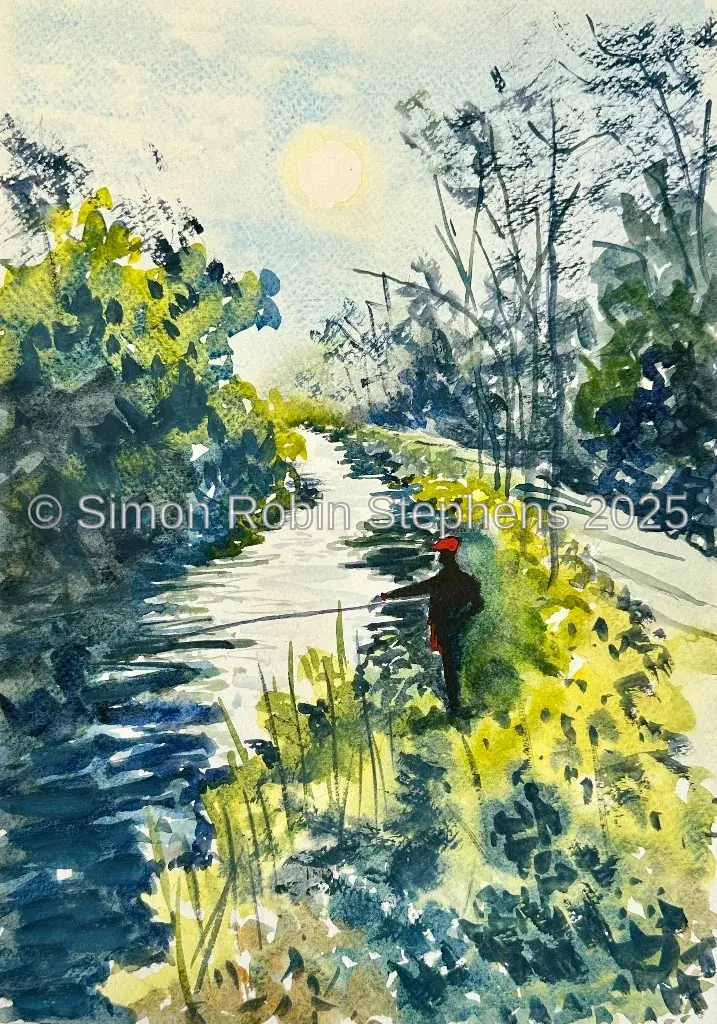
<ul> <li><strong>Water reflections</strong> — Carshalton Ponds, calm scenes</li> <li><strong>Gentle landscapes</strong> — South London parks, Surrey countryside</li> <li><strong>Seasonal change</strong> — Cherry blossoms, autumn light, winter stillness</li> <li><strong>Sanctuaries</strong> — Quiet corners, peaceful moments</li> </ul>
<p>View these in my <a href="/gallery/collections/sanctuaries/" title="Sanctuaries Collection">Sanctuaries Collection</a> or <a href="/gallery/collections/south-london/" title="South London Collection">South London Collection</a>.</p>
<h2>For Art Therapists Specifically</h2>
<p>If you're an <strong>art therapist</strong>, your considerations are slightly different:</p>
<ul> <li><strong>Your artwork shouldn't overshadow client artwork</strong> — keep it subtle</li> <li><strong>Consider blank wall space</strong> — room for displaying client work</li> <li><strong>Process-focused pieces</strong> — watercolour shows visible process, can normalize "imperfection"</li> <li><strong>Inspiration without intimidation</strong> — beautiful but not so perfect clients feel inadequate</li> </ul>
<h2>Final Thoughts: Art as Co-Therapist</h2>
<p>The right artwork in a therapy room isn't passive decoration. It's an active element of the therapeutic environment—offering:</p>
<ul> <li>A grounding presence when emotions run high</li> <li>A visual reminder that beauty exists alongside pain</li> <li>A focal point for breathing and calming techniques</li> <li>A subtle message: this is a safe space for healing</li> </ul>
<p>As an artist whose work hangs in therapy rooms across <strong>South London</strong> and <strong>Surrey</strong>, I'm honoured each time a therapist chooses one of my paintings. I know that painting might witness hundreds of moments of courage, vulnerability, and healing.</p>
<p>That's the real purpose of <strong>therapeutic art</strong>—not to be admired, but to quietly support the important work happening in its presence.</p>
<h2>Get in Touch</h2>
<p>If you're a therapist, counsellor, or healthcare professional looking for appropriate artwork for your practice, I'd be happy to discuss your specific needs. I understand the unique requirements of therapeutic spaces and can recommend pieces or discuss commissions.</p>
<p><a href="/#contact" title="Contact Simon Robin Stephens">Contact me</a> to start a conversation about art for your therapy room.</p>
<section class="faq mt-12 mb-8" itemscope itemtype="https://schema.org/FAQPage"> <h2 class="text-2xl font-heading text-gray-800 mb-6">Frequently Asked Questions</h2>
<div class="mb-6" itemscope itemprop="mainEntity" itemtype="https://schema.org/Question"> <h3 class="text-lg font-semibold text-gray-800 mb-2" itemprop="name">What size artwork is best for a standard therapy room?</h3> <div itemscope itemprop="acceptedAnswer" itemtype="https://schema.org/Answer"> <p itemprop="text" class="text-gray-700">For typical therapy rooms (3x4m), A3 to A2 size works beautifully (11.7x16.5" to 16.5x23.4"). This provides visual presence without overwhelming. For waiting areas, consider A2 or larger. For intimate counselling rooms, A4 to A3 is appropriate. Measure your wall space—artwork should occupy 60-75% of available width.</p> </div> </div>
<div class="mb-6" itemscope itemprop="mainEntity" itemtype="https://schema.org/Question"> <h3 class="text-lg font-semibold text-gray-800 mb-2" itemprop="name">Do you offer bulk discounts for multiple therapy rooms?</h3> <div itemscope itemprop="acceptedAnswer" itemtype="https://schema.org/Answer"> <p itemprop="text" class="text-gray-700">Yes! I offer professional discounts for therapists, counselling organizations, and healthcare facilities purchasing multiple pieces. Prints are especially cost-effective for multiple rooms while maintaining consistent therapeutic atmosphere. Contact me to discuss your needs and receive a customized quote.</p> </div> </div>
<div class="mb-6" itemscope itemprop="mainEntity" itemtype="https://schema.org/Question"> <h3 class="text-lg font-semibold text-gray-800 mb-2" itemprop="name">Can I commission artwork specific to my therapy practice?</h3> <div itemscope itemprop="acceptedAnswer" itemtype="https://schema.org/Answer"> <p itemprop="text" class="text-gray-700">Absolutely! Many therapists commission pieces that reflect their therapeutic approach or client needs. I can create watercolours with specific color palettes (calming blues, grounding earth tones), themes (nature, seasons, local landmarks), or compositions suitable for specific client populations. Commissions take 3-4 weeks.</p> </div> </div>
<div class="mb-6" itemscope itemprop="mainEntity" itemtype="https://schema.org/Question"> <h3 class="text-lg font-semibold text-gray-800 mb-2" itemprop="name">What if a client has a negative reaction to the artwork?</h3> <div itemscope itemprop="acceptedAnswer" itemtype="https://schema.org/Answer"> <p itemprop="text" class="text-gray-700">This is rare with neutral landscape watercolours, but individual responses vary. I offer a 30-day exchange policy for therapy professionals—if artwork doesn't suit your space or clients, we'll find something that does. Many therapists rotate pieces seasonally or between rooms to maintain freshness.</p> </div> </div>
<div class="mb-6" itemscope itemprop="mainEntity" itemtype="https://schema.org/Question"> <h3 class="text-lg font-semibold text-gray-800 mb-2" itemprop="name">Are your watercolours suitable for trauma-informed therapy spaces?</h3> <div itemscope itemprop="acceptedAnswer" itemtype="https://schema.org/Answer"> <p itemprop="text" class="text-gray-700">Yes. My watercolours follow trauma-informed principles: no jarring imagery, no human figures (which can be triggering), soft colour palettes, open compositions suggesting safety and possibility, and familiar natural scenes. Many trauma therapists specifically choose watercolour art for its inherent gentleness and non-confrontational nature.</p> </div> </div>
<div class="mb-6" itemscope itemprop="mainEntity" itemtype="https://schema.org/Question"> <h3 class="text-lg font-semibold text-gray-800 mb-2" itemprop="name">How do I care for watercolour artwork in a therapy setting?</h3> <div itemscope itemprop="acceptedAnswer" itemtype="https://schema.org/Answer"> <p itemprop="text" class="text-gray-700">Frame under UV-protective glass to prevent fading. Avoid direct sunlight—position on walls perpendicular to windows. Dust frames gently with soft cloth. No special humidity control needed unless your therapy room has unusual conditions. All originals include care instructions and certificates. Prints have similar care requirements.</p> </div> </div> </section>
<script type="application/ld+json"> { "@context": "https://schema.org", "@type": "FAQPage", "mainEntity": [ {"@type": "Question", "name": "What size artwork is best for a standard therapy room?", "acceptedAnswer": {"@type": "Answer", "text": "For typical therapy rooms (3x4m), A3 to A2 size works beautifully (11.7x16.5 to 16.5x23.4). This provides visual presence without overwhelming. For waiting areas, consider A2 or larger. For intimate counselling rooms, A4 to A3 is appropriate. Measure your wall space—artwork should occupy 60-75% of available width."}}, {"@type": "Question", "name": "Do you offer bulk discounts for multiple therapy rooms?", "acceptedAnswer": {"@type": "Answer", "text": "Yes! I offer professional discounts for therapists, counselling organizations, and healthcare facilities purchasing multiple pieces. Prints are especially cost-effective for multiple rooms while maintaining consistent therapeutic atmosphere. Contact me to discuss your needs and receive a customized quote."}}, {"@type": "Question", "name": "Can I commission artwork specific to my therapy practice?", "acceptedAnswer": {"@type": "Answer", "text": "Absolutely! Many therapists commission pieces that reflect their therapeutic approach or client needs. I can create watercolours with specific color palettes (calming blues, grounding earth tones), themes (nature, seasons, local landmarks), or compositions suitable for specific client populations. Commissions take 3-4 weeks."}}, {"@type": "Question", "name": "What if a client has a negative reaction to the artwork?", "acceptedAnswer": {"@type": "Answer", "text": "This is rare with neutral landscape watercolours, but individual responses vary. I offer a 30-day exchange policy for therapy professionals—if artwork doesn't suit your space or clients, we'll find something that does. Many therapists rotate pieces seasonally or between rooms to maintain freshness."}}, {"@type": "Question", "name": "Are your watercolours suitable for trauma-informed therapy spaces?", "acceptedAnswer": {"@type": "Answer", "text": "Yes. My watercolours follow trauma-informed principles: no jarring imagery, no human figures (which can be triggering), soft colour palettes, open compositions suggesting safety and possibility, and familiar natural scenes. Many trauma therapists specifically choose watercolour art for its inherent gentleness and non-confrontational nature."}}, {"@type": "Question", "name": "How do I care for watercolour artwork in a therapy setting?", "acceptedAnswer": {"@type": "Answer", "text": "Frame under UV-protective glass to prevent fading. Avoid direct sunlight—position on walls perpendicular to windows. Dust frames gently with soft cloth. No special humidity control needed unless your therapy room has unusual conditions. All originals include care instructions and certificates. Prints have similar care requirements."}} ] } </script>
<p class="text-sm text-gray-600 mt-8"><em>— Simon Robin Stephens, watercolour artist creating mindful artwork for therapeutic spaces in Carshalton and South London</em></p>