<p>Ask any experienced watercolourist what the most important thing a beginner can do, and most will say the same thing: <strong>buy better paper</strong>. Not more expensive brushes or a wider range of pigments — better paper. It is the foundation everything else rests on, and it makes more difference than almost any other variable.</p>
<p>I've painted on hundreds of different papers over the years, from student-grade cartridge to £2-a-sheet handmade sheets from India and Japan. Here is my honest guide to what works, what to avoid, and what I actually use.</p>
<h2>The three things that matter most in watercolour paper</h2> <h3>1. Weight (gsm)</h3> <p>Paper weight is measured in grams per square metre. For watercolour, you want <strong>300gsm or heavier</strong>. Lighter paper (anything below 200gsm) will buckle and warp as soon as water hits it, creating dips and pools that are almost impossible to control. 300gsm holds its shape much better, and if you stretch it first (more on that below), it stays completely flat.</p>
<h3>2. Surface texture</h3> <p>Watercolour paper comes in three main surfaces:</p> <ul> <li><strong>Rough</strong> — heavily textured, great for loose, expressive landscapes. Water and pigment settle into the surface in unpredictable, beautiful ways.</li> <li><strong>Cold Pressed (CP) / NOT</strong> — medium texture, the most versatile and what I use most of the time. Good for both detail and loose washes.</li> <li><strong>Hot Pressed (HP)</strong> — very smooth, ideal for fine detail and illustration. Less forgiving but stunning for tight botanical or architectural work.</li> </ul> <p>If you're not sure where to start, <strong>Cold Pressed at 300gsm</strong> is the answer to almost every question.</p>
<h3>3. Cotton vs wood pulp</h3> <p>Better papers are made from cotton (or a cotton/linen mix). Cotton paper is more absorbent, more forgiving when you lift or rework areas, and ages better — it won't yellow over decades the way wood-pulp paper can. If a paper doesn't say "100% cotton" on the label, it's probably wood pulp.</p>
<h2>My recommendations by budget</h2>
<h3>Best beginner paper: Fabriano Artistico (£15–20 for an A3 block)</h3> <p>Italian-made, 100% cotton, available in rough and cold pressed, lovely to work on. This is what I'd recommend to any beginner who wants to do things properly without going bankrupt.</p>
<h3>Best student paper: Bockingford 300gsm</h3> <p>Not 100% cotton, but still a very good paper for the price. Forgiving, holds water well, and available in most art shops. A great option if you're painting regularly but not yet ready to commit to cotton paper costs.</p>
<h3>Best overall: Arches Aquarelle (£20–30 for a block)</h3> <p>The gold standard. Made in the Vosges mountains in France using the same methods for over 500 years, Arches is what most professional watercolourists use. It's forgiving, takes multiple glazes beautifully, and lifts cleanly when you want to remove pigment. Once you paint on Arches, it's very hard to go back.</p>
<h3>Best luxury/special projects: Saunders Waterford High White</h3> <p>Made in the UK by St Cuthberts Mill in Somerset, this is a beautifully bright, clean paper that produces luminous results. The "High White" version is particularly stunning for landscapes where you want the light to really sing.</p>
<h2>Should I stretch my paper?</h2>
<p>Stretching means pre-wetting the paper and taping it to a board so that it dries flat and stays flat during painting. It's worth doing for anything below 300gsm. Above 300gsm, many painters (myself included) don't bother — the paper is heavy enough to stay reasonably flat on its own, and blocks (spiral-bound pads where the paper is glued on all four sides) handle the warp issue without any extra work.</p>
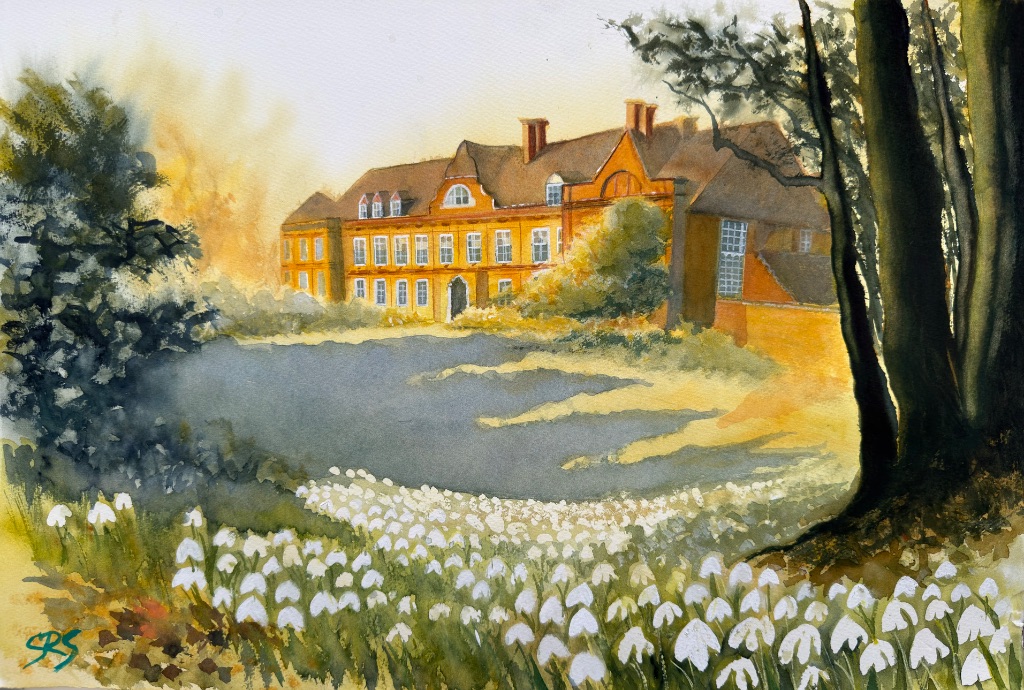
<h2>What I use for my watercolour landscapes</h2> <p>Most of my paintings — including the <a href="/gallery">originals you can browse in my gallery</a> — are painted on Arches Aquarelle 300gsm Cold Pressed, either from a block or as loose sheets stretched on a board. For smaller studies and experiments, I use Fabriano Artistico. I've used both for the pieces that are available as <a href="/commission">commissions</a>.</p> <p>The right paper doesn't make the painting for you — but the wrong paper will make it much harder. It's the one material investment I'd always encourage.</p>