<p>I was diagnosed with ADHD in 2024. I was 46 years old.</p>
<p>The diagnosis explained a great deal — the scattered attention, the relentless mental noise, the way a single interesting idea could unravel an entire afternoon. But it also raised a question I had not expected: <em>why had watercolour painting been calming me for four years before anyone told me there was a name for what I was managing?</em></p>
<p>The answer, I think, is in the nature of the medium itself.</p>
<h2>Why Watercolour Works for an ADHD Brain</h2>
<p>Watercolour is not a forgiving medium in the conventional sense. It bleeds. It blooms. It dries differently than you expected. It makes decisions you did not plan for.</p>
<p>For most people learning to paint, that unpredictability is frustrating. For an ADHD brain, it is the exact right amount of stimulation to hold attention without overwhelming it.</p>
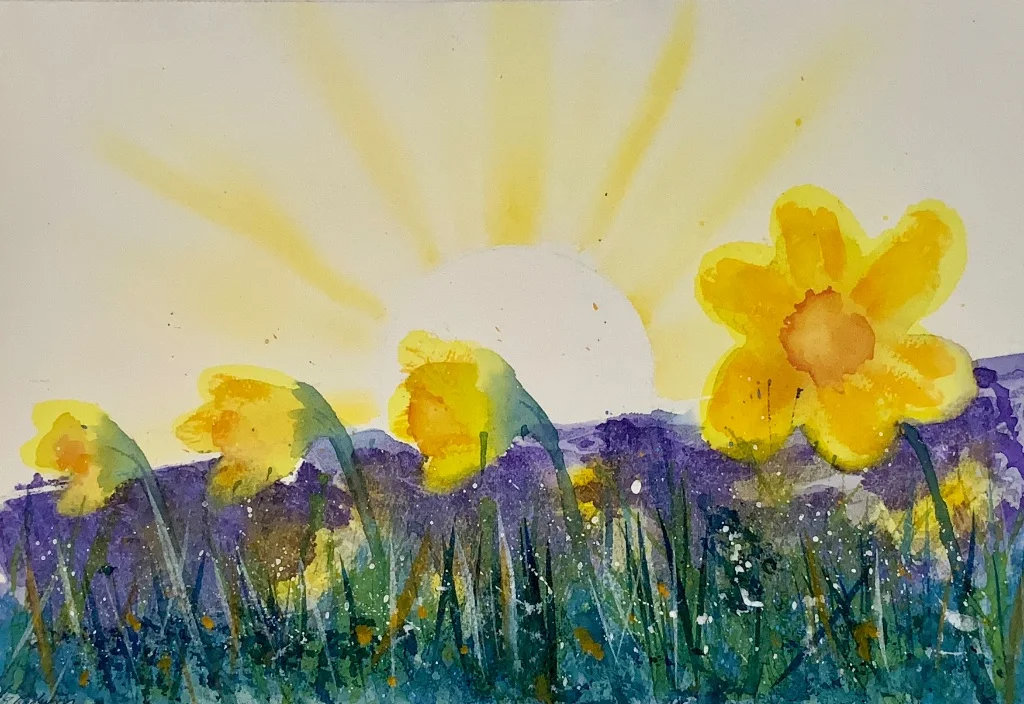
<p>Here is what I mean. When I sit down with a brush loaded with cadmium yellow and drag it wet across damp paper, I have approximately three seconds to decide what happens next. The paint is moving. The water is spreading. The window for influence is closing fast.</p>
<p>My brain, which normally runs ten conversations simultaneously, narrows to a single point: <em>this wash, this moment, this decision.</em></p>
<p>That is not focus I have trained. That is focus the medium demands. And for someone whose brain rarely produces it voluntarily, that demand is a gift.</p>
<h2>The Science Behind Art Therapy and ADHD</h2>
<p>I am not a therapist and this is not clinical advice. But the research landscape around art therapy and ADHD is genuinely encouraging, and it tracks precisely with my lived experience.</p>
<p>Studies suggest that creative activities activate the brain's default mode network differently than task-based work — they allow a kind of purposeful wandering that the ADHD brain finds easier to sustain. The tactile, sensory quality of painting — the feel of the brush, the smell of the pigment, the sound of water on paper — engages multiple sensory channels simultaneously, which appears to assist with grounding and attention regulation.</p>
<p>There is also something in the immediate feedback loop. Watercolour tells you what is working <em>instantly</em>. The brush mark you just made is the brush mark in front of you. There is no lag, no processing delay, no waiting for a result. For a brain wired to struggle with delayed gratification, that immediacy is enormously reinforcing.</p>
<h2>What a Session Actually Looks Like</h2>
<p>People sometimes imagine therapeutic painting as quiet, contemplative, almost meditative. My painting sessions are not like that — at least not at the start.</p>
<p>I begin scattered. There is always a period of sitting with blank paper while my brain cycles through unrelated thoughts. I have learned to treat this as part of the process rather than evidence that I cannot concentrate. The brain is warming up. The thoughts need somewhere to go before the focus can arrive.</p>
<p>I keep a small sketchbook for this phase — I jot down whatever is in my head, not to capture ideas, but to empty them out. Then I pick up the brush.</p>
<p>Twenty minutes into a painting, something shifts. The thoughts that were clamouring have found a different channel. The painting is receiving them. The anxiety that normally sits behind my sternum has moved somewhere else. My breathing slows without me deciding to slow it.</p>
<p>This is what I mean when I say watercolour is therapeutic. Not that it makes life easier. Not that it solves anything. But that for the duration of a painting session, the volume on everything else turns down — and that quiet is genuinely restorative.</p>
<h2>Colour as Emotional Language</h2>
<p>One of the unexpected consequences of painting regularly is that I have developed a relationship with colour that I find difficult to articulate in any other way.</p>
<p>Certain pigments reliably produce certain states. French ultramarine — deep, granulating, slightly cool — is how I paint when I am trying to process something difficult. Yellow ochre is comfort. Raw sienna is warmth and forward movement. Quinacridone magenta is a colour I use rarely and only when something feels properly alive.</p>
<p>These are not aesthetic choices in the conventional sense. They are something closer to an emotional vocabulary. The canvas is receiving what language cannot always carry.</p>
<p>I think this is part of why art therapy works for people who find verbal expression difficult. The image does not require you to name what you are feeling. It only requires you to make a mark that corresponds to it.</p>
<h2>For Other ADHD Adults Considering Painting</h2>
<p>If you have ADHD and you are curious about painting as a form of self-regulation, here is what I would suggest:</p>
<p><strong>Start with watercolour, not oils or acrylics.</strong> The immediacy of watercolour — the fact that you cannot overwork it indefinitely, that it requires decision and movement — is better suited to an ADHD brain than slower, more forgiving media.</p>
<p><strong>Accept the first fifteen minutes.</strong> The scattered, distracted opening to a session is normal. It is not failure. Do not put the brush down. Make something — anything — while the brain settles.</p>
<p><strong>Remove the outcome pressure.</strong> The therapeutic value of painting is in the process, not the product. Some of my most productive sessions have produced paintings I would not hang anywhere. That is not the point.</p>
<p><strong>Try a workshop before buying materials.</strong> A structured session with guidance removes the decision paralysis of starting alone. My workshops in Carshalton are designed specifically for people who have never painted before — all materials provided, small groups, no pressure to produce anything beyond your own experience of the morning.</p>
<h2>The Work Continues</h2>
<p>I paint almost every day now. Not always for long — sometimes fifteen minutes is all the window I have. But the practice has become non-negotiable in the same way that medication is non-negotiable: it is part of how I stay regulated.</p>
<p>The paintings that come out of this practice are, I think, better for being made this way. There is something in work made from genuine need that is different from work made for display. The viewer does not always know what it is. But they feel it.</p>
<p>If any of this resonates — if you are living with ADHD and looking for something that might help you find some of that quiet — I hope you will consider painting. Not because it will cure anything. But because it might, in the middle of a hard day, give you three minutes of real presence.</p>
<p>That is worth a great deal.</p>
<p><em>Simon</em></p>
<p><em>Workshops available at <a href="/workshops">simonrobinstephensart.com/workshops</a>. Commissions open at <a href="/commission">simonrobinstephensart.com/commission</a>.</em></p>