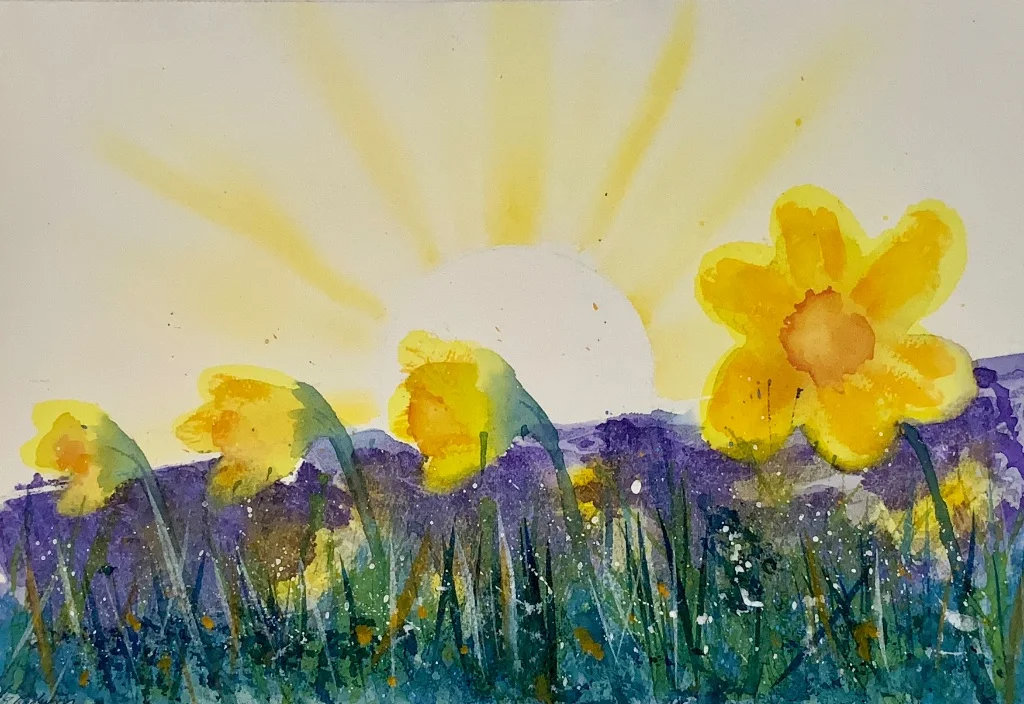
<article><h1>Mindfulness and Creativity: How Painting Changed My Mental Health</h1><p>I did not start painting to improve my mental health. I started because I needed somewhere to put the noise. Living with ADHD means my mind is constantly moving — skipping between thoughts, returning to anxieties, chasing distractions. Painting became the one thing that could hold my attention for long enough that the rest of the world went quiet.</p><h2>What Mindfulness Actually Means</h2><p>Mindfulness is simply paying attention — to what is happening right now, without judgement. When I am working on a watercolour — mixing a particular grey for a winter sky, watching pigment spread in water, deciding whether a shadow needs one more wash — I am entirely in the present. There is no room for the future. There is no pull from the past. There is only this mark, on this paper, in this moment. This is not a metaphor. It is a neurological reality. Flow states activate the prefrontal cortex in ways that reduce anxiety and interrupt rumination.</p><h2>The Evidence for Art and Wellbeing</h2><p>Research from Drexel University found that just 45 minutes of creative activity significantly reduced cortisol levels in participants — regardless of their prior experience or skill level. You do not need to be good at painting to benefit from it. The act itself is the intervention. Other studies show that regular creative practice is associated with reduced symptoms of depression and anxiety, improved emotional regulation, and stronger sense of purpose.</p><h2>What Watercolour Does Specifically</h2><p>Watercolour is particularly well-suited to mindfulness practice. It is immediate and unforgiving — you cannot easily undo a watercolour mark, which forces committed attention. It rewards slow preparation — before I make a mark, I spend a long time looking. It creates flow states reliably — the combination of sufficient challenge and clear feedback produces the neurological conditions for flow with remarkable consistency.</p><h2>My Own Practice</h2><p>Since my ADHD diagnosis in 2024, I have come to understand my painting practice not as a hobby but as a form of self-regulation. My Sanctuaries of the Mind collection emerged directly from this understanding — each painting is an attempt to create, in paint, the quality of quiet that I find in specific landscapes. Approximately half of my paintings end up in therapy practices, counselling rooms, and wellness spaces.</p><h2>Starting Your Own Practice</h2><p>If you are interested in using creativity for mental health, my advice is simple: start with watercolour, make small marks, and accept that the first paintings will be technically imperfect. The imperfection is not the problem — it is the practice. I offer beginner watercolour workshops in Carshalton that approach the medium through this therapeutic lens.</p></article>
Mindfulness and Creativity: How Painting Changed My Mental Health
5 min read
Last Updated:
A personal reflection on how watercolour painting became my daily mindfulness practice — and why creativity might be the most underrated tool for mental health and wellbeing.

Further Reading