<p>I want to be honest with you: I didn't start painting because I was passionate about art. I started because I was struggling.</p>
<p>In my late twenties, I went through a period of significant anxiety. The kind where your thoughts move too fast and your chest feels tight and the ordinary business of being alive starts to feel like something you're failing at. A lot of people will recognise this. Not all of them find watercolour as the answer — but for me, it was transformative, and I want to try to explain why.</p>
<h2>The particular quality of attention that painting demands</h2> <p>When you're painting, especially en plein air or from observation, you have to look. Actually look — not the glazed, half-present looking we do when we scroll through a phone screen, but real, focused, detailed looking. Where does the shadow fall? What colour is the water right now? How does the edge of that tree meet the sky?</p> <p>This quality of attention is incompatible with anxiety. You cannot look closely at the world and spiral at the same time. The brain doesn't work that way. What painting does — what it has done for me, consistently, over many years — is provide a genuinely absorbing task that pulls attention outward, into the world, away from the recursive loop of anxious thought.</p>
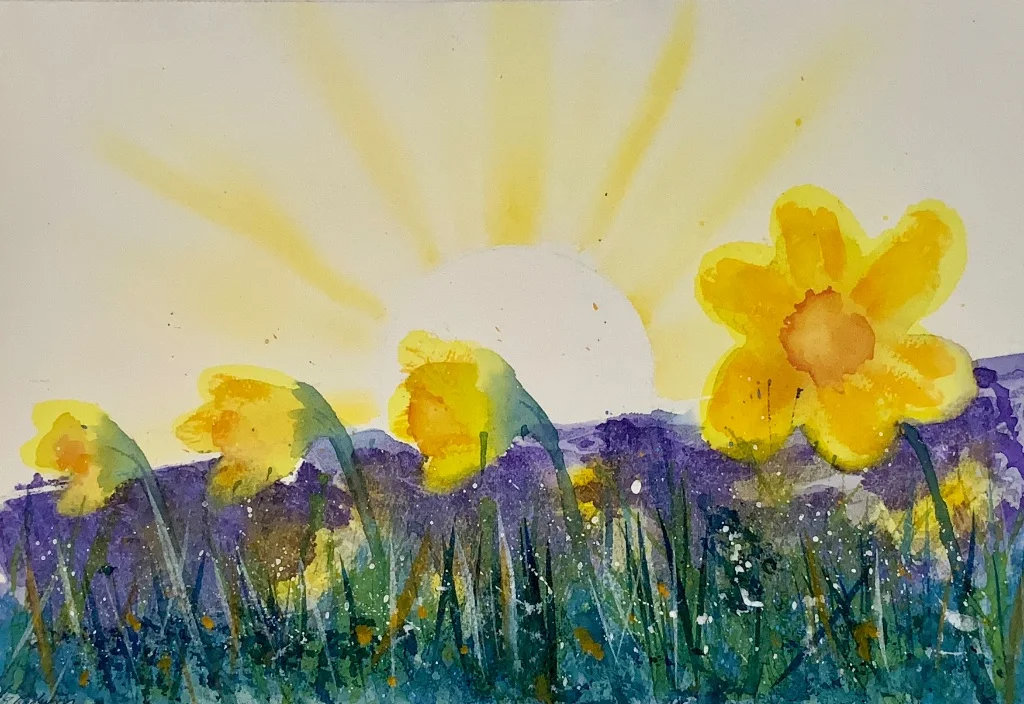
<h2>Why watercolour specifically</h2> <p>There is something about watercolour's particular demands that I find especially useful. You cannot control it completely. The water moves, the pigment blooms, happy accidents happen, things go wrong in ways that turn out to be right. You have to learn to hold plans loosely and respond to what actually happens rather than what you expected.</p> <p>For someone who tends toward the anxious end of the spectrum, this is a genuine lesson. Watercolour teaches you that imperfection can be beautiful, that you can respond and adapt rather than fight and control, that not everything needs to go the way you planned.</p>
<h2>The evidence behind art therapy</h2> <p>I should be clear: I'm not a therapist, and this is personal experience, not medical advice. But I'm not alone in finding art useful for mental health. The research on art therapy and creative activity is substantial. Studies consistently show that making art reduces cortisol (the stress hormone), improves mood, and increases feelings of engagement and purpose. Art therapy is now used in NHS settings, in hospices, in schools.</p> <p>The mechanism seems to be partly what I described above — focused attention — and partly the satisfaction of making something. When anxiety makes you feel helpless and out of control, the experience of making something that didn't exist before — even something imperfect, even just a small study of a tree or a pond — is quietly restorative.</p>
<h2>You don't have to be good at it</h2> <p>This is the thing I want to say most clearly: the therapeutic value of making art has almost nothing to do with being good at it. I've met many people who say "I can't draw" or "I have no artistic talent" and use this as a reason not to try. But the benefits come from the process of making, not the quality of the result.</p> <p>If you're curious about exploring watercolour for its own sake, I run occasional <a href="/workshops">workshops</a> that are specifically designed to be welcoming for people who don't think of themselves as "artists." The point is never the finished painting — it's the hour of calm, focused attention.</p>
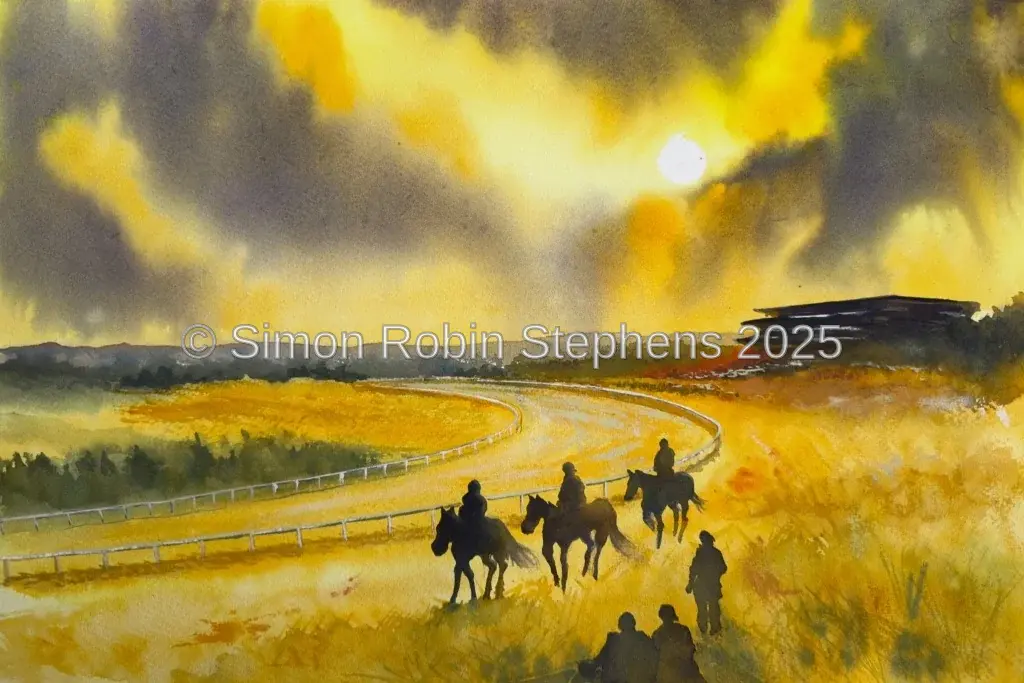
<h2>Where I paint when I need it most</h2> <p>When I'm struggling, I go outside. There's something about painting in a specific place — beside the Carshalton ponds, in Sutton's parks, in the quieter corners of South London — that grounds me in a way that studio work doesn't quite replicate. The physical being-in-the-world combines with the focused looking and the making, and something shifts.</p> <p>The landscapes I paint are often the landscapes I go to when I need to feel better. That's why so many of them have that particular quality — not just a record of a place, but a record of a feeling, an encounter, a moment of being genuinely present. If you'd like to live with one, <a href="/gallery">you can browse the collection here</a>.</p>