<p>I paint almost exclusively in blues and greens. Not because I lack imagination, and not by accident. The palette I work in is a deliberate choice — one that has shaped the way I think about colour, calm, and what painting is actually for.</p><h2>What We Mean When We Talk About Colour Therapy</h2><p>Colour therapy as a formal practice has a chequered history. Some of what is claimed for it is unsupported. But the underlying observation — that colours have measurable physiological effects — is solid. Research in environmental psychology consistently shows that blue and green environments reduce heart rate and lower cortisol levels. This is not a placebo effect. It persists across cultures and is present in children who have not yet been conditioned by cultural associations with colour.</p><p>The theory is evolutionary: blue and green are the colours of sky, water, and vegetation — of safety, open space, and resources. Red and orange are the colours of fire, blood, and ripe fruit — of urgency and action. Our nervous systems have not forgotten.</p><h2>What Happens When You Paint Blue and Green</h2><p>When I am working on a landscape — French Ultramarine bleeding into Sap Green at the treeline, Cerulean sky diffusing into cloud — something shifts in the studio. The physical act of watercolour painting is itself regulating: slow breath, sustained attention, light touch. Add blue and green to that and you compound the effect.</p><h2>The Specific Colours I Use</h2><p>Cool blues (Prussian Blue, Cerulean, Phthalo Blue) feel expansive and recede spatially. Warm blues (French Ultramarine, Indigo) feel grounding and solid. Yellow-greens (Sap Green) are full of energy. Blue-greens (Viridian) are cooler and more meditative.</p><h2>A Simple Exercise: The Two-Colour Landscape</h2><p>Try this: set out French Ultramarine and Burnt Sienna. Mix them in different ratios, lay a simple landscape. Now try the same exercise with French Ultramarine and Sap Green. Notice the difference — not just visually, but physically. Most people find the blue-green combination noticeably more restful to paint.</p><h2>Why I Avoid Bright Reds and Oranges in My Work</h2><p>I use red and orange occasionally — autumn leaves, warmth in reflected water — but as accents, not foundations. A landscape dominated by orange-red demands something from the viewer. My work is primarily for people who want their walls to function as a kind of calm.</p><h2>How to Use Colour More Intentionally in Your Own Practice</h2><p>Notice what your colour choices do to you. Are there colours you avoid because they feel uncomfortable? When you are anxious or overwhelmed, what palette helps most? There are no universal answers — the point is to start noticing rather than picking by habit.</p><p>I started painting partly as a response to my own mental health — ADHD, anxiety, nervous-system dysregulation. Watercolour, and specifically the palette I work in, became part of how I manage that. If any of this resonates, the best way to experience it is to try it. Join one of my <a href="/workshops">watercolour workshops in South London</a>, or start at home with the <a href="/blog?category=Behind+the+Scenes">technique articles</a>.</p>
Finding Calm in Colour: Why Blue and Green Work So Well in Watercolour Therapy
5 min read
Last Updated:
There is a reason watercolour landscapes feel calming. The colours are not accidental — blue and green have a measurable effect on the nervous system. Here is why I paint the palette I paint, and how you can use it too.

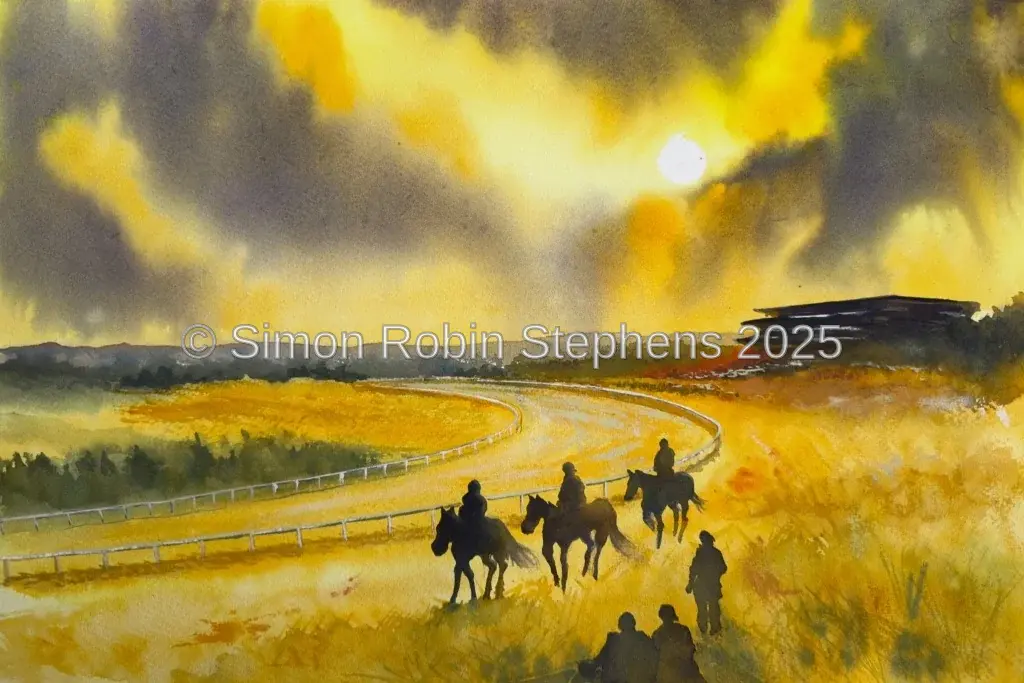
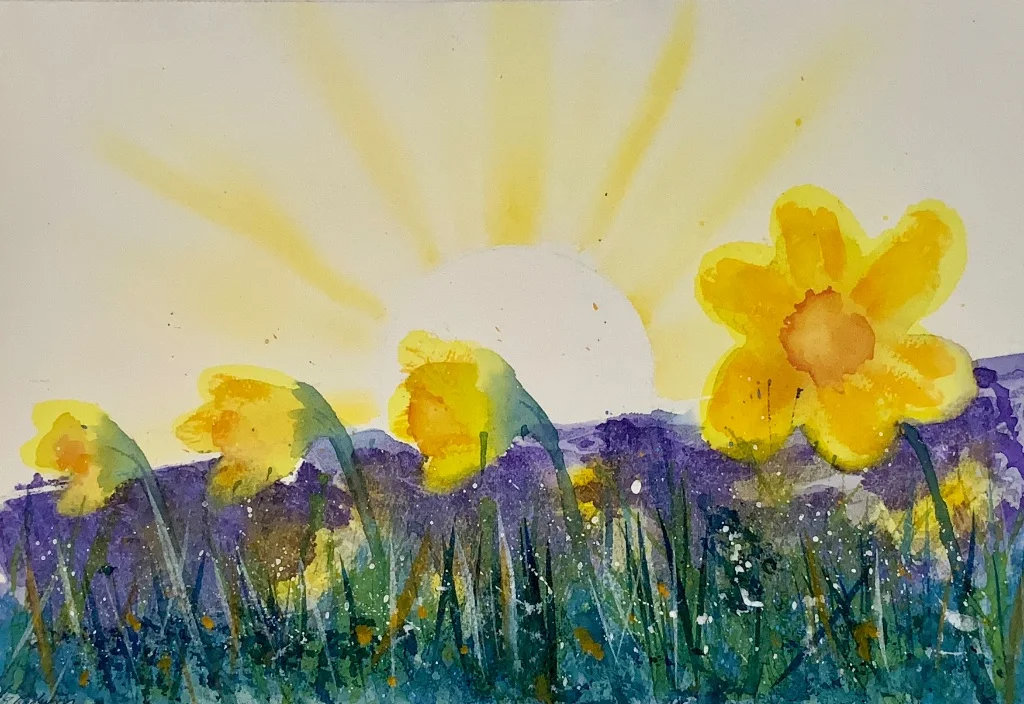
Further Reading