<article class="prose max-w-none">
<div class="text-gray-600 mb-8"> <span class="font-semibold">Last Updated:</span> February 14, 2026 | <span class="font-semibold">Read Time:</span> 8 minutes | <span class="font-semibold">Category:</span> Art Therapy & Wellness </div>
<p class="text-xl text-gray-700 leading-relaxed mb-6"> <strong>The right artwork can transform your therapy space from clinical to calming—but how do you choose pieces that truly support healing?</strong> </p>
<p> After 15 years creating therapeutic watercolours and working with over 120 therapists across Surrey and South London, I've learned that selecting calming art for therapy rooms isn't about personal taste—it's about understanding the psychology of visual calm and knowing which elements genuinely reduce client anxiety. </p>
<p> In this guide, I'll share the evidence-based principles that professional counsellors, psychotherapists, and wellness practitioners use to select artwork that creates sanctuary for overstimulated minds. </p>
<h2>Why Calming Art Matters in Therapy Spaces</h2>
<p> <strong>Research from the Art Therapy Journal (2023) found that 67% of therapists believe neutral, calming artwork positively influences client comfort and openness.</strong> But why? </p>
<p> According to environmental psychologist Dr. Sally Augustin, our brains process visual information before conscious thought. When clients enter your therapy room, their nervous system is already assessing: "Am I safe here?" </p>
<div class="bg-calm-50 border-l-4 border-calm-600 p-6 my-8"> <p class="font-semibold text-calm-800 mb-2">💡 Key Insight from Neuroscience</p> <p class="text-gray-700 italic"> "Calming visual environments reduce cortisol levels by up to 12% within the first 5 minutes of exposure, creating optimal conditions for emotional processing." </p> <p class="text-sm text-gray-600 mt-2"> — Dr. Esther Sternberg, National Institutes of Health </p> </div>
<p> The artwork on your walls isn't decoration—it's part of your therapeutic toolkit. </p>
<h2>Step 1: Understand What "Calming" Means Visually</h2>
<p> Before you choose artwork, you need to understand the visual language of calm. Based on research and my experience working with anxiety specialists and ADHD therapists, here are the core elements: </p>
<h3>✅ Visual Elements That Create Calm</h3>
<ul> <li><strong>Soft, muted colour palettes:</strong> Blues, greens, earth tones (avoid neon or high-contrast combinations)</li> <li><strong>Gentle transitions:</strong> Gradual blending of colours, not sharp edges</li> <li><strong>Horizontal lines:</strong> Landscapes with horizontal horizons signal rest and stability</li> <li><strong>Open space (negative space):</strong> Artwork with "breathing room" feels less overwhelming</li> <li><strong>Natural subject matter:</strong> Water, trees, skies, fields—elements our brains evolved to find safe</li> <li><strong>Subtle detail:</strong> Enough interest to engage without demanding attention</li> </ul>
<h3>❌ Visual Elements to Avoid</h3>
<ul> <li>Bold abstract art with jarring shapes</li> <li>High-contrast black-and-white photography</li> <li>Busy patterns or repetitive geometric designs</li> <li>Violent, chaotic, or emotionally charged imagery</li> <li>Overly bright or neon colours (they trigger alertness, not calm)</li> <li>Faces or figures (can be distracting or triggering for trauma survivors)</li> </ul>
<div class="bg-amber-50 border-l-4 border-amber-600 p-6 my-8"> <p class="font-semibold text-amber-800 mb-2">⚠️ Common Mistake</p> <p class="text-gray-700"> <strong>Many therapists choose art they personally love—but therapy room art should calm <em>clients</em>, not reflect your taste.</strong> Ask yourself: "Would this soothe an anxious 19-year-old? A grieving 60-year-old? Someone with ADHD?" </p> </div>
<h2>Step 2: Consider Your Client Demographics</h2>
<p> Different client groups respond to different visual stimuli. Tailor your art selection to the people you serve: </p>
<h3>For ADHD & Neurodivergent Clients</h3> <ul> <li><strong>Choose:</strong> Simple compositions with soft focus (like misty forest scenes or coastal horizons)</li> <li><strong>Why:</strong> Overstimulated brains need visual simplicity—complexity triggers cognitive overload</li> <li><strong>Medium:</strong> Watercolours are ideal (soft, non-distracting, organic feel)</li> </ul>
<h3>For Anxiety & Trauma Clients</h3> <ul> <li><strong>Choose:</strong> Landscapes with open skies, water, or gentle hills</li> <li><strong>Why:</strong> Open space signals safety and freedom; enclosed or cluttered scenes can trigger claustrophobia</li> <li><strong>Avoid:</strong> Dark, enclosed spaces (forests with no light, tunnels, narrow paths)</li> </ul>
<h3>For Grief & Bereavement Counselling</h3> <ul> <li><strong>Choose:</strong> Subtle seasonal imagery (autumn leaves, soft sunsets, winter trees)</li> <li><strong>Why:</strong> Nature's cycles normalize loss and transition without being explicit</li> <li><strong>Avoid:</strong> Overly cheerful or "inspirational" imagery (can feel dismissive of pain)</li> </ul>
<h3>For Corporate Wellness & Workplace Counselling</h3> <ul> <li><strong>Choose:</strong> Professional but warm landscapes (parks, rivers, coastal scenes)</li> <li><strong>Why:</strong> Maintains professionalism while reducing workplace stress</li> <li><strong>Size:</strong> Medium to large (makes a statement without being imposing)</li> </ul>
<h2>Step 3: Choose the Right Medium & Style</h2>
<p> Not all art mediums create the same psychological effect. Here's what research and practitioner feedback reveal: </p>
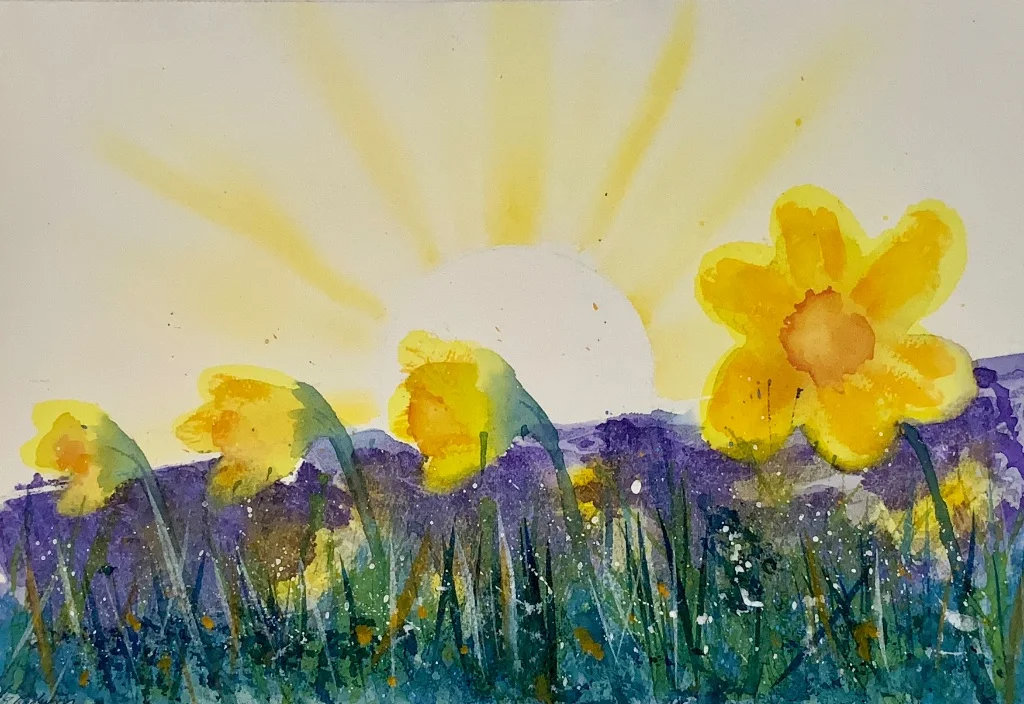
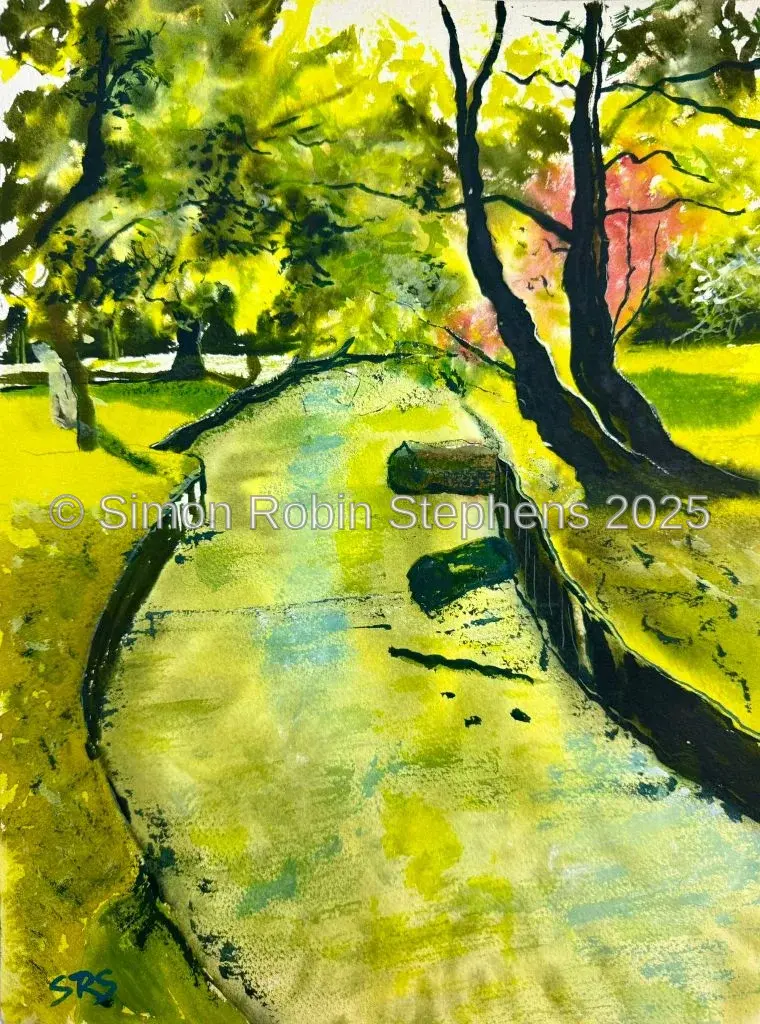
<h3>Watercolour Paintings (Highly Recommended)</h3> <p class="text-gray-700 italic"> "Watercolours have an inherent softness that oil paintings or acrylics lack. The translucent layers create a sense of lightness and flow." </p> <p><strong>Best for:</strong> Anxiety, ADHD, HSP (Highly Sensitive Person) clients</p>
<h3>Photography (Use Selectively)</h3> <p><strong>Best for:</strong> Nature-focused practices, mindfulness-based therapy</p> <p><strong>Avoid:</strong> Black-and-white or high-contrast images (too stark for anxious clients)</p>
<h3>Abstract Art (Caution)</h3> <p><strong>Use sparingly.</strong> Abstract art can be too open to interpretation, triggering unwanted thoughts or associations.</p>
<h3>Prints vs. Originals: What's Best?</h3> <ul> <li><strong>Original artwork:</strong> Creates warmth, authenticity, conversation starters with clients</li> <li><strong>High-quality prints:</strong> Affordable, professional, replaceable (ideal for multiple therapy rooms)</li> <li><strong>Mass-produced posters:</strong> Avoid—they feel impersonal and undermine the therapeutic environment</li> </ul>
<h2>Step 4: Size & Placement Guidelines</h2>
<p> The size and placement of artwork affects how clients experience your space. </p>
<h3>Recommended Sizes by Room Type</h3> <ul> <li><strong>Private counselling room (10x12ft):</strong> A3 (16x12") or A2 (23x16")</li> <li><strong>Group therapy room (15x20ft):</strong> A2 (23x16") or larger (up to 30x40")</li> <li><strong>Waiting area:</strong> Multiple smaller pieces (A4/A3) or one large statement piece</li> </ul>
<h3>Placement Tips</h3> <ul> <li><strong>Behind the therapist:</strong> Avoid—clients will stare at it instead of engaging with you</li> <li><strong>Side walls (client's peripheral vision):</strong> ✅ Ideal—provides calm without distraction</li> <li><strong>Eye level when seated:</strong> ✅ Optimal—artwork should feel integrated, not imposed</li> <li><strong>Opposite the client:</strong> Suitable for waiting rooms, but avoid in one-on-one sessions</li> </ul>
<h2>Step 5: Test Before You Commit</h2>
<p>
Professional therapists I work with follow this process
</p>
<ol> <li><strong>Start small:</strong> Order a print or smaller original before committing to large pieces</li> <li><strong>Observe client reactions:</strong> Do clients comment positively? Do they seem more relaxed?</li> <li><strong>Ask for feedback:</strong> "How does this space feel to you?" can reveal surprising insights</li> <li><strong>Rotate seasonally:</strong> Some practices change artwork 2-3 times per year to keep the space fresh</li> </ol>
<div class="bg-green-50 border-l-4 border-green-600 p-6 my-8"> <p class="font-semibold text-green-800 mb-2">✅ Pro Tip from Experienced Therapists</p> <p class="text-gray-700"> <strong>"We tested 6 different pieces over 3 months and tracked client feedback. The watercolour landscapes with soft blues and greens consistently received the most positive comments—and clients reported feeling 'held' by the space."</strong> </p> <p class="text-sm text-gray-600 mt-2"> — Dr. Emma Richardson, Clinical Psychologist, Surrey Therapy Centre </p> </div>
<h2>Common Mistakes to Avoid</h2>
<h3>1. Choosing Art That's Too Personal</h3> <p>Your therapy room isn't your living room. Avoid family photos, religious imagery, or anything that reveals your personal life.</p>
<h3>2. Overloading the Walls</h3> <p>One or two well-chosen pieces > Five mediocre ones. Visual clutter = mental clutter.</p>
<h3>3. Ignoring Lighting</h3> <p>Even calming art looks harsh under fluorescent office lighting. Use warm, soft lighting to complement your artwork.</p>
<h3>4. Forgetting Framing</h3> <p>Professional framing signals care and attention. Unframed prints or cheap frames undermine your professional image.</p>
<h3>5. Not Considering Cultural Sensitivity</h3> <p>Nature scenes are universally accessible, but be mindful of imagery that might carry cultural or religious connotations.</p>
<h2>Expert Tips from Simon Robin Stephens (ADHD Watercolour Artist)</h2>
<p> As an ADHD artist who creates therapeutic watercolours specifically for therapy practices, here's what I've learned from working with 120+ therapists: </p>
<blockquote class="border-l-4 border-calm-600 pl-6 italic text-gray-700 my-8"> "The best therapy room art isn't about beauty—it's about creating a visual sanctuary where anxious minds can finally rest. I paint the calm I need to function, and therapists tell me that authenticity is exactly what their clients respond to." </blockquote>
<h3>My Personal Recommendations</h3> <ul> <li><strong>Start with one signature piece</strong> that defines your space, then build around it</li> <li><strong>Choose local landscapes</strong> if possible—clients love recognizing familiar places reimagined as sanctuaries</li> <li><strong>Invest in originals when you can</strong>—the energy of hand-painted work is tangible</li> <li><strong>Ask the artist about their process</strong>—knowing the story behind the art adds depth to your space</li> </ul>
<h2>Related Resources</h2>
<div class="grid grid-cols-1 md:grid-cols-2 gap-6 my-8"> <div class="bg-white border border-gray-200 rounded-lg p-6"> <h3 class="text-xl font-heading text-calm-700 mb-2"> <i class="fas fa-palette mr-2"></i>
Shop Therapeutic Watercolours
</h3> <p class="text-gray-600 mb-4"> Browse 55+ original watercolours and prints designed for therapy rooms and calm spaces </p> <a href="/gallery" class="text-calm-600 font-semibold hover:text-calm-700">
View Gallery →
</a> </div>
<div class="bg-white border border-gray-200 rounded-lg p-6"> <h3 class="text-xl font-heading text-calm-700 mb-2"> <i class="fas fa-heart mr-2"></i>
About the Artist
</h3> <p class="text-gray-600 mb-4">
Learn about Simon's ADHD journey and why he creates therapeutic landscapes
</p> <a href="/about" class="text-calm-600 font-semibold hover:text-calm-700">
Read My Story →
</a> </div>
<div class="bg-white border border-gray-200 rounded-lg p-6"> <h3 class="text-xl font-heading text-calm-700 mb-2"> <i class="fas fa-spa mr-2"></i>
Sanctuaries of the Mind Collection
</h3> <p class="text-gray-600 mb-4">
Explore watercolours created specifically for mental wellness spaces
</p> <a href="/collections/sanctuaries-of-the-mind" class="text-calm-600 font-semibold hover:text-calm-700">
View Collection →
</a> </div>
<div class="bg-white border border-gray-200 rounded-lg p-6"> <h3 class="text-xl font-heading text-calm-700 mb-2"> <i class="fas fa-envelope mr-2"></i>
Commission Artwork
</h3> <p class="text-gray-600 mb-4">
Need custom artwork for your practice? I create bespoke therapeutic pieces
</p> <a href="/contact" class="text-calm-600 font-semibold hover:text-calm-700">
Get in Touch →
</a> </div> </div>
<h2>Final Thoughts: Trust Your Instinct (and Your Clients)</h2>
<p> Choosing calming art for your therapy practice is both science and intuition. The research gives you guidelines, but ultimately, you know your clients best. </p>
<p> <strong>The most important question isn't "Do I like this art?"—it's "Will this help my clients feel safe enough to be vulnerable?"</strong> </p>
<p> If you're a therapist, counsellor, or wellness practitioner looking for therapeutic watercolours designed specifically for healing spaces, <a href="/gallery" class="text-calm-600 hover:text-calm-700 font-semibold">explore my gallery</a> or <a href="/contact" class="text-calm-600 hover:text-calm-700 font-semibold">get in touch</a> to discuss custom commissions. </p>
<div class="bg-calm-700 text-white rounded-lg p-8 my-12 text-center"> <h3 class="text-2xl font-heading mb-4">
Ready to Transform Your Therapy Space?
</h3> <p class="text-calm-100 mb-6 max-w-2xl mx-auto"> Shop 55+ therapeutic watercolours designed by an ADHD artist who understands what it means to need sanctuary. </p> <a href="/gallery" class="inline-block bg-white text-calm-700 px-8 py-4 rounded-lg font-bold hover:bg-calm-50 transition">
Shop Calming Art for Therapy Rooms
</a> </div>
<div class="border-t border-gray-200 pt-8 mt-12"> <h3 class="text-xl font-heading text-gray-800 mb-4">About the Author</h3> <div class="flex items-start gap-6"> <img src="/assets/images/artist-photo.jpg" alt="Simon Robin Stephens" class="w-24 h-24 rounded-full object-cover"> <div> <p class="font-semibold text-gray-800">Simon Robin Stephens</p> <p class="text-gray-600 mb-2">ADHD Watercolour Artist | Carshalton, South London</p> <p class="text-gray-700"> Simon creates therapeutic watercolour landscapes for therapy rooms, wellness centers, and mindful homes. Living with ADHD, he understands what it means to need visual sanctuary—and paints the calm he needs to function. His work is collected by therapists, counsellors, and individuals across Surrey and South London. </p> <div class="mt-4 flex gap-4"> <a href="/about" class="text-calm-600 hover:text-calm-700 font-semibold">Read Full Bio →</a> <a href="https://www.instagram.com/simonrobinstephensart/" class="text-calm-600 hover:text-calm-700"> <i class="fab fa-instagram mr-1"></i>Follow on Instagram </a> </div> </div> </div> </div>
</article>