<h2>Where memory meets stone</h2>
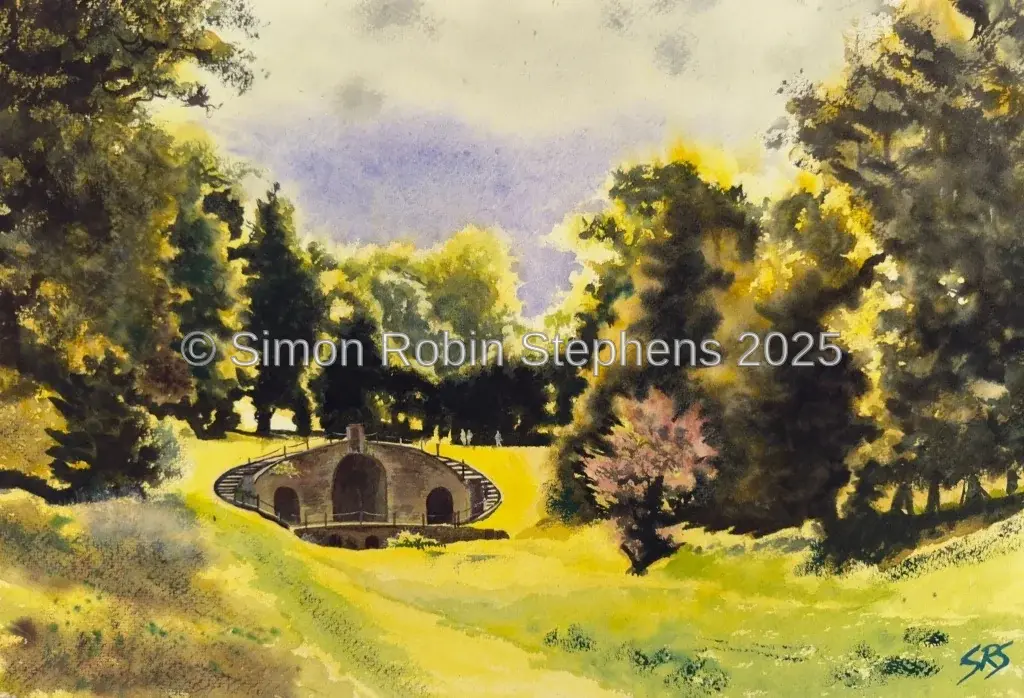
<p>There is a place in <strong>Carshalton Park</strong> where time seems to pause. The historic grotto — built centuries ago, weathered by seasons, softened by moss — sits in dappled shade beneath towering trees. When afternoon light breaks through the canopy, it transforms the old stone into something almost sacred.</p>
<p>I have walked past this grotto dozens of times. But one afternoon, the quality of light stopped me. It was not dramatic — no golden hour theatrics, no sudden revelation. Just gentle, steady illumination that made the stone glow as if lit from within. I set up my easel right there.</p>
<h2>Painting heritage with intention</h2>
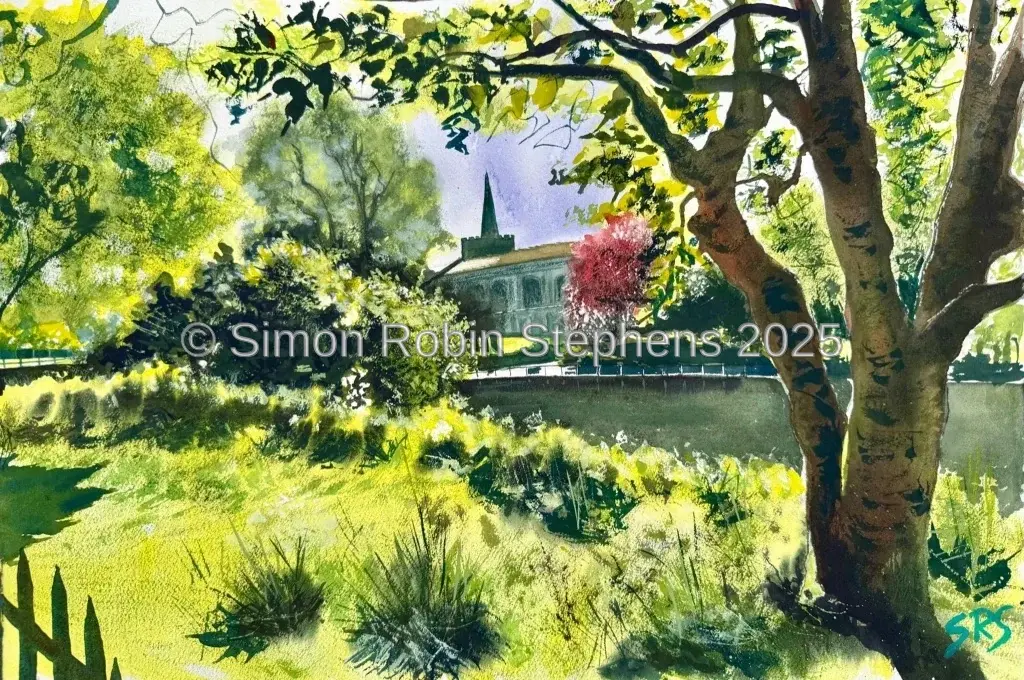
<p>As a member of the <strong>Carshalton and Wallington Art Group</strong>, I have learned that painting local heritage is more than documenting architecture. It is about capturing the feeling of a place — the way air moves through leaves, the texture of weathered stone, the silence that settles in spaces people have loved for generations.</p>
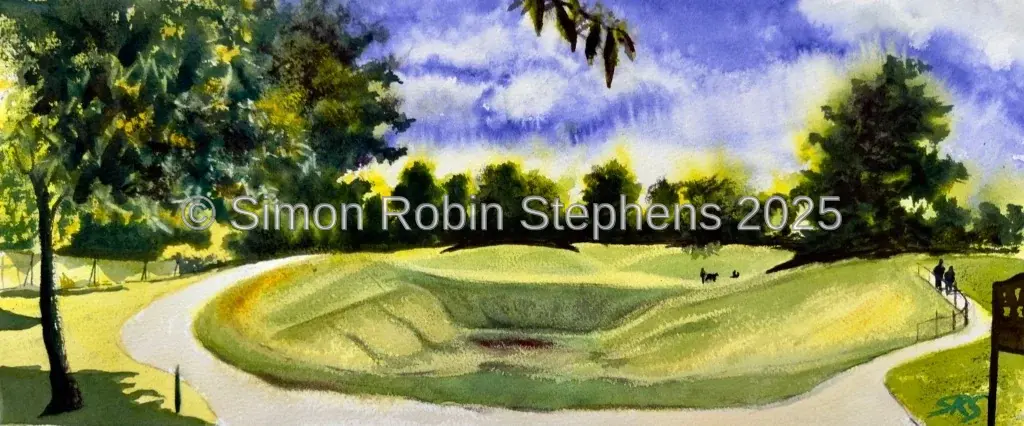
<p><em>Echos of Stone</em> is not just a painting of a grotto. It is a meditation on permanence and memory. The stone has been here longer than any of us. It has witnessed countless afternoons like this one. And yet, in that particular light, on that particular day, it felt entirely new.</p>
<h2>Why heritage matters to local artists</h2>
<p>I paint Carshalton because it is home. But also because these landmarks — the ponds, the parks, the hidden grottos — deserve to be seen, really seen. Not photographed in passing, but observed with the kind of slow attention that watercolour demands.</p>
<p>When you paint something, you commit to it. You spend hours studying the way shadows pool in carved stone, the way tree branches frame a view, the way afternoon light makes ordinary places feel timeless. That commitment changes how you see your own neighbourhood. It deepens your connection to place.</p>
<h2>Stillness as creative practice</h2>
<p>For someone navigating <strong>ADHD</strong>, painting heritage sites like the grotto is a form of grounding. The structure is already there — the stone, the trees, the established composition. My task is not to invent but to observe. To be still. To let the place speak and translate what I hear into washes of colour.</p>
<p>That afternoon at the grotto taught me that heritage is not just about preservation. It is about presence. Standing still long enough to notice. Paying attention long enough to care.</p>
<h2>See the painting</h2>
<p>If you would like to see <em>Echos of Stone</em> up close, you can view it in my <a href="/gallery/collections/south-london/echos-of-stone" title="View Echos of Stone watercolour painting">South London Collection</a>. It captures that afternoon light, that particular stillness, and the quiet permanence of Carshalton Park historic grotto.</p>
<p>And if you find yourself walking through Carshalton Park, take a moment at the grotto. Stand in the dappled light. Let the stone hold your attention for a while. You might hear the echoes too.</p>
<section class="faq mt-12 mb-8" itemscope itemtype="https://schema.org/FAQPage"> <h2 class="text-2xl font-heading text-gray-800 mb-6">Frequently Asked Questions</h2>
<div class="mb-6" itemscope itemprop="mainEntity" itemtype="https://schema.org/Question"> <h3 class="text-lg font-semibold text-gray-800 mb-2" itemprop="name">Where is Carshalton Grotto located?</h3> <div itemscope itemprop="acceptedAnswer" itemtype="https://schema.org/Answer"> <p itemprop="text" class="text-gray-700">Carshalton Grotto is in Carshalton Park, South London (Surrey border). It's a Grade II listed 18th-century shell grotto tucked in a quiet corner of the park. The grotto is accessible during park hours—take a moment to visit if you're local.</p> </div> </div>
<div class="mb-6" itemscope itemprop="mainEntity" itemtype="https://schema.org/Question"> <h3 class="text-lg font-semibold text-gray-800 mb-2" itemprop="name">Can I purchase a print of the Carshalton Grotto painting?</h3> <div itemscope itemprop="acceptedAnswer" itemtype="https://schema.org/Answer"> <p itemprop="text" class="text-gray-700">Yes! Prints are available from £3.99 (postcard) to £54.99 (A2). All prints are archival quality on premium watercolour paper. The original may also be available—visit my gallery or contact me for details.</p> </div> </div>
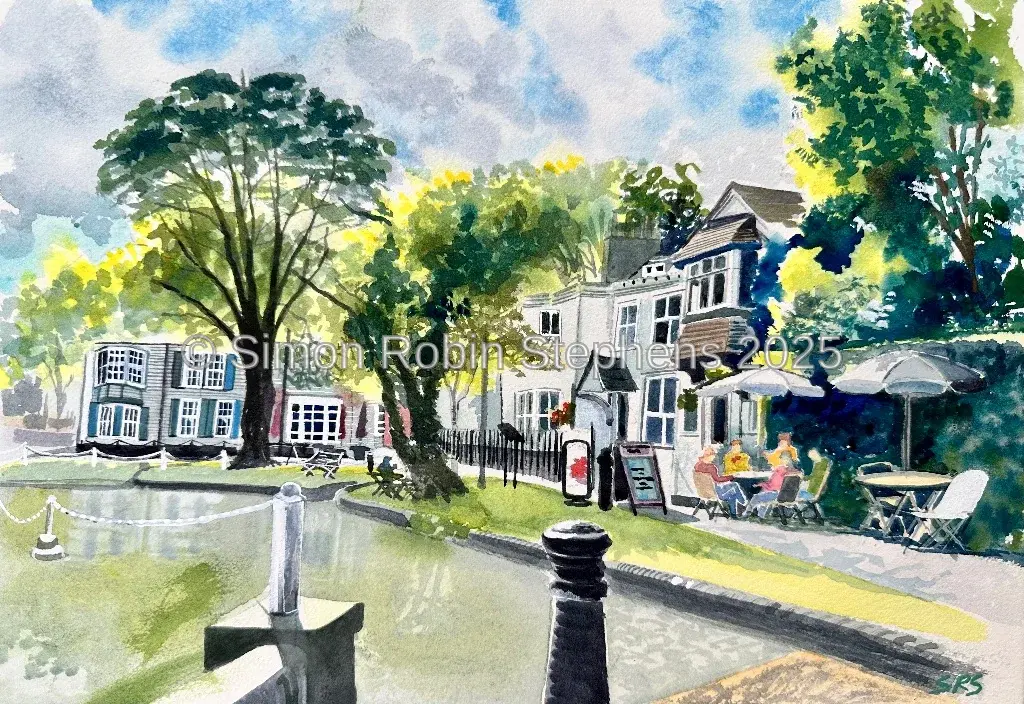
<div class="mb-6" itemscope itemprop="mainEntity" itemtype="https://schema.org/Question"> <h3 class="text-lg font-semibold text-gray-800 mb-2" itemprop="name">Do you paint other heritage sites in Carshalton?</h3> <div itemscope itemprop="acceptedAnswer" itemtype="https://schema.org/Answer"> <p itemprop="text" class="text-gray-700">Absolutely! I've painted Carshalton Ponds, Anne Boleyn's Well, the historic Water Tower, and All Saints Church. Carshalton has incredible heritage, and I love capturing these local landmarks. Commissions welcome for specific locations.</p> </div> </div>
<div class="mb-6" itemscope itemprop="mainEntity" itemtype="https://schema.org/Question"> <h3 class="text-lg font-semibold text-gray-800 mb-2" itemprop="name">What is a shell grotto?</h3> <div itemscope itemprop="acceptedAnswer" itemtype="https://schema.org/Answer"> <p itemprop="text" class="text-gray-700">A shell grotto is a decorative garden feature popular in 18th-century England, where interior walls are covered with shells, stones, and minerals creating intricate patterns. Carshalton's grotto was built around 1720 as part of a grand estate garden.</p> </div> </div>
<div class="mb-6" itemscope itemprop="mainEntity" itemtype="https://schema.org/Question"> <h3 class="text-lg font-semibold text-gray-800 mb-2" itemprop="name">Is this painting suitable for historic buildings or museums?</h3> <div itemscope itemprop="acceptedAnswer" itemtype="https://schema.org/Answer"> <p itemprop="text" class="text-gray-700">Yes! Heritage organizations often display my local history paintings to celebrate community landmarks. Prints are affordable for multiple locations, and I can create commissioned pieces focusing on specific architectural or historical details.</p> </div> </div>
<div class="mb-6" itemscope itemprop="mainEntity" itemtype="https://schema.org/Question"> <h3 class="text-lg font-semibold text-gray-800 mb-2" itemprop="name">How do you capture the texture of stone in watercolour?</h3> <div itemscope itemprop="acceptedAnswer" itemtype="https://schema.org/Answer"> <p itemprop="text" class="text-gray-700">Stone texture in watercolour requires layering and restraint. I use dry brush techniques for rough surfaces, let natural granulation create texture, and preserve white paper for highlights. The key is suggesting texture rather than rendering every detail.</p> </div> </div> </section>
<script type="application/ld+json"> { "@context": "https://schema.org", "@type": "FAQPage", "mainEntity": [ {"@type": "Question", "name": "Where is Carshalton Grotto located?", "acceptedAnswer": {"@type": "Answer", "text": "Carshalton Grotto is in Carshalton Park, South London (Surrey border). It's a Grade II listed 18th-century shell grotto tucked in a quiet corner of the park. The grotto is accessible during park hours—take a moment to visit if you're local."}}, {"@type": "Question", "name": "Can I purchase a print of the Carshalton Grotto painting?", "acceptedAnswer": {"@type": "Answer", "text": "Yes! Prints are available from £3.99 (postcard) to £54.99 (A2). All prints are archival quality on premium watercolour paper. The original may also be available—visit my gallery or contact me for details."}}, {"@type": "Question", "name": "Do you paint other heritage sites in Carshalton?", "acceptedAnswer": {"@type": "Answer", "text": "Absolutely! I've painted Carshalton Ponds, Anne Boleyn's Well, the historic Water Tower, and All Saints Church. Carshalton has incredible heritage, and I love capturing these local landmarks. Commissions welcome for specific locations."}}, {"@type": "Question", "name": "What is a shell grotto?", "acceptedAnswer": {"@type": "Answer", "text": "A shell grotto is a decorative garden feature popular in 18th-century England, where interior walls are covered with shells, stones, and minerals creating intricate patterns. Carshalton's grotto was built around 1720 as part of a grand estate garden."}}, {"@type": "Question", "name": "Is this painting suitable for historic buildings or museums?", "acceptedAnswer": {"@type": "Answer", "text": "Yes! Heritage organizations often display my local history paintings to celebrate community landmarks. Prints are affordable for multiple locations, and I can create commissioned pieces focusing on specific architectural or historical details."}}, {"@type": "Question", "name": "How do you capture the texture of stone in watercolour?", "acceptedAnswer": {"@type": "Answer", "text": "Stone texture in watercolour requires layering and restraint. I use dry brush techniques for rough surfaces, let natural granulation create texture, and preserve white paper for highlights. The key is suggesting texture rather than rendering every detail."}} ] } </script>
<p class="text-sm text-gray-600 mt-8"><em>— Simon Robin Stephens, watercolour artist based in Carshalton, Surrey</em></p>