<!DOCTYPE html> <html lang="en"> <head> <meta charset="UTF-8"> <meta name="description" content="How watercolour painting teaches mindfulness and acceptance for ADHD brains. A South London artist explores the unexpected connection between slow art and fast thinking."> </head> <body>
<script type="application/ld+json"> { "@context": "https://schema.org", "@type": "Article", "headline": "ADHD and the Art of Slow: Why Watercolour Chose Me", "author": { "@type": "Person", "name": "Simon Robin Stephens", "url": "https://www.simonrobinstephensart.com/about" }, "publisher": { "@type": "Organization", "name": "Simon Robin Stephens Art", "logo": { "@type": "ImageObject", "url": "https://www.simonrobinstephensart.com/logo-horizontal.png" } }, "datePublished": "2025-11-15", "dateModified": "2026-02-18", "image": "https://www.simonrobinstephensart.com/static/blog/adhd-watercolour-process.jpg", "url": "https://www.simonrobinstephensart.com/blog/adhd-art-of-slow-watercolour", "description": "Watercolour demands patience and presence—two things ADHD makes difficult. Yet somehow, this medium has become my greatest teacher in mindfulness.", "keywords": "ADHD artist, mindful art, neurodivergent artist, therapeutic painting, watercolour therapy, South London artist", "about": [ {"@type": "MedicalCondition", "name": "ADHD"}, {"@type": "Thing", "name": "Watercolour Painting"}, {"@type": "Thing", "name": "Mindfulness"} ], "articleSection": "Art & Process", "wordCount": "1520" } </script>
<article itemscope itemtype="https://schema.org/Article">
<header> <h1 itemprop="headline">ADHD and the Art of Slow: Why Watercolour Chose Me</h1> <p class="article-meta">
By <span itemprop="author">Simon Robin Stephens</span> |
<time itemprop="datePublished" datetime="2025-11-15">November 15, 2025</time> </p> </header>
<aside class="tldr" role="complementary"> <h2>TL;DR – Quick Takeaways</h2> <ul> <li>Watercolour's unforgiving nature forces ADHD brains to slow down and be present</li> <li>The medium teaches acceptance—you can't control everything, only respond</li> <li>Short bursts of focus actually work better for watercolour than sustained concentration</li> <li>Paintings become visual records of achieving flow states despite ADHD</li> <li>Many neurodivergent individuals find watercolour art particularly calming to view</li> </ul> </aside>
<section itemprop="articleBody">
<h2>Why Would Someone with ADHD Choose the Slowest Art Form?</h2>
<p>It doesn't make sense on paper. ADHD means constant mental motion. Watercolour demands patience, waiting, restraint. You'd think oil painting or digital art would suit a restless brain better.</p>
<p>But watercolour chose me as much as I chose it. Maybe more.</p>
<p>The medium is unforgiving. You can't paint over mistakes. You can't rush drying. You can't force precision. These constraints—these frustrating, impossible constraints—turned out to be exactly what my ADHD brain needed.</p>
<h2>What Makes Watercolour Different from Other Art Forms?</h2>
<p>Most painting mediums give you control. Oil paint sits where you put it. Acrylics dry quickly and cover mistakes. Digital art has unlimited undo buttons.</p>
<p>Watercolour does what it wants. Pigment flows. Colours blend unpredictably. Paper warps. Water pools. You're collaborating with the medium, not commanding it.</p>
<p>This lack of control is precisely what makes it therapeutic for ADHD. You're forced to let go. To watch. To respond rather than control.</p>
<h3>The Unexpected Benefits of an Uncontrollable Medium</h3> <ul> <li><strong>Forced presence:</strong> You must pay attention constantly—perfect for hyper-focus</li> <li><strong>Built-in breaks:</strong> Drying time creates natural pauses for scattered attention</li> <li><strong>Acceptance training:</strong> Mistakes become features; imperfection becomes style</li> <li><strong>Immediate feedback:</strong> You see results instantly, satisfying ADHD's need for stimulation</li> </ul>
<h2>How Does ADHD Affect the Creative Process?</h2>
<p>Time blindness is real. I'll think I've been painting for 20 minutes—it's been two hours. Or I'll get distracted mid-stroke and wander away, coming back to find the paper dried improperly.</p>
<p>But ADHD also brings advantages. That ability to notice everything at once? Perfect for capturing complex scenes. The hyperfocus when something clicks? Absolute flow state. The impulsive energy? Great for bold color choices.</p>
<p>Research from King's College London found that individuals with ADHD often excel in creative fields precisely because of—not despite—their neurodivergence. The scattered attention that makes office work challenging becomes an asset when painting landscapes.</p>
<h2>What Is the "Art of Slow" and Why Does It Matter?</h2>
<p>The slow art movement emerged in the 2000s as a counterpoint to fast-paced digital consumption. It's about creating and viewing art mindfully, without rushing.</p>
<p>For someone with ADHD, "slow" doesn't mean the same thing. It's not about achieving calm focus—that's often impossible. Instead, it's about accepting the pace the medium demands.</p>
<p>Watercolour won't be rushed. Paper needs time to dry. Layers must cure. Colours develop as they settle. You adapt to the medium's timeline, not yours.</p>
<blockquote> <p>"ADHD taught me to move fast. Watercolour taught me to wait well. Together, they created a practice where I can be both restless and patient, scattered and focused, all at once."</p> </blockquote>
<h2>Can Art Actually Help Manage ADHD Symptoms?</h2>
<p>Yes—with caveats. Art isn't therapy, though art therapy is a recognized clinical practice. But creating visual art does activate several ADHD-friendly brain processes.</p>
<p>Making art engages the default mode network—the brain state associated with creativity and daydreaming. For ADHD brains, which often struggle to regulate this network, art provides structured access to these mental states.</p>
<p>A 2023 study in the <em>Journal of Attention Disorders</em> found that regular engagement with visual art (creating or viewing) correlated with improved emotional regulation in adults with ADHD. Participants reported feeling calmer and more centered.</p>
<h3>Why Viewing Watercolour Art Helps Neurodivergent Individuals</h3> <ul> <li><strong>Soft edges:</strong> No harsh lines means less visual overwhelm</li> <li><strong>Natural flow:</strong> Organic shapes feel less structured and demanding</li> <li><strong>Subtle complexity:</strong> Layered colours provide interest without chaos</li> <li><strong>Calming subjects:</strong> Landscapes and natural scenes reduce anxiety</li> </ul>
<p>This is why many therapists who work with neurodivergent clients choose <a href="https://www.simonrobinstephensart.com/collections/therapeutic-collection">watercolour art for therapy rooms</a>. The medium's inherent gentleness creates environments where busy brains can rest.</p>
<h2>What Does Your Creative Process Actually Look Like?</h2>
<p>Chaotic, honestly. I don't follow traditional painting sequences. I might start with sky, jump to foreground, abandon it for an hour, return to add mid-tones, then suddenly finish the whole thing in 20 minutes of manic focus.</p>
<p>My Carshalton studio looks like controlled chaos—half-finished paintings everywhere, sketches scattered across tables, multiple projects running simultaneously. This would drive some artists mad. For me, it's necessary.</p>
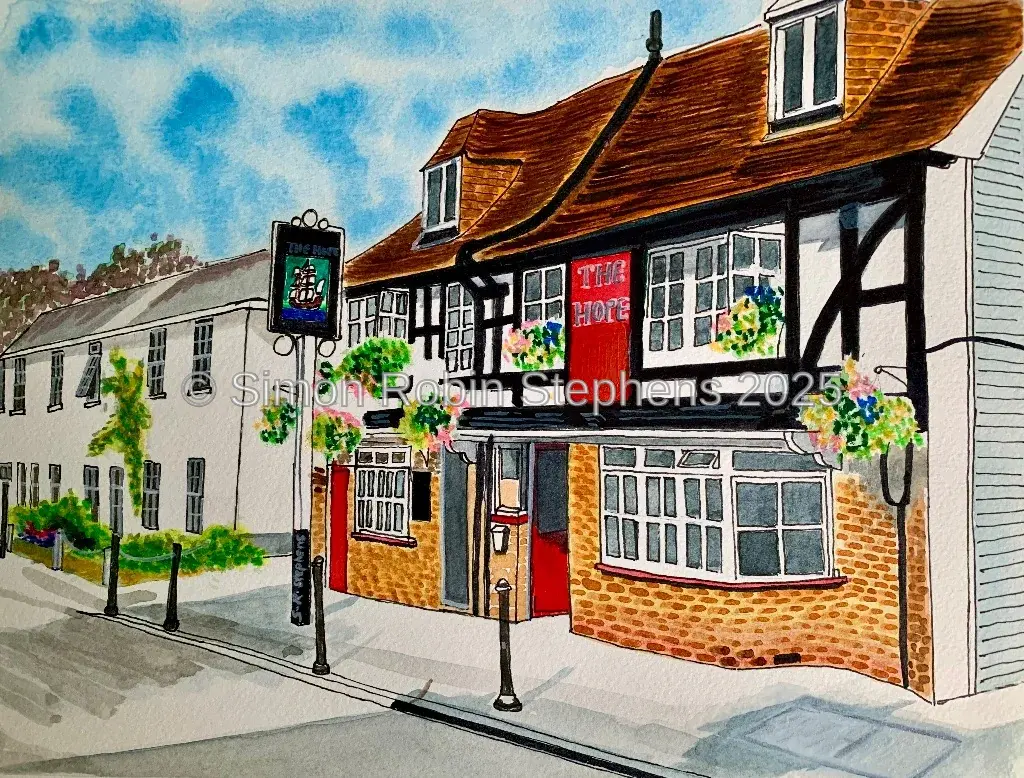
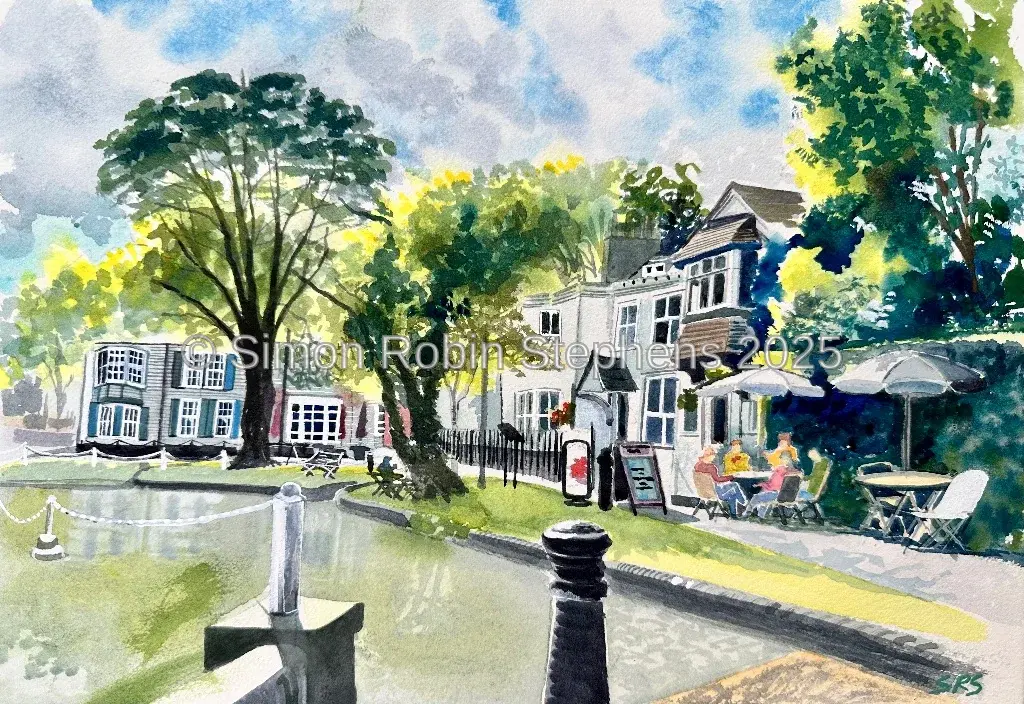
<p>Having several pieces in progress means I can switch between them as attention shifts. If I'm stuck on a <a href="https://www.simonrobinstephensart.com/collections/south-london">South London scene</a>, I move to a <a href="https://www.simonrobinstephensart.com/collections/surrey-sanctuaries">Surrey landscape</a>. If detail work feels impossible, I work on loose background washes.</p>
<h2>How Do You Choose What to Paint?</h2>
<p>ADHD makes sustained projects difficult, so I work in collections. Themed groups provide structure without monotony. The <em>Surrey Sanctuaries</em> series focuses on calm outdoor spaces. <em>South London</em> captures urban nature spots.</p>
<p>Each collection offers variety within boundaries—different enough to stay interesting, similar enough to maintain focus. It's the sweet spot for ADHD creativity.</p>
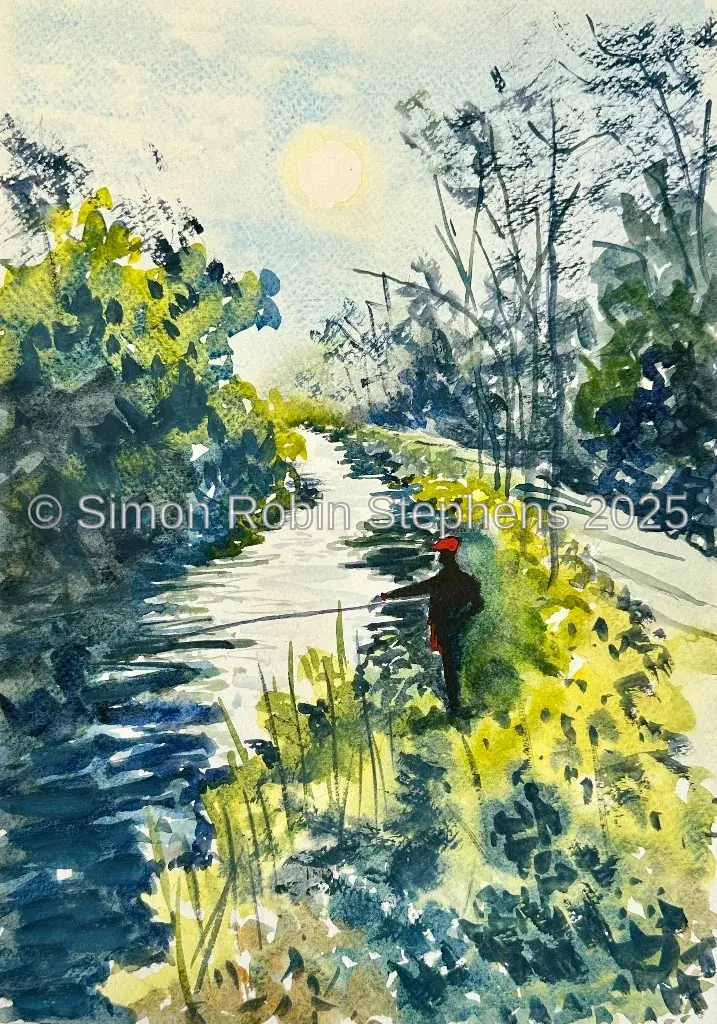
<p>Subjects themselves tend toward mindful themes: still ponds, empty paths, quiet gardens. Places where you can breathe. These are the locations I seek out when overwhelmed, so naturally they become my paintings.</p>
<h2>What Should People Know About Buying Art from Neurodivergent Artists?</h2>
<p>We bring unique perspectives to our work. The same brain wiring that makes admin tasks challenging creates fresh approaches to composition, color, and subject matter.</p>
<p>When you buy from a neurodivergent artist, you're supporting someone who likely faces additional barriers in traditional employment. Art becomes both creative practice and viable livelihood.</p>
<p>All my <a href="https://www.simonrobinstephensart.com/originals">original watercolours</a> include authenticity certificates and care instructions. Prints are available from £3.99, originals from £95. Free UK delivery over £50, 14-day returns, and I'm always happy to discuss commissions.</p>
</section>
<aside class="related-works" role="complementary"> <h2>Related Artworks You Might Love</h2> <ul> <li><a href="https://www.simonrobinstephensart.com/collections/therapeutic-collection">Therapeutic Collection</a> – Calming watercolours specifically created for mindful spaces</li> <li><a href="https://www.simonrobinstephensart.com/collections/south-london">South London Collection</a> – Urban nature scenes painted with ADHD-friendly short bursts of focus</li> <li><a href="https://www.simonrobinstephensart.com/commissions">Commission Your Own Peaceful Space</a> – I'll paint a location that brings you calm</li> </ul> <p><em>Every purchase supports an independent neurodivergent artist based in Surrey. Thank you.</em></p> </aside>
<section class="faq" itemscope itemtype="https://schema.org/FAQPage"> <h2>Frequently Asked Questions</h2>
<div itemscope itemprop="mainEntity" itemtype="https://schema.org/Question">
<h3 itemprop="name">Can watercolour painting help with ADHD symptoms?</h3>
<div itemscope itemprop="acceptedAnswer" itemtype="https://schema.org/Answer"> <p itemprop="text">While art isn't a substitute for clinical treatment, many people with ADHD find watercolour painting helpful for practicing mindfulness and managing restlessness. The medium's need for focused attention combined with natural pauses creates a rhythm that suits ADHD brains. Always consult healthcare professionals for ADHD management strategies.</p> </div> </div>
<div itemscope itemprop="mainEntity" itemtype="https://schema.org/Question"> <h3 itemprop="name">Why is watercolour art recommended for neurodivergent individuals?</h3> <div itemscope itemprop="acceptedAnswer" itemtype="https://schema.org/Answer"> <p itemprop="text">Watercolour's soft edges, natural flow, and organic shapes create visually gentle artwork that doesn't overwhelm. Many therapists who work with ADHD and autistic clients choose watercolours specifically because the medium feels calming rather than demanding. The lack of hard lines and harsh contrasts reduces visual stress.</p> </div> </div>
<div itemscope itemprop="mainEntity" itemtype="https://schema.org/Question"> <h3 itemprop="name">Do you offer workshops or tutorials for people with ADHD?</h3> <div itemscope itemprop="acceptedAnswer" itemtype="https://schema.org/Answer"> <p itemprop="text">Not currently, but it's something I'm developing. I'd love to create ADHD-friendly watercolour resources that acknowledge the unique challenges and strengths neurodivergent artists bring. Sign up for my newsletter to be notified when workshops launch.</p> </div> </div>
<div itemscope itemprop="mainEntity" itemtype="https://schema.org/Question"> <h3 itemprop="name">Are your paintings suitable for therapy and counseling offices?</h3> <div itemscope itemprop="acceptedAnswer" itemtype="https://schema.org/Answer"> <p itemprop="text">Yes! Many therapists, counselors, and ADHD coaches display my work in their practices. The calming subjects and gentle watercolour technique create therapeutic environments. I can advise on sizing and placement for professional spaces. Bulk pricing available for multiple pieces.</p> </div> </div>
<div itemscope itemprop="mainEntity" itemtype="https://schema.org/Question">
<h3 itemprop="name">How long does it take you to complete a painting?</h3>
<div itemscope itemprop="acceptedAnswer" itemtype="https://schema.org/Answer"> <p itemprop="text">With ADHD, "time" is complicated! A single painting might take 3-4 hours of active work, but spread over several days or even weeks. I often work on multiple pieces simultaneously, switching between projects as focus shifts. This isn't inefficiency—it's how my brain works best.</p> </div> </div>
<div itemscope itemprop="mainEntity" itemtype="https://schema.org/Question"> <h3 itemprop="name">Do you accept commissions from clients with specific sensory needs?</h3> <div itemscope itemprop="acceptedAnswer" itemtype="https://schema.org/Answer"> <p itemprop="text">Absolutely. If you or someone you're buying for has sensory sensitivities, I can adjust color palettes, avoid certain visual elements, or create extra-calming compositions. Just let me know your requirements during the commission consultation. Understanding neurodivergent needs is part of my practice.</p> </div> </div>
</section>
<footer class="article-footer"> <p>ADHD and watercolour shouldn't work together. But somehow they do. The medium that demands what ADHD makes difficult has become the practice that helps me find stillness—even if just for moments at a time.</p> <p>If you're neurodivergent and drawn to watercolour art, trust that instinct. There's something about this medium that speaks to brains like ours.</p> <p>— Simon</p> </footer>
</article>
<script type="application/ld+json"> { "@context": "https://schema.org", "@type": "FAQPage", "mainEntity": [ { "@type": "Question",
"name": "Can watercolour painting help with ADHD symptoms?",
"acceptedAnswer": { "@type": "Answer", "text": "While art isn't a substitute for clinical treatment, many people with ADHD find watercolour painting helpful for practicing mindfulness and managing restlessness. The medium's need for focused attention combined with natural pauses creates a rhythm that suits ADHD brains. Always consult healthcare professionals for ADHD management strategies." } }, { "@type": "Question",
"name": "Why is watercolour art recommended for neurodivergent individuals?",
"acceptedAnswer": { "@type": "Answer", "text": "Watercolour's soft edges, natural flow, and organic shapes create visually gentle artwork that doesn't overwhelm. Many therapists who work with ADHD and autistic clients choose watercolours specifically because the medium feels calming rather than demanding. The lack of hard lines and harsh contrasts reduces visual stress." } }, { "@type": "Question",
"name": "Do you offer workshops or tutorials for people with ADHD?",
"acceptedAnswer": { "@type": "Answer", "text": "Not currently, but it's something I'm developing. I'd love to create ADHD-friendly watercolour resources that acknowledge the unique challenges and strengths neurodivergent artists bring. Sign up for my newsletter to be notified when workshops launch." } }, { "@type": "Question",
"name": "Are your paintings suitable for therapy and counseling offices?",
"acceptedAnswer": { "@type": "Answer", "text": "Yes! Many therapists, counselors, and ADHD coaches display my work in their practices. The calming subjects and gentle watercolour technique create therapeutic environments. I can advise on sizing and placement for professional spaces. Bulk pricing available for multiple pieces." } }, { "@type": "Question",
"name": "How long does it take you to complete a painting?",
"acceptedAnswer": { "@type": "Answer", "text": "With ADHD, \"time\" is complicated! A single painting might take 3-4 hours of active work, but spread over several days or even weeks. I often work on multiple pieces simultaneously, switching between projects as focus shifts. This isn't inefficiency—it's how my brain works best." } }, { "@type": "Question",
"name": "Do you accept commissions from clients with specific sensory needs?",
"acceptedAnswer": { "@type": "Answer", "text": "Absolutely. If you or someone you're buying for has sensory sensitivities, I can adjust color palettes, avoid certain visual elements, or create extra-calming compositions. Just let me know your requirements during the commission consultation. Understanding neurodivergent needs is part of my practice." } } ] } </script>
</body> </html>