<h2>The watercolour workshop market is noisy. Here's how to navigate it.</h2>
<p>There are more watercolour workshops available now than at any point in the last twenty years. Evening classes, weekend intensives, online courses, community sessions, retreat weekends in the countryside. Some are genuinely life-changing. Others will have you blending cheap synthetic pigments on paper so thin it buckles under a damp brush, wondering why your work looks nothing like the tutor's demo.</p>
<p>I've taken my share of both kinds. And I run my own workshops in Carshalton, so I've thought hard about what actually matters. Here's what I look for — and what makes me quietly step away from a booking page.</p>
<h2>1. Small group size (and the tutor knows your name)</h2>
<p>The single biggest predictor of a good watercolour workshop experience is the tutor-to-student ratio. In a group of more than twelve, individual feedback becomes almost impossible. You'll watch a demo, attempt it yourself, and by the time the tutor reaches your end of the table you've either solved the problem or baked in a bad habit.</p>
<p>I cap my sessions at twelve. Not because I couldn't fit more in the room — but because a workshop where I don't know everyone's name by the end of the first hour hasn't worked as a workshop. It's just been a performance.</p>
<p>Ask the organiser: <em>"What's the maximum group size?"</em> If the answer is "it varies" or "up to twenty", treat that as a yellow flag.</p>
<h2>2. Real materials, not budget substitutes</h2>
<p>Good watercolour instruction requires decent materials. Not expensive, necessarily — but not the kind of kit that fights you at every turn. Student-grade paints that don't lift, 90gsm copy paper that warps into a landscape of its own, brushes with synthetic bristles that hold no water: these obstacles are invisible to the beginner, who assumes the problem is their own inexperience.</p>
<p>A good workshop either provides or specifies materials that are actually suitable. When I run sessions, all materials are included in the cost and I've chosen them specifically: a small palette of reliable pigments, 300gsm cold-press Saunders Waterford paper, and a couple of decent synthetic brushes that behave predictably.</p>
<p>Ask: <em>"What materials will I be using?"</em> If the answer is vague, or if you're expected to bring your own without any guidance on what's suitable, that's worth knowing before you turn up.</p>
<h2>3. A clear, limited focus</h2>
<p>Watercolour workshops that try to cover everything teach nothing well. Wet-on-wet, dry brush, glazing, granulation, colour mixing, perspective, composition — these are each individually worth a three-hour session. A workshop that claims to cover all of them in a single morning is setting you up for overwhelm, not learning.</p>
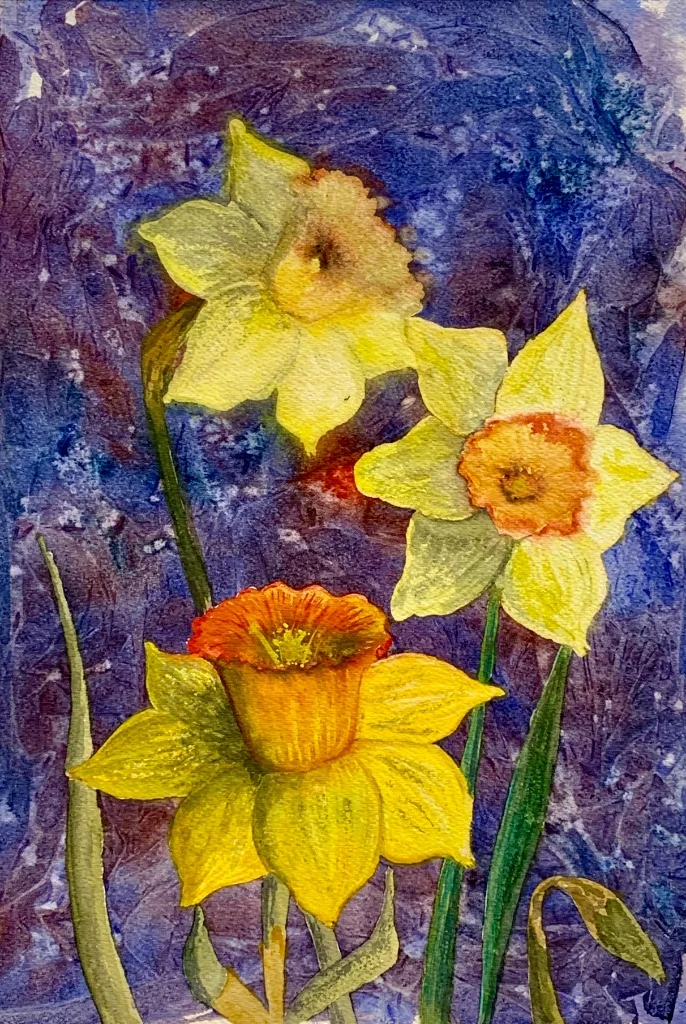
<p>The best sessions I've attended and the best sessions I run have a single, specific focus. A Spring Flowers session focuses on observation, soft edges, and the way petals hold light. A Surrey Landscapes session focuses on aerial perspective, horizon line, and the quiet luminosity of an overcast English sky. A Therapeutic Calm session focuses on letting the paint do what it wants — on releasing outcome pressure entirely.</p>
<p>Ask: <em>"What specific technique or subject will the session focus on?"</em> A specific answer is a good sign. A list of everything is a warning.</p>
<h2>4. A tutor who paints — not just teaches</h2>
<p>This is harder to assess from a booking page, but worth researching. Some watercolour tutors are primarily educators who have developed a reliable method. Others are working artists who teach as a secondary activity. Both can be excellent. But the working artist typically brings something the educator doesn't: the living evidence that the approach actually works, a portfolio that's changing, and the willingness to admit when a painting isn't working and start again.</p>
<p>I am primarily a painter. I teach because it deepens my own understanding of the medium and because I genuinely enjoy watching someone discover what watercolour can do. My website — the one you're reading now — is the current body of work. That transparency matters to me.</p>
<p>Look for a tutor whose own work you admire. If you can't find examples of their recent painting, ask.</p>
<h2>5. A safe environment for beginners</h2>
<p>Watercolour is uniquely exposing. Unlike oil or acrylic, you can't easily paint over a mistake. The work shows every hesitation, every rushed decision, every uncertain mark. For someone coming to a workshop for the first time — especially someone who hasn't made anything visual since school — the psychological safety of the environment matters enormously.</p>
<p>The best workshops I've attended were ones where the tutor made visible mistakes on purpose. Where laughter was a reasonable response to a painting going wrong. Where "I don't know — let's try both and see what happens" was a sentence the tutor actually said.</p>
<p>This is especially important for anyone with ADHD, anxiety, or a complicated relationship with creative work. Art classes can be healing. They can also be quietly humiliating if the atmosphere isn't right.</p>
<p>If you have questions about how a workshop handles beginners, or whether it's suitable for someone who hasn't picked up a brush in thirty years — ask directly. A good tutor will give you a straight, generous answer.</p>
<h2>6. A reasonable price</h2>
<p>My workshops are £45 for three hours, all materials included. That's £15 per hour, which is roughly what a reasonable art tutor charges for private one-to-one instruction. In a group of twelve it represents good value for the tutor; in a group of four it represents an unsustainable rate that will eventually lead to either quality cuts or the workshop disappearing.</p>
<p>Very cheap workshops — £10–£15 for three hours — usually mean one of three things: large groups, poor materials, or a heavily subsidised community project (which can be excellent — just know what you're getting). Very expensive workshops — £150+ for a day — need to be justified by a genuine reputation, premium materials, or a location that makes the experience worth it.</p>
<p>£40–£80 for a three- to four-hour session with a working artist in a small group, materials included, is a reasonable range for something you'll actually get value from.</p>
<h2>What to run from</h2>
<p>A few things that reliably indicate a workshop isn't worth your time:</p>
<ul> <li><strong>No maximum group size listed.</strong> If the organiser won't tell you, assume large.</li> <li><strong>Heavy emphasis on "paint like me."</strong> The goal of a good workshop is to help you develop your own relationship with the medium — not to produce a copy of the tutor's demo.</li> <li><strong>"Suitable for all levels."</strong> Everything is always suitable for all levels in marketing copy. Ask specifically whether complete beginners are genuinely welcome and whether the session accommodates different skill levels.</li> <li><strong>No physical location.</strong> Online workshops have their place, but if you're new to watercolour, being in a room with other people — able to see someone's brush touching paper — is worth more than any screen can offer.</li> <li><strong>The work on display is all the same.</strong> If every student painting from the demo looks identical, the workshop taught copying, not painting.</li> </ul>
<h2>My workshops in Carshalton</h2>
<p>I run three sessions through spring and summer 2026, each with a different focus:</p>
<ul> <li><strong>Spring Flowers</strong> — Saturday 10 May 2026, 10am–1pm</li> <li><strong>Surrey Landscapes</strong> — Saturday 7 June 2026, 10am–1pm</li> <li><strong>Therapeutic Calm</strong> — Saturday 5 July 2026, 10am–1pm</li> </ul>
<p>All sessions are held at the Salvation Army Community Centre, Westmead Road, Carshalton SM5 2LD. Maximum 12 participants. All materials included. £45 per person, with a £10 deposit to reserve your place.</p>
<p>If you've never painted before, or haven't for decades, that's fine. These workshops are designed to be a gentle beginning — not a performance.</p>
<p><a href="/workshops">See upcoming dates and reserve your place →</a></p>