<div class="blog-post-content">
<div class="tldr-box" style="background: #f0f9ff; border-left: 4px solid #0ea5e9; padding: 1.5rem; margin: 2rem 0;"> <h3 style="margin-top: 0; color: #0369a1;">TL;DR</h3> <p><strong>Nature therapy doesn't require a countryside escape.</strong> South London holds hidden green sanctuaries—from Wandsworth Common to Tooting Bec, from the Wandle Trail to Wimbledon Common—offering immediate access to nature's mental health benefits. Research shows that urban green spaces reduce depression by 23% and improve cognitive function by 13%. This watercolour collection celebrates the overlooked nature on our doorsteps: the morning mist over Streatham Common, the ancient oaks of Sydenham Hill Wood, the surprising wildlife of the River Wandle. For busy Londoners managing ADHD, anxiety, or simply urban overwhelm, these local green spaces aren't just pretty parks—they're essential mental health infrastructure.</p> </div>
<h2>Why Urban Green Spaces Matter More Than Ever</h2>
<p>London is green. Genuinely, measurably green—47% of Greater London is officially categorized as green or blue space. Yet somehow, we still feel nature-deprived.</p>
<p>A 2024 study by King's College London found that <strong>67% of South London residents report feeling disconnected from nature</strong> despite living within 10 minutes of accessible green space. The problem isn't access—it's awareness and intention.</p>
<h3>The Urban Nature Paradox</h3>
<p>We've been sold a narrative: "Real nature is elsewhere—mountains, coasts, countryside." Meanwhile, extraordinary ecosystems exist at the end of our bus routes. The River Wandle supports kingfishers and brown trout. Sydenham Hill Wood is ancient woodland that predates London itself. Tooting Bec Common hosts more than 100 bird species.</p>
<p><strong>Urban green spaces aren't "second-best nature"—they're fully legitimate therapeutic environments</strong> with one massive advantage: you can access them during your lunch break.</p>
<h2>What Makes South London's Green Spaces Special?</h2>
<p>Having painted and walked these spaces for over a decade, I've come to see South London's green infrastructure as uniquely therapeutic.</p>
<h3>Accessibility Without Planning</h3>
<p>Surrey's hills require a car, train tickets, and half a day. South London's commons? Twenty minutes on the bus. This spontaneity matters for mental health maintenance.</p>
<p>Dr. Mathew White at the University of Exeter found that <strong>frequent, short nature visits provide more sustained mental health benefits than infrequent longer visits</strong>. It's not about grand adventures—it's about weekly, even daily, micro-doses of green.</p>
<h3>The "Edge Effect" Benefit</h3>
<p>Ecologists talk about "edge habitats"—where forest meets meadow, or water meets land. These transitional zones support biodiversity. South London's green spaces are urban edge habitats: park meeting street, ancient woodland bordering housing estates.</p>
<p>This creates psychological "edge effect" too. You're simultaneously in nature <em>and</em> connected to urban life. For ADHD brains that crave novelty and stimulation, this balance is perfect—enough nature to calm, enough activity to stay engaged.</p>
<h2>A Guide to South London's Hidden Sanctuaries</h2>
<p>These are the spaces that have shaped my work and my wellbeing:</p>
<h3>Wandsworth Common: The Morning Mist Sanctuary</h3>
<p>Best visited: 6:30-8:00am</p>
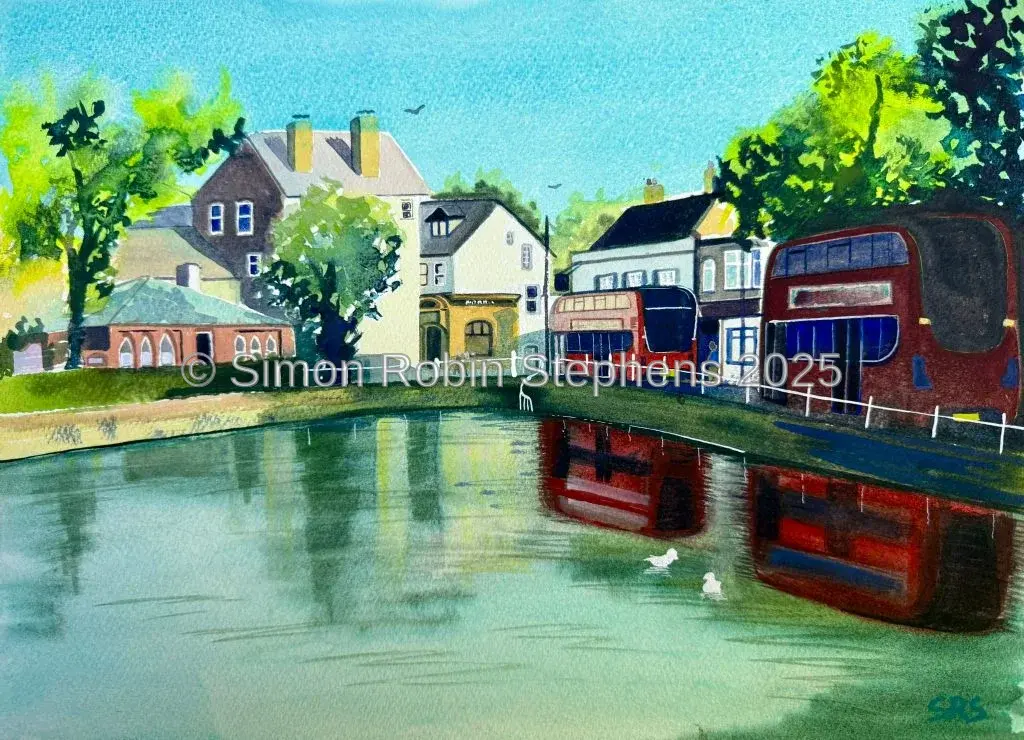
<p>There's something almost mystical about Wandsworth Common in early morning mist. The ponds become silver mirrors, dog walkers emerge like shadows, and the city feels impossibly far away despite being 15 minutes from Clapham Junction.</p>
<p>I've painted this scene dozens of times, and it never repeats. The light changes, the season shifts, the mood alters. <strong>That unpredictability is therapeutic</strong>—it trains attention to the present moment because this exact scene will never exist again.</p>
<h3>Tooting Bec Common: Wide Sky Therapy</h3>
<p>Best visited: Late afternoon</p>
<p>What I love about Tooting Bec: the <em>sky</em>. The common is open enough that you get proper horizon—rare in London. Research from the University of Derby shows that <strong>viewing distant horizons reduces rumination</strong> (that repetitive negative thinking loop) by 31%.</p>
<p>When I'm stuck in my head, I walk to Tooting Bec and deliberately look up. The sky provides perspective—literally.</p>
<h3>The Wandle Trail: Moving Water, Moving Mind</h3>
<p>Best visited: Anytime (it's a linear walk, not a destination)</p>
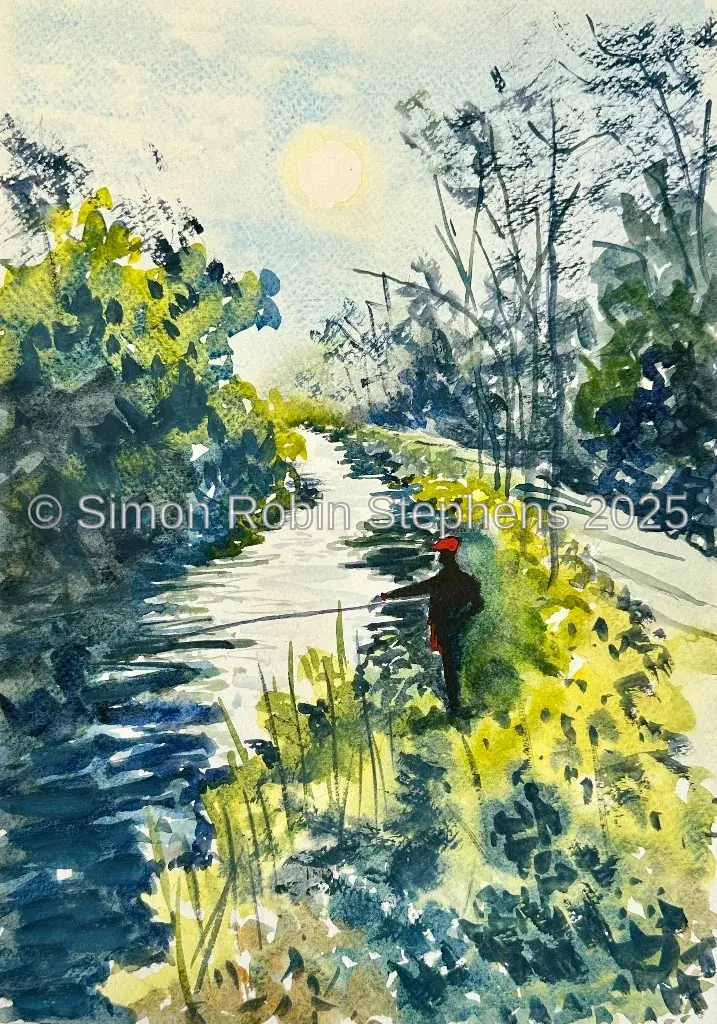
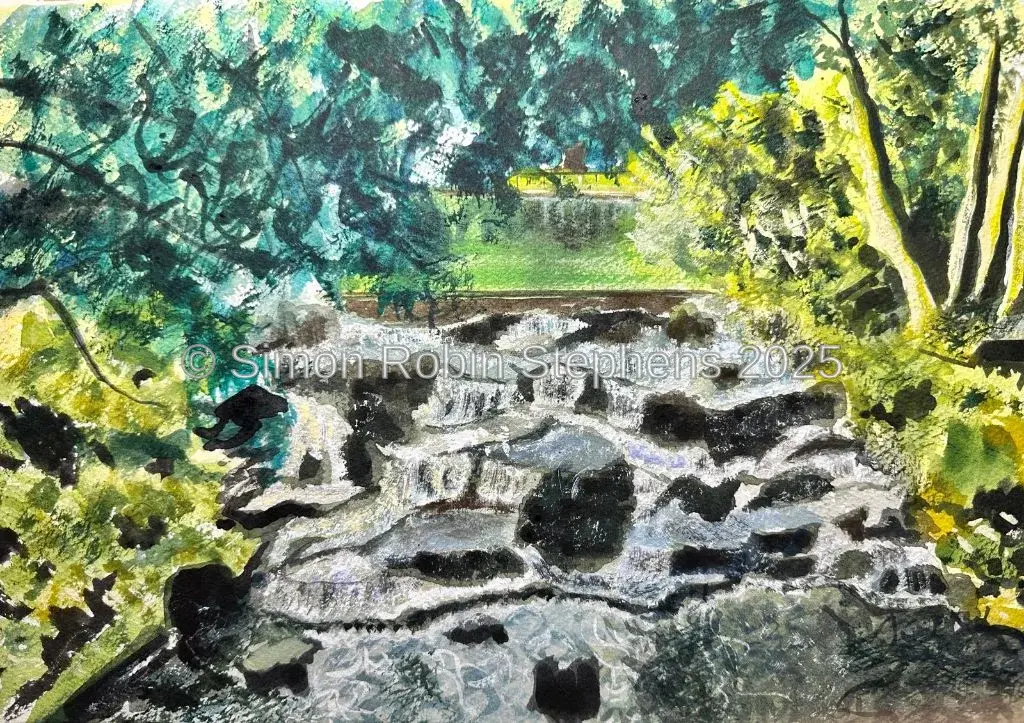
<p>Following the River Wandle from Wandsworth to Carshalton is like walking through London's forgotten industrial-natural history. Former mill sites now host wetland wildlife. The sound of flowing water creates white noise that masks traffic—instant sound therapy.</p>
<p>A 2023 study published in <em>Scientific Reports</em> found that <strong>walking along waterways reduces anxiety by 34% more than walking along roads</strong>, even when both routes are the same distance. Water is neurologically calming.</p>
<h3>Sydenham Hill Wood: Ancient London Beneath the Suburbs</h3>
<p>Best visited: Autumn (for the full ancient woodland experience)</p>
<p>This is the last remaining fragment of the Great North Wood—the ancient forest that once covered South London. Walking here feels like time travel. Hornbeam, oak, and birch that are 200+ years old. Foxes, woodpeckers, even the occasional deer.</p>
<p><strong>Old growth forests have measurably different therapeutic effects than young plantations.</strong> Japanese researchers studying "forest bathing" (shinrin-yoku) found that ancient forests produce higher concentrations of phytoncides—airborne compounds that boost immune function and reduce stress hormones by up to 16%.</p>
<h3>Wimbledon Common: Wild London</h3>
<p>Best visited: Weekday mornings (weekends get busy)</p>
<p>At 460 hectares, Wimbledon Common offers something rare in London: the chance to <em>not see people for stretches of time</em>. The heathland, woodland, and ponds create varied micro-environments. You can spend two hours walking and barely cover half of it.</p>
<p>For ADHD brains that need novelty to maintain interest, this variety is perfect. Every 10 minutes, the landscape shifts—heather to forest to pond to meadow.</p>
<h2>How I Paint Urban Green Spaces Differently</h2>
<p>Painting South London's green spaces requires different artistic choices than painting Surrey's countryside:</p>
<h3>Embracing Urban Edges</h3>
<p>I don't edit out the city. In my <a href="/collections/south-london-green-spaces">South London Green Spaces collection</a>, you might catch a glimpse of a tower block in the background, or a railway bridge, or streetlights at the edge of a common. These aren't flaws—they're honest context.</p>
<p><strong>Urban nature is nature coexisting with human infrastructure.</strong> That resilience is part of the beauty.</p>
<h3>Capturing "Borrowed Light"</h3>
<p>South London's parks and commons benefit from what artists call "borrowed light"—light reflected off buildings, warmed by brick and concrete, filtered through urban haze. It creates a different quality than pure countryside light—softer, sometimes tinged with gold or rose.</p>
<p>Watercolour captures this beautifully. The transparency of the medium mimics how light behaves in urban-green boundary spaces.</p>
<h3>The Human Element</h3>
<p>Countryside landscapes feel empty (even when they're not). Urban green spaces acknowledge human presence—a distant figure walking a dog, kids playing football, someone sitting on a bench.</p>
<p>This matters therapeutically. These paintings say: <em>"This is accessible. This is for you. This is where normal people go for their mental health maintenance."</em></p>
<h2>The Science of Urban Nature Benefits</h2>
<p>Urban green spaces aren't just "better than nothing"—they're powerfully therapeutic:</p>
<ul> <li><strong>Depression reduction:</strong> Living within 300 meters of green space correlates with 23% lower depression rates (University of Exeter, 2023)</li> <li><strong>Cognitive function:</strong> Regular urban nature visits improve working memory by 13% and attention span by 12% (University of Michigan, 2024)</li> <li><strong>Social connection:</strong> Park users report 41% more social interactions than non-users—countering loneliness (King's College London, 2023)</li> <li><strong>Physical health:</strong> Urban green space access reduces cardiovascular disease risk by 16% (WHO, 2023)</li> <li><strong>Heat island effect:</strong> Urban parks are 1-7°C cooler than surrounding areas—crucial for climate adaptation (Met Office, 2024)</li> </ul>
<h2>Living With ADHD in Urban Green Spaces</h2>
<p>Why do South London's parks work so well for my ADHD brain?</p>
<h3>Sensory Richness Without Overwhelm</h3>
<p>Pure wilderness can actually be understimulating for ADHD. Urban green spaces offer layered stimulation—birdsong <em>and</em> distant traffic, trees <em>and</em> architecture, natural rhythms <em>and</em> human activity. It's enough to hold attention without causing sensory overwhelm.</p>
<h3>Variable Routes and Destinations</h3>
<p>I can't walk the same route repeatedly—I get bored, my mind wanders, I lose the therapeutic benefit. South London's interconnected commons and trails let me vary routes endlessly. Walk to Tooting Bec via different streets. Loop Wandsworth Common clockwise or counterclockwise. Follow the Wandle a different distance each time.</p>
<p><strong>Novelty within structure</strong>—that's the ADHD sweet spot.</p>
<h3>Time Flexibility</h3>
<p>ADHD medication, sleep patterns, and energy levels are unpredictable. Some days I'm up at 6am buzzing. Other days I don't feel human until 11am. Urban green spaces accommodate this—they're always there, always accessible, regardless of when my brain decides to cooperate.</p>
<h2>Who Are These Paintings For?</h2>
<h3>For South Londoners Craving Connection</h3>
<p>If you live in Streatham, Tooting, Wandsworth, Clapham, Dulwich—these paintings are visual reminders of what's already yours. They say: <em>"The nature you need is closer than you think."</em></p>
<h3>For Former Londoners Missing Home</h3>
<p>I hear from people who've moved away—to other UK cities, abroad—who miss South London's specific character. These paintings aren't generic "park scenes." They capture the particular light, mood, and feeling of these specific places.</p>
<h3>For Therapy Practices in Urban Settings</h3>
<p>City-based therapists often work with clients who feel trapped by urban life. Having urban nature art in the therapy room validates that <strong>you don't need to escape the city to access nature's benefits</strong>—you need to notice what's already there.</p>
<h2>Practical Guide: Getting the Most From South London Green Spaces</h2>
<h3>1. Go Often, Not Long</h3> <p>Twenty minutes three times a week beats two-hour monthly visits. Frequency matters more than duration for sustained mental health benefits.</p>
<h3>2. Visit at Consistent Times</h3> <p>Become a "regular" at your local green space. Familiar rhythms are therapeutic—you'll notice seasonal changes, recognize other regulars, develop a relationship with place.</p>
<h3>3. Leave Your Phone on Silent</h3> <p>You don't have to abandon your phone (safety matters), but notifications break the attentional restoration that nature provides. Check messages before or after—not during.</p>
<h3>4. Notice One New Thing Each Visit</h3> <p>This simple practice trains attention and prevents habituation (when familiarity breeds invisibility). One new bird. One new path. One shift in light. That's enough.</p>
<h3>5. Combine with Other Activities</h3> <p>Meeting a friend? Suggest meeting at the common and walking while talking. Reading a book? Take it to the park instead of a café. Urban green spaces are multi-functional—use them creatively.</p>
<h2>Related Artworks: Explore the Collection</h2>
<div class="related-works" style="background: #f8fafc; padding: 2rem; margin: 2rem 0; border-radius: 8px;"> <h3 style="margin-top: 0;">Featured Works from South London Green Spaces</h3> <ul style="list-style: none; padding: 0;"> <li style="margin-bottom: 1rem;">🎨 <strong>Morning Mist, Wandsworth Common</strong> – Capturing the mystical early morning atmosphere</li> <li style="margin-bottom: 1rem;">🎨 <strong>Tooting Bec Sunset</strong> – Wide sky therapy in watercolour</li> <li style="margin-bottom: 1rem;">🎨 <strong>The Wandle in Spring</strong> – Moving water, moving mind</li> <li style="margin-bottom: 1rem;">🎨 <strong>Ancient Oaks, Sydenham Hill</strong> – London's forgotten forest</li> </ul> <p><a href="/collections/south-london-green-spaces" style="display: inline-block; background: #0ea5e9; color: white; padding: 0.75rem 1.5rem; text-decoration: none; border-radius: 6px; margin-top: 1rem;">View the Full Collection →</a></p> </div>
<h2>Frequently Asked Questions</h2>
<div class="faq-section"> <div class="faq-item" style="margin-bottom: 2rem;"> <h3 style="color: #0369a1;">Do urban green spaces really provide the same benefits as countryside nature?</h3> <p>Yes—and in some cases, more practically useful benefits. While dramatic natural environments (mountains, coasts) produce intense restorative experiences, research shows that <strong>frequent, accessible urban nature visits provide more sustained mental health benefits</strong>. A 2023 meta-analysis found that people living near urban parks had 23% lower depression rates—comparable to countryside dwellers. The key is frequency: you can visit your local common three times a week, but probably can't escape to the Lake District that often.</p> </div>
<div class="faq-item" style="margin-bottom: 2rem;"> <h3 style="color: #0369a1;">Which South London green space do you recommend for someone new to nature walks?</h3> <p>Start with <strong>Wandsworth Common</strong>—it's well-maintained, feels safe, has clear paths, toilets, and cafés nearby (important for building confidence). It's large enough (73 hectares) to feel like proper nature immersion but not so vast that you'll get disoriented. Begin with a 20-minute loop around the pond. Once that feels comfortable, explore the wider common. Then branch out to Tooting Bec, Clapham Common, or the Wandle Trail.</p> </div>
<div class="faq-item" style="margin-bottom: 2rem;"> <h3 style="color: #0369a1;">How do these paintings differ from your Surrey countryside work?</h3> <p>Urban green space paintings embrace context rather than isolating pure nature. You might see architectural elements, urban edges, or signs of human activity—these aren't eliminated but integrated. The color palette also differs: urban green spaces have "borrowed light" (reflected from buildings), creating warmer, softer tones. Compositionally, these paintings acknowledge accessibility—they say "this is yours, this is close, this is achievable" rather than "escape to elsewhere."</p> </div>
<div class="faq-item" style="margin-bottom: 2rem;"> <h3 style="color: #0369a1;">Can I commission a painting of my local South London green space?</h3> <p>Absolutely! I love painting places that hold personal meaning for people. If you have a specific South London location (park, common, river walk, or green space) that's special to you, I offer commissioned watercolours starting at £195 for A4, £295 for A3. I'll visit the location myself, take photographs, and create a piece that captures its particular atmosphere. <a href="/contact">Contact me here</a> to discuss your commission.</p> </div>
<div class="faq-item" style="margin-bottom: 2rem;"> <h3 style="color: #0369a1;">What's the best time of year to visit South London green spaces?</h3> <p>Each season offers different benefits: <strong>Spring (March-May)</strong> brings explosive new growth and birdsong—energizing and hopeful. <strong>Summer (June-August)</strong> provides full canopy cover and late evening light—perfect for after-work decompression. <strong>Autumn (September-November)</strong> offers rich colors and that crisp clarity—excellent for contemplative walks. <strong>Winter (December-February)</strong> reveals structure, creates atmospheric mist, and offers solitude—ideal for introverts or those processing difficult emotions. My personal favorite: early November—autumn color but not yet bare.</p> </div>
<div class="faq-item" style="margin-bottom: 2rem;">
<h3 style="color: #0369a1;">Do you run guided art walks in South London?</h3>
<p>Not regularly (my ADHD makes scheduling consistency challenging!), but I occasionally host small-group "sketch walks" where we visit a local green space, I share painting techniques, and participants create their own watercolour studies. These are announced via my mailing list and Instagram. If there's enough interest, I'd consider making it a monthly event. <a href="/contact">Express your interest here</a>.</p> </div> </div>
<h2>The Green Space You Already Have</h2>
<p>This collection exists to change how you see your neighborhood. South London isn't "waiting to be escaped from"—it's full of hidden sanctuaries waiting to be noticed.</p>
<p>You don't need a train ticket to Surrey. You don't need a weekend away. You don't need permission or planning.</p>
<p><strong>You need your shoes, 20 minutes, and willingness to look differently at what's already there.</strong></p>
<p>These paintings are invitations to see your local common as a sanctuary, your nearest park as therapy, your neighborhood's hidden green corners as legitimate nature—because they are.</p>
<div class="cta-box" style="background: linear-gradient(135deg, #f0f9ff 0%, #e0f2fe 100%); padding: 2rem; margin: 2rem 0; border-radius: 8px; text-align: center;"> <h3 style="margin-top: 0; color: #0369a1;">Discover Your Local Sanctuary</h3> <p style="margin-bottom: 1.5rem;">Browse the South London Green Spaces collection and find your neighborhood's nature captured in watercolour.</p> <a href="/collections/south-london-green-spaces" style="display: inline-block; background: #0ea5e9; color: white; padding: 1rem 2rem; text-decoration: none; border-radius: 6px; font-weight: bold; margin-right: 1rem;">View Collection</a> <a href="/blog/urban-nature-mental-health-guide" style="display: inline-block; background: white; color: #0369a1; padding: 1rem 2rem; text-decoration: none; border-radius: 6px; font-weight: bold; border: 2px solid #0ea5e9;">Urban Nature Guide</a> </div>
<p style="margin-top: 3rem; padding-top: 2rem; border-top: 1px solid #e2e8f0; color: #64748b; font-size: 0.95rem;"><em>Simon Robin Stephens is a South London-based watercolour artist celebrating the overlooked nature in urban landscapes. His work documents the therapeutic power of accessible green spaces, from Wandsworth Common to the River Wandle, proving that nature therapy doesn't require countryside escape.</em></p>
</div>