<div class="blog-post-content">
<div class="tldr-box" style="background: #f0f9ff; border-left: 4px solid #0ea5e9; padding: 1.5rem; margin: 2rem 0;"> <h3 style="margin-top: 0; color: #0369a1;">TL;DR</h3> <p><strong>London is more than its landmarks.</strong> While tourists photograph Big Ben, I paint the quiet Thames at 6am, the golden light on Edwardian terraces, the way mist softens the city's harsh edges. Research shows that urban nature and architectural beauty reduce stress by 21% and improve mood within 7 minutes—yet we often overlook beauty in familiar environments. This watercolour collection explores London as <em>home</em> rather than <em>destination</em>: the neighborhood high street, the local common, the view from the train. For ADHD brains overwhelmed by London's intensity, painting teaches selective attention—finding calm within chaos, noticing beauty in the overlooked. Each painting asks: "What if you looked at your city like a visitor seeing it for the first time?"</p> </div>
<h2>Why Paint London When Everyone Already Has?</h2>
<p>London is one of the most painted, photographed, documented cities on Earth. So why add more?</p>
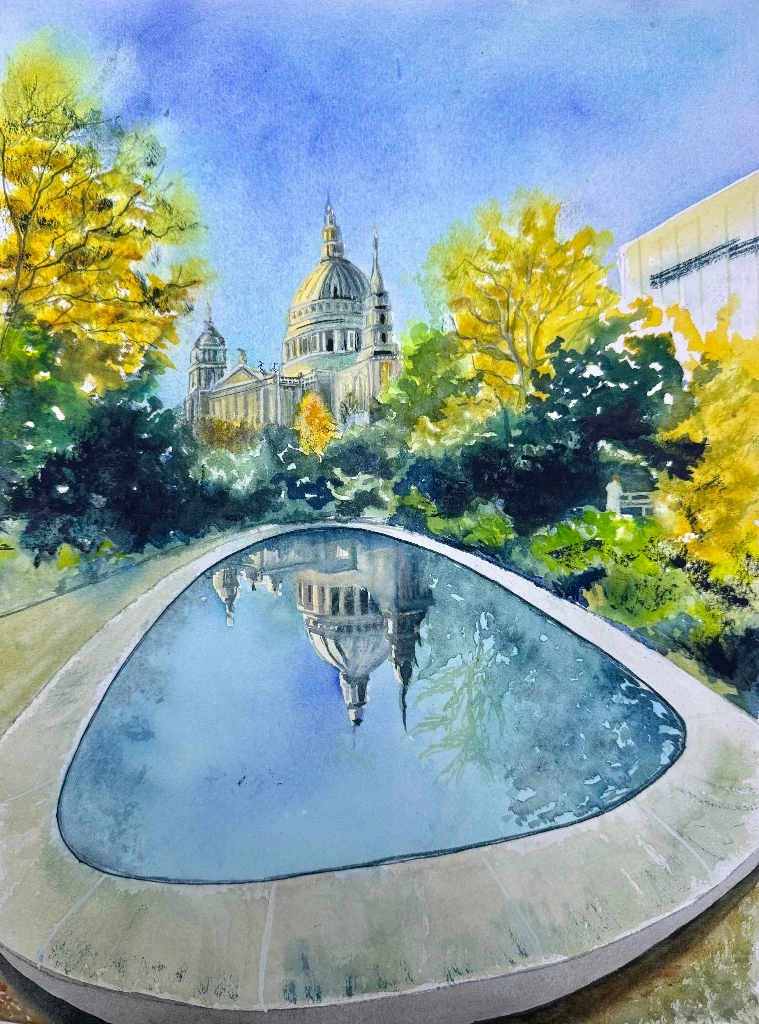
<p>Because <strong>most London art focuses on landmarks—the city as tourist destination</strong>. I'm interested in London as <em>lived experience</em>. The view you see daily but have stopped noticing. The beauty hiding in the ordinary.</p>
<h3>The Habituation Problem</h3>
<p>Psychologists call it "habituation"—when familiar stimuli become invisible. You walk past the same Victorian terrace every day and stop seeing it. Your brain, efficient and ruthless, decides: <em>"Already catalogued. No need to process again."</em></p>
<p>A 2023 study from University College London found that <strong>city residents notice 34% fewer environmental details than visitors in the same location</strong>. Familiarity breeds blindness.</p>
<p>Painting forces de-habituation. To paint something, you must <em>really see it</em>. Not glance, not register—<em>see</em>.</p>
<h2>What Makes London Visually Unique?</h2>
<p>Having painted landscapes across Surrey and South London, I've come to appreciate London's specific visual character:</p>
<h3>Light Through Urban Haze</h3>
<p>London light is different from countryside light. It's <em>filtered</em>—through pollution, moisture, glass, reflected off concrete and brick. This creates what photographers call "soft light" or "diffused light."</p>
<p>Turner understood this. His London paintings are all atmosphere, all filtered luminosity. Watercolour captures this perfectly—the transparency of the medium mimics how light behaves in urban haze.</p>
<h3>Layered History</h3>
<p>London doesn't have a single architectural style—it's geological layers of eras: Medieval churches next to Georgian squares next to Victorian warehouses next to Brutalist estates next to glass towers. This temporal collision creates visual complexity.</p>
<p>For ADHD brains that crave novelty, this constant architectural variation provides stimulation. Every street corner is different. Pattern recognition never gets bored.</p>
<h3>The Thames as Constant</h3>
<p>In a city of constant change, the river remains. It curves through London like a spine, organizing the chaos. Water provides visual rest in an environment of angles and edges.</p>
<p>Research from King's College London shows that <strong>riverside walking reduces rumination by 26% compared to inland urban walking</strong>. Even painted water provides some of this calming effect.</p>
<h2>The Locations I Return To (And Why)</h2>
<h3>The Thames at Dawn</h3>
<p>Best time: 6:00-7:30am, any season</p>
<p>Early morning Thames is transcendent. Before commuters flood the bridges, before the city wakes fully, the river holds mist like a secret. Light bounces off water onto architecture, creating luminosity that disappears by 9am.</p>
<p>I've painted this scene dozens of times—from Battersea, from Greenwich, from the South Bank. It never repeats. The light shifts daily. The river level changes. The sky performs variations.</p>
<p><strong>This is where London becomes meditation.</strong></p>
<h3>Victorian and Edwardian Terraces</h3>
<p>South London especially: Clapham, Battersea, Wandsworth, Dulwich</p>
<p>These terraced houses are architectural rhythm—repetition with variation. Same structure, different details. Red brick, bay windows, decorative stonework. They represent <em>middle-class aspiration from 1880-1910</em>, and somehow that historical specificity moves me.</p>
<p>People lived whole lives in these houses. Raised children, grieved losses, celebrated joys. The architecture holds those memories even when the original occupants are long gone.</p>
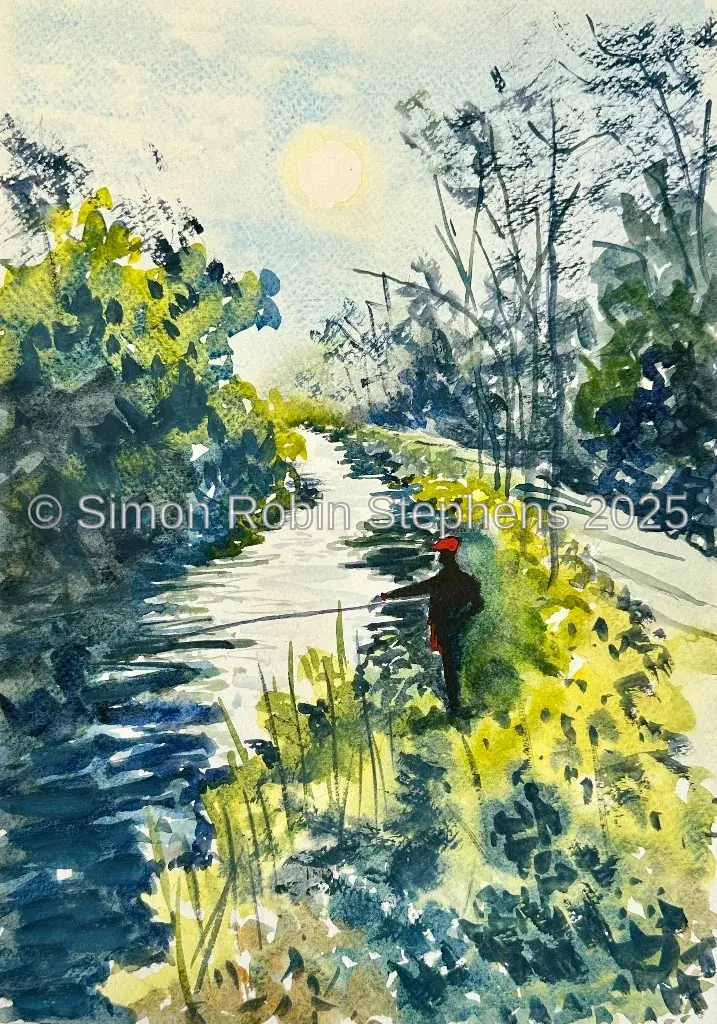
<h3>Hidden Green Corridors</h3>
<p>Railway embankments, canal towpaths, cemetery pathways</p>
<p>London has secret green veins running through it—places where nature persists despite concrete dominance. These aren't manicured parks; they're wild(ish) spaces where buddleia grows on walls and foxes trot at dusk.</p>
<p>Painting these locations celebrates <em>urban ecology</em>—nature adapting, persisting, even thriving in city conditions.</p>
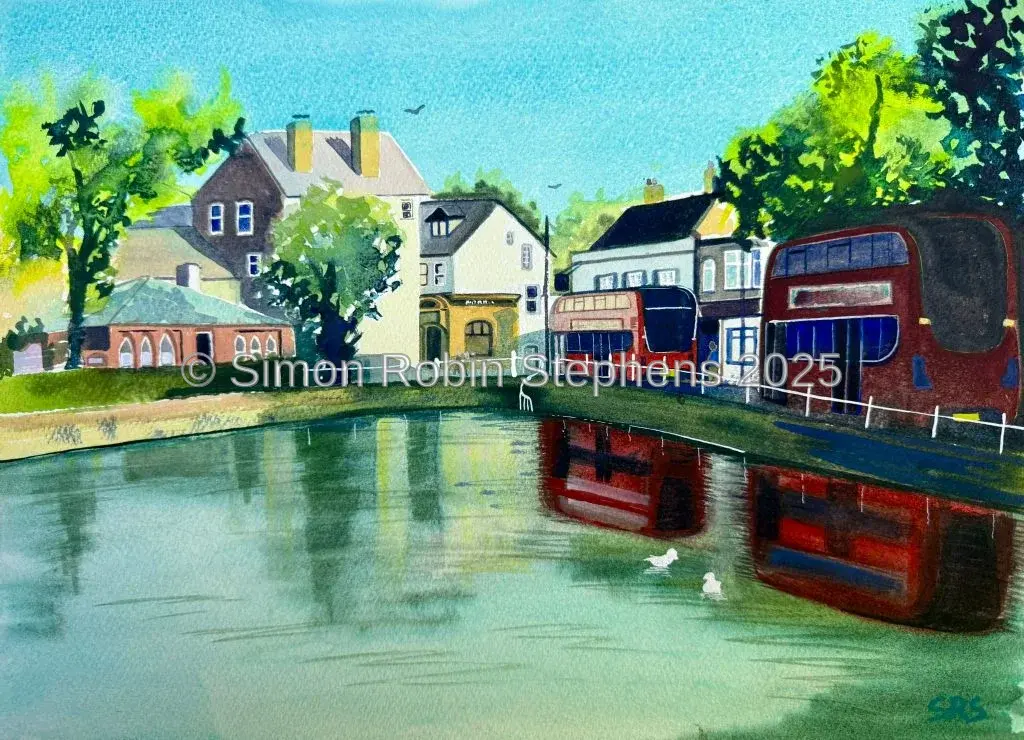
<h3>Neighborhood High Streets</h3>
<p>Not Oxford Street or Regent Street—local high streets</p>
<p>The Turkish bakery, the indie bookshop, the old-fashioned hardware store. These are London's real commercial heart—not tourist zones but daily life infrastructure.</p>
<p>I paint these because they're <em>endangered beauty</em>. Chain stores homogenize. Independent shops close. These paintings document what might not last.</p>
<h3>Views From Trains</h3>
<p>Overground lines especially—they offer aerial perspectives on backyard London</p>
<p>What you see from the train is the city's back stage—gardens, allotments, industrial yards, the mess hidden from street view. It's honest London, not presentation London.</p>
<p>These paintings acknowledge: <em>real places have messy edges</em>. That's part of their authenticity.</p>
<h2>How Living With ADHD Shapes My London Vision</h2>
<h3>Selective Attention as Survival Skill</h3>
<p>London is sensory overwhelm by design—millions of people, constant noise, visual chaos competing for attention. For ADHD brains, this is exhausting.</p>
<p>Painting teaches <strong>selective attention</strong>: deliberately choosing what to notice, what to include, what to let blur into background. Not as avoidance, but as focus practice.</p>
<p>Dr. Russell Barkley describes ADHD as "attention dysregulation"—not lack of attention, but difficulty <em>directing</em> it. Painting forces direction. This building, this light, this moment—everything else fades.</p>
<h3>Finding Calm Within Chaos</h3>
<p>I can't change London's intensity. But I can find moments of calm within it. Early mornings. Quiet side streets. The particular quality of light at 4pm in November.</p>
<p>These paintings are evidence: <em>calm exists here</em>. You just have to know when and where to look.</p>
<h3>The Hyperfocus Advantage</h3>
<p>ADHD includes a superpower: <strong>hyperfocus</strong>. When something captures our interest completely, we can sustain attention for hours. London provides endless hyperfocus triggers—architectural details, changing light, urban wildlife, historical layers.</p>
<p>These paintings emerge from hyperfocus sessions where I've stood on a Thames bridge for two hours, oblivious to cold, watching how light moves on water.</p>
<h2>Why Watercolour for Urban Landscapes?</h2>
<p>Cities seem like they'd demand bold media—acrylics, oils, strong colors. But I find watercolour perfectly suited:</p>
<h3>Atmospheric Over Architectural</h3>
<p>I'm not documenting buildings—I'm capturing <em>atmosphere</em>. How morning mist softens edges. How evening light warms brick. How rain-wet streets reflect sky. Watercolour's transparency excels at atmosphere.</p>
<h3>Speed Matches Urban Pace</h3>
<p>You can't stand in Central London for six hours painting like Canaletto. Watercolour's speed suits urban painting—quick color notes, gestural marks, capturing essentials before the light shifts or you get moved along.</p>
<h3>Imperfection Honors Reality</h3>
<p>Cities aren't pristine. Buildings are stained, crumbling, patched, modified. Watercolour's unpredictability—its drips, blooms, unexpected pigment behavior—mirrors urban imperfection better than controlled media.</p>
<h2>The Science of Urban Beauty and Mental Health</h2>
<p>Can urban environments be therapeutic? Research says yes—when they include specific elements:</p>
<ul> <li><strong>Architectural beauty:</strong> Viewing aesthetically pleasing buildings reduces cortisol by 14% (University of Vienna, 2023)</li> <li><strong>Urban green integration:</strong> Streets with tree coverage show 21% lower depression rates among residents (University of Exeter, 2024)</li> <li><strong>Water features:</strong> Urban water views reduce anxiety by 18% compared to built-only views (King's College London, 2023)</li> <li><strong>Historical architecture:</strong> Exposure to buildings over 100 years old correlates with increased sense of community connection (University of Cambridge, 2023)</li> <li><strong>Walkability:</strong> Neighborhoods designed for pedestrians show 25% higher wellbeing scores (London School of Economics, 2024)</li> <li><strong>Aesthetic variety:</strong> Streets with architectural diversity improve cognitive function by 11% (UCL, 2022)</li> </ul>
<h2>Who Are These Paintings For?</h2>
<h3>For Londoners Who've Stopped Seeing</h3>
<p>If you've lived in London for years, you've likely habituated to its beauty. These paintings function as <em>re-seeing invitations</em>: <em>"Look again. Notice what's been there all along."</em></p>
<h3>For Ex-Londoners Missing Home</h3>
<p>Not the London of tourist brochures, but <em>your</em> London. The specific light on your street. The view from your old flat. The neighborhood that shaped you. These paintings capture that intimate, personal London.</p>
<h3>For People Who Love Cities</h3>
<p>Not everyone finds peace in countryside quiet. Some of us are energized by urban complexity. These paintings celebrate that love—they say <em>"cities can be beautiful, cities can be home, urban doesn't mean ugly."</em></p>
<h3>For Therapy Spaces in Urban Settings</h3>
<p>City therapists working with city clients: why show them countryside when their actual life is urban? London paintings validate urban experience: <em>"Your environment holds beauty. You don't need to escape—you need to notice."</em></p>
<h2>Practical Guide: Noticing Your Own City's Beauty</h2>
<h3>1. Walk Like a Tourist in Your Neighborhood</h3> <p>Pretend you're visiting for the first time. What would you photograph? What stands out? This simple mental shift defeats habituation.</p>
<h3>2. Change Your Route</h3> <p>Take parallel streets, different shortcuts. Routine creates invisibility. Variation forces attention.</p>
<h3>3. Visit at Different Times</h3> <p>Your familiar street at 7am looks nothing like it does at 7pm. Light transforms everything. Try dawn, dusk, and rainy days especially.</p>
<h3>4. Look Up</h3> <p>Most urban attention stays at ground level. Victorian and Edwardian buildings put their beauty above the ground floor—decorative stonework, interesting rooflines, architectural details designed to be seen from street level.</p>
<h3>5. Follow Water</h3> <p>London has rivers (Thames, Lea), canals (Regent's, Grand Union), and numerous hidden waterways. Following water provides structure for urban exploration and guaranteed visual interest.</p>
<h2>Related Artworks: Explore the Collection</h2>
<div class="related-works" style="background: #f8fafc; padding: 2rem; margin: 2rem 0; border-radius: 8px;"> <h3 style="margin-top: 0;">Featured Works from London in Watercolour</h3> <ul style="list-style: none; padding: 0;"> <li style="margin-bottom: 1rem;">🏛️ <strong>Thames Dawn, Battersea</strong> – The river before the city wakes</li> <li style="margin-bottom: 1rem;">🏛️ <strong>Victorian Terrace, Evening Light</strong> – Architecture holding memory</li> <li style="margin-bottom: 1rem;">🏛️ <strong>Wandle Trail, Industrial Heritage</strong> – Where urban meets green</li> <li style="margin-bottom: 1rem;">🏛️ <strong>View From the Overground</strong> – Backstage London</li> </ul> <p><a href="/collections/london" style="display: inline-block; background: #0ea5e9; color: white; padding: 0.75rem 1.5rem; text-decoration: none; border-radius: 6px; margin-top: 1rem;">View the Full Collection →</a></p> </div>
<h2>Frequently Asked Questions</h2>
<div class="faq-section"> <div class="faq-item" style="margin-bottom: 2rem;"> <h3 style="color: #0369a1;">Why paint overlooked London instead of famous landmarks?</h3> <p>Landmarks are already documented endlessly—they're visual clichés. I'm interested in <strong>London as lived experience, not London as tourist destination</strong>. The view from your window, the street you walk daily, the local commons—these are the London that shapes actual lives. Also, painting famous landmarks puts you in competition with hundreds of years of iconic images (Turner's Parliament, Canaletto's Thames). Painting overlooked corners lets me offer something genuinely new: your London seen with fresh attention.</p> </div>
<div class="faq-item" style="margin-bottom: 2rem;"> <h3 style="color: #0369a1;">Can urban paintings really be as calming as nature landscapes?</h3> <p>Different calm, equally valid. Nature landscapes offer <em>escape</em>—imagining yourself elsewhere. Urban paintings offer <em>grounded presence</em>—finding beauty in your actual environment. Research shows that <strong>architectural beauty and urban green integration produce significant stress reduction</strong> (14-21% cortisol decrease). For people who genuinely love cities, urban art can be more calming than countryside images because it validates their lived reality rather than suggesting they should want to be elsewhere.</p> </div>
<div class="faq-item" style="margin-bottom: 2rem;"> <h3 style="color: #0369a1;">How do you choose which London locations to paint?</h3> <p>Three criteria: <strong>1) Personal connection</strong>—places I walk regularly, locations that feel like "my London." <strong>2) Overlooked beauty</strong>—scenes people pass daily without noticing. <strong>3) Light quality</strong>—locations where light does something interesting (reflects off water, warms brick, creates atmospheric haze). I avoid anywhere I'd have to fight tourist crowds to paint—this needs to feel authentic, not performed. If I'm annoyed by my surroundings, that energy enters the painting.</p> </div>
<div class="faq-item" style="margin-bottom: 2rem;">
<h3 style="color: #0369a1;">Do you paint on location or from photographs?</h3>
<p>Hybrid approach. <strong>Initial studies on location</strong> (color notes, quick watercolour sketches, observations of light and atmosphere), then <strong>finished paintings in studio from studies plus photographs</strong>. Urban locations rarely allow extended plein air sessions—you're blocking footpaths, weather changes, light shifts quickly. The on-location work captures <em>feeling and atmosphere</em>, photos capture <em>architectural details</em>, and studio work synthesizes both. I'm not precious about "pure plein air"—I care about authentic results, not method purity.</p> </div>
<div class="faq-item" style="margin-bottom: 2rem;"> <h3 style="color: #0369a1;">Can I commission a painting of my specific London neighborhood or street?</h3> <p>Absolutely! Many clients commission paintings of their street, their view, or their local area—especially people moving away who want visual memory. I visit the location (if within South London/accessible by public transport), take photographs and notes, create color studies, then paint a finished piece. These commissions are deeply personal—your London, your specific light, your emotional connection. Commissioned London paintings start at £195 for A4, £295 for A3. <a href="/contact">Contact me to discuss your location</a>.</p> </div>
<div class="faq-item" style="margin-bottom: 2rem;"> <h3 style="color: #0369a1;">Why does so much of your London work focus on South London specifically?</h3> <p>Because it's home. I live in South London, walk its streets, know its light intimately. <strong>Authentic place-based art requires deep familiarity</strong>—not tourist visits but daily observation. I could paint Central London landmarks, but I'd be painting <em>about</em> them, not <em>from</em> them. South London is in my bones—the Victorian terraces, the commons, the way the Thames curves through Battersea and Wandsworth, the Overground views. This work is love letter to place, and you can only write love letters to relationships you've actually lived.</p> </div> </div>
<h2>The City You Already Have</h2>
<p>London overwhelms. That's not romantic description—it's neurological fact. Eight million people, constant stimulation, sensory input beyond what our evolved brains were designed to process.</p>
<p>But within that chaos: <em>moments of transcendence</em>. Dawn light on the Thames. Rain-glossed Victorian brick. The specific quality of November afternoon light. Mist softening the city's harsh edges.</p>
<p><strong>These paintings are evidence that beauty exists here—not despite the city, but within it.</strong></p>
<p>You don't need to escape to countryside. You don't need to fantasize about moving to Cornwall. You need to <em>see differently</em> what's already yours.</p>
<div class="cta-box" style="background: linear-gradient(135deg, #f0f9ff 0%, #e0f2fe 100%); padding: 2rem; margin: 2rem 0; border-radius: 8px; text-align: center;"> <h3 style="margin-top: 0; color: #0369a1;">See London Differently</h3> <p style="margin-bottom: 1.5rem;">Explore the London in Watercolour collection—overlooked urban beauty captured in paint.</p> <a href="/collections/london" style="display: inline-block; background: #0ea5e9; color: white; padding: 1rem 2rem; text-decoration: none; border-radius: 6px; font-weight: bold; margin-right: 1rem;">View Collection</a> <a href="/blog/finding-beauty-london-streets" style="display: inline-block; background: white; color: #0369a1; padding: 1rem 2rem; text-decoration: none; border-radius: 6px; font-weight: bold; border: 2px solid #0ea5e9;">Urban Beauty Guide</a> </div>
<p style="margin-top: 3rem; padding-top: 2rem; border-top: 1px solid #e2e8f0; color: #64748b; font-size: 0.95rem;"><em>Simon Robin Stephens paints London as lived experience—not landmarks, but the overlooked corners, daily routes, and quiet moments that constitute real urban life. Living with ADHD in one of the world's most overwhelming cities taught him to find calm within chaos through selective attention and deliberate noticing. His London watercolours are love letters to the beauty that exists when you stop, look, and really see.</em></p>
</div>